Evaluating Perennials for Chicagoland Gardens
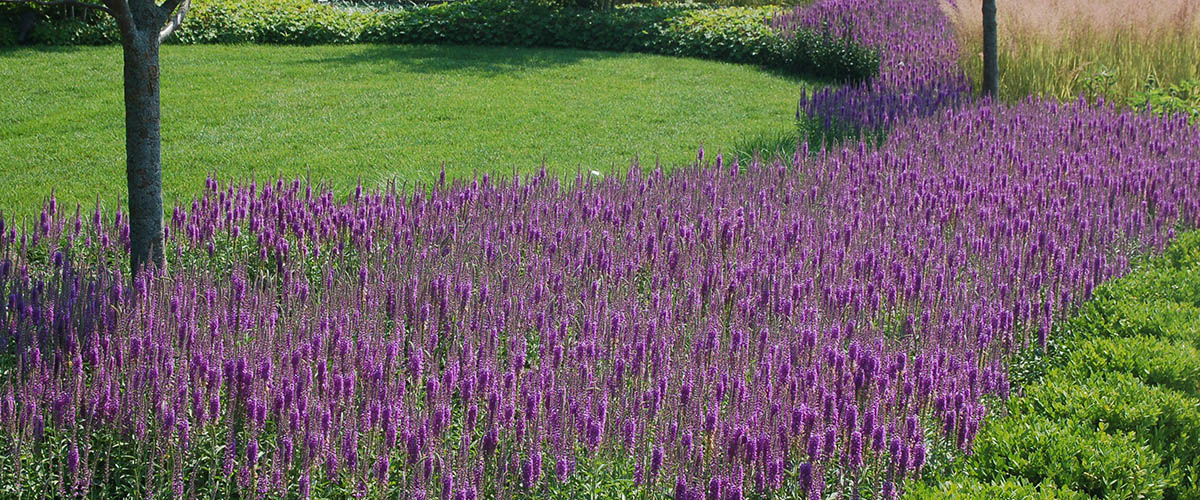
Perennials in Focus is a plant evaluation program that examines new and underused plants for Chicagoland, the third largest metropolitan area in the country. A group of horticultural experts trials and evaluates plants at numerous locations across the region. Results help consumers, public gardens, growers, landscape designers, breeders, and other industry professionals make informed plant choices.
Testing native perennial seed for successful meadow restoration
Meadow restoration begins long before seedlings are planted in the ground. The quality, viability, and germination behavior of native perennial seed determine how evenly a restoration develops, which species establish first, and whether the final plant community reflects the intended design. A reliable germination test turns a packet of uncertain seed into useful evidence.
Native plants are often sold or collected as seed, yet their performance can vary widely by species, harvest year, storage conditions, and seed treatment. Some prairie perennials germinate readily after a short period of cold, while others require extended stratification, light exposure, alternating temperatures, or several growing seasons before emergence.
For Chicagoland restoration projects, regional trial data can add valuable context. The Perennials in Focus program evaluates perennial plants across local gardens and seasons, helping gardeners and professionals compare traits that influence real-world establishment.
Why germination data matters
A seed lot with a low germination percentage may require a higher sowing rate, additional plugs, or a different propagation method. Without testing, restoration managers can mistake poor emergence for unsuitable soil, insufficient moisture, herbivore damage, or competition from weeds. Germination results help separate seed problems from site-management problems.
The timing of emergence also affects meadow composition. Fast-germinating species may occupy open soil quickly, while species with deeper dormancy appear later and can be overlooked during the first season. A restoration plan based only on early seedlings may favor a narrow group of plants and underrepresent valuable but slower native perennials.
Testing also supports responsible budgeting. Native seed can be expensive, particularly when it is locally sourced or collected from remnant populations. Knowing the percentage of viable seed allows growers to estimate the number of live seedlings produced per gram and compare seed lots before committing them to a large-scale sowing.
Define the test before sowing
A germination test should begin with a clear question. You might need to know the percentage of seeds that produce normal seedlings, the number of days until emergence, or whether a cold-moist stratification treatment improves performance. Each objective calls for consistent conditions and a documented protocol.
Use a representative sample rather than selecting only the largest or healthiest-looking seeds. Mix the seed lot gently, then count a predetermined number, such as 50 or 100 seeds. Smaller samples can provide a rough estimate, but larger samples reduce the effect of random variation. Record the species, collection or purchase date, source, lot number, treatment, and test start date.
“Germination rate” should be distinguished from overall viability. A living seed may fail to germinate during a short test because it is dormant, while a damaged or empty seed may never produce a seedling. A tetrazolium test, cut test, or embryo inspection can provide additional information when visible germination does not explain the result.
Prepare seed and substrates carefully
Many native prairie and woodland perennials have physiological dormancy. Cold-moist stratification, which stores hydrated seed at cool temperatures for a defined period, often helps simulate winter conditions. The required duration varies considerably, so treatment should follow species-specific propagation guidance rather than a single standard schedule.
Clean, moisture-retentive media are suitable for small germination trials. Sterile seed-starting mix, blotting paper, or fine vermiculite can reduce fungal problems and make roots easier to observe. Containers should drain well, remain labeled, and be covered only when adequate air exchange is maintained.
Temperature and light should be recorded as carefully as moisture. A warm greenhouse bench may encourage some species but inhibit others. If the restoration site will be seeded outdoors, a parallel outdoor trial can reveal how natural temperature fluctuations affect emergence. Protect test containers from rodents, birds, and excessive drying so losses are not mistaken for poor seed quality.
Track emergence with consistent observations
Inspect each test at a regular interval, such as every two or three days. Count seedlings that show normal root and shoot development, and remove or record abnormal seedlings separately. Avoid counting swollen seeds, cracked seed coats, moldy material, or seedlings that lack a functioning root unless the chosen testing standard says otherwise.
A simple record should include cumulative germination and the date of first emergence. The final percentage is calculated by dividing the number of normal seedlings by the number of seeds tested and multiplying by 100. Mean germination time can reveal differences that a final percentage misses: two seed lots may reach 60 percent germination, but one may emerge a week earlier and establish more reliably in a competitive meadow.
Repeat the test when results are unexpected. A second trial using fresh media, a different temperature, or a longer stratification period may show that dormancy was the limiting factor. Replicates are especially useful for rare seed, because a single container can be strongly affected by contamination, uneven moisture, or a small counting error.
| Test condition | What it can reveal | Useful restoration decision |
|---|---|---|
| Untreated seed at moderate temperature | Baseline emergence and obvious viability | Whether the lot is suitable for immediate sowing |
| Cold-moist stratification | Response to winter-like conditions | Whether fall sowing or pre-treatment is preferable |
| Alternating day and night temperatures | Sensitivity to natural temperature cycles | Whether controlled propagation is helping or hindering |
| Light versus covered seed | Light requirement or surface-sowing response | Whether seed should remain exposed or be lightly covered |
| Replicated outdoor trial | Field emergence under local weather | A realistic estimate for meadow establishment |
Interpret results for field conditions
A high laboratory germination percentage does not guarantee a dense stand outdoors. Field seed faces temperature swings, drought, crusted soil, fungal pathogens, rodents, and competition from established vegetation. Treat the test as one part of a broader establishment assessment rather than a direct forecast of final plant density.
Species with low germination may still be important restoration plants if they contribute unusual structure, late-season bloom, wildlife value, or genetic diversity. Increasing the seeding rate can compensate for low emergence, but only when the cause is understood and the added seed will not create excessive competition. For especially dormant species, nursery propagation or plugs may be more efficient than repeated direct sowing.
Compare results by species and seed lot, not by a single universal pass mark. Early successional grasses and forbs may behave very differently from long-lived woodland herbs. A modest germination percentage can be expected for some freshly collected species, while a similar result in a normally reliable species may signal aging, poor storage, incomplete cleaning, or ineffective treatment.
Build a practical testing record
A consistent record makes germination results useful across multiple seasons and locations. Include weather notes for outdoor trials, substrate moisture, temperature ranges, stratification dates, and the number of normal seedlings observed at each count. Photographs can document unusual seedlings, fungal growth, or differences in emergence speed.
When a species performs well, retain the protocol and seed-source information for future propagation. When it performs poorly, avoid discarding the species immediately. Test a fresh lot, extend the dormancy treatment, or consult regional propagation references before making a long-term planting decision.
For larger meadow projects, combine germination records with establishment observations after planting. Track survival, flowering, height, spread, and weed pressure during the first several seasons. This creates a more complete picture of restoration value than germination data alone and supports better choices for growers, landscape professionals, public gardens, and homeowners.
Recommendations for stronger trials
- Test at least 50 seeds per treatment, with replicates when seed is available.
- Record seed source, collection year, storage conditions, and every pre-treatment.
- Compare untreated seed with a species-appropriate cold-moist stratification treatment.
- Count normal seedlings on a fixed schedule and record first emergence as well as final percentage.
- Validate promising laboratory results with a protected outdoor or small field trial.
A careful seed germination rate evaluation gives meadow restoration a measurable starting point. It helps determine whether a native perennial needs different treatment, a higher sowing rate, nursery propagation, or simply more time to emerge. Use the resulting records alongside regional plant evaluations and field observations to build diverse, resilient plantings suited to the Chicagoland climate.
Apply the method to one species or seed lot this season, document what happens, and use the evidence to refine the next restoration batch. Consistent testing turns native seed from an unpredictable input into a better-managed foundation for long-lasting meadow habitat.
In the Garden
Evaluator gardens are located across the Chicagoland area, representing a range of growing conditions. Visit our retail and wholesale partners to find trialled perennials for your own garden.
Retail & Wholesale: Hinsdale Nurseries (Willowbrook, IL), Mariani Nurseries (Kenosha, WI & Garden Prairie, IL), Northwind Perennials (Burlington, WI), The Growing Place (Aurora, IL).
Wholesale Only: Hinsdale Nurseries (Plano, IL), Intrinsic Perennial Gardens (Hebron, IL).
Our Evaluation Program
The 2017–2020 evaluation cycle included Agastache 'Blue Boa', Allium senescens 'Blue Eddy', Amsonia ciliata var. filifolia 'Georgia Pancake', Astilbe 'Chocolate Shogun', Boltonia astroides 'James Crocket', Brunnera 'Alexander's Great', and Geranium cinereum 'Jolly Jewel Purple'. Completed evaluations include Amsonia 'Blue Ice' (2004–07).
On April 10, 2020, the program published snapshot profiles for Vernonia lettermanii 'Iron Butterfly', Stokesia laevis 'Elf', Stachys officinalis 'Pink Cotton Candy', Lobelia 'Monet Moment', Helleborus 'Winter Thrillers', Geum 'Mai Tai', Geranium soboliferum 'Butterfly Kisses', Gentiana x intermedia 'True Blue', Eurybia divaricata, Asparagus 'Purple Passion', and Agastache 'Bolero'.
Browse the full collection of snapshots organized alphabetically — from A–D, E–H, I–Q, and R–Z — to find detailed performance data on perennials trialled across Chicagoland.