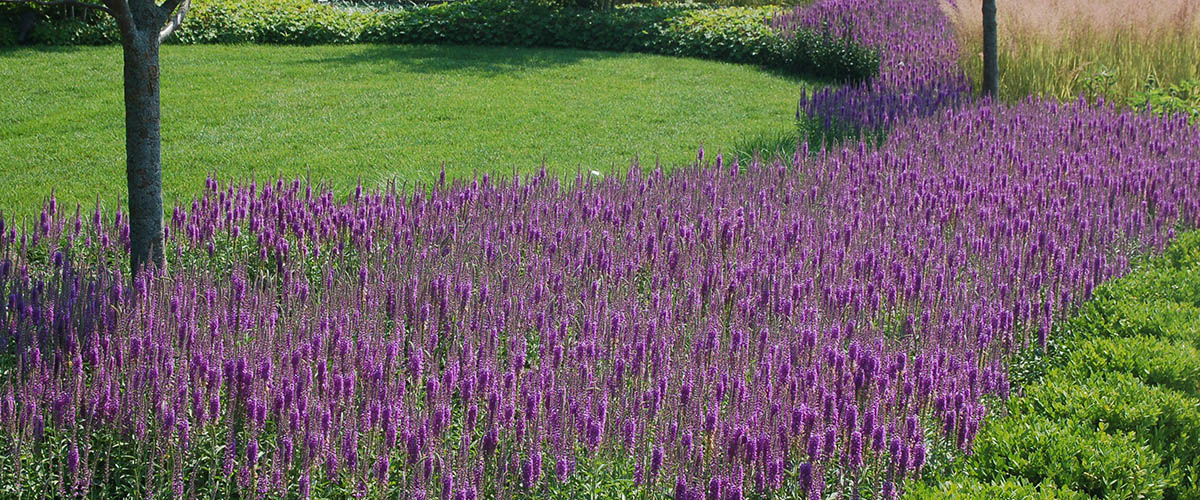
Evaluating Perennials for Chicagoland Gardens
Perennials in Focus is a plant evaluation program that examines new and underused plants for Chicagoland, the third largest metropolitan area in the country. A group of horticultural experts trials and evaluates plants at numerous locations across the region. Results help consumers, public gardens, growers, landscape designers, breeders, and other industry professionals make informed plant choices.
Evaluating Purple Coneflower Seed Germination in Chicagoland
Echinacea purpurea, commonly called purple coneflower, is a familiar North American perennial with strong value for pollinator gardens, prairie-style landscapes, cut-flower plantings, and public displays. Its mature performance is well documented, yet successful establishment begins with a less visible question: how reliably will its seed germinate under local conditions?
For Chicagoland gardeners and growers, germination results can vary with seed quality, moisture, temperature, sowing date, and the amount of cold exposure received before spring. A carefully designed local trial can separate true genetic differences from environmental effects and provide information that applies to regional production rather than relying only on general catalog claims.
A useful evaluation should measure more than the final number of seedlings. The timing of emergence, uniformity, seedling vigor, survival after transplanting, and later plant development all help determine whether a seed lot is practical for gardens, nurseries, restoration projects, and perennial trials.
Why local testing matters
Chicagoland sits within a climate where winter temperatures fluctuate, spring soil can remain cold and wet, and early summer may shift quickly toward heat and drought. These conditions influence seed dormancy and seedling establishment. A packet that germinates well in a warmer greenhouse may behave differently in an unheated structure or directly in outdoor beds.
Purple coneflower seeds often benefit from a period of moist chilling, known as cold stratification. This treatment helps overcome physiological dormancy in some seed lots, although responses may differ among cultivars, harvest years, and suppliers. Testing untreated and stratified seed side by side shows whether chilling is essential, merely beneficial, or unnecessary for a particular source.
Local evaluation also supports better plant selection after emergence. A seed lot may produce many seedlings but show uneven growth, weak stems, or poor survival during the first summer. Recording these details gives growers a more useful picture than a single germination percentage.
Building a reliable germination trial
Start with clearly identified seed lots. Record the cultivar or collection name, supplier, harvest year when available, date received, storage conditions, and the number of seeds tested. Using several lots provides a stronger comparison than testing one packet, especially when the goal is to assess seed quality rather than demonstrate that the species can germinate.
A practical trial can include four treatments: direct sowing at room temperature, moist cold stratification followed by sowing, outdoor fall sowing, and sowing in a controlled warm environment. Use multiple replicates with the same number of seeds in each. Equal cell size, growing medium, watering volume, and light exposure reduce accidental differences between treatments.
For a simple professional-style test, 25 to 50 seeds per replicate is a useful starting point. Larger sample sizes improve confidence, while at-home trials can still reveal clear differences when the method is consistent. Label every container and randomize its position periodically so that one edge of a bench does not receive better light or warmer temperatures.
Managing temperature, moisture, and light
A sterile, well-drained seed-starting medium helps prevent damping-off and makes emergence easier to observe. Seeds should generally be covered lightly rather than buried deeply. Purple coneflower needs moisture to activate germination, but saturated media can deprive seeds of oxygen and encourage fungal problems.
Warm conditions can support germination after dormancy has been addressed, while fluctuating outdoor temperatures may produce a slower, less synchronized emergence pattern. A germination mat may create uniform warmth, but it should not replace proper chilling when a seed lot responds to stratification. Measure the medium temperature when possible instead of relying only on room temperature.
Once seedlings emerge, provide strong light and good air movement. Weak, elongated seedlings are difficult to compare fairly and may fail for reasons unrelated to the original seed treatment. Record the date when the first seedling appears, then continue checking at regular intervals until no new seedlings emerge for at least a week.
Recording results beyond emergence
Germination percentage is calculated by dividing the number of emerged, normal seedlings by the number of viable seeds tested and multiplying by 100. The final percentage matters, but the speed and evenness of emergence may be just as important for commercial production. A treatment that produces slightly fewer seedlings but does so rapidly and uniformly can be easier to manage.
Track abnormal seedlings separately. Bent roots, damaged cotyledons, fungal growth, and stalled shoots should not be counted as healthy germination. After seedlings develop their first true leaves, rate vigor using consistent observations such as leaf color, stem strength, root development, and transplant survival.
| Measure | What to record | Why it matters |
|---|---|---|
| Final germination | Healthy seedlings as a percentage of seeds sown | Shows overall seed-lot performance |
| Days to first emergence | Calendar days from sowing to first seedling | Indicates how quickly dormancy is overcome |
| Emergence window | Days between first and last normal seedlings | Reveals uniformity |
| Abnormal seedlings | Number and type of weak or distorted seedlings | Separates emergence from usable plants |
| Early survival | Seedlings living after transplanting or hardening off | Connects germination with production success |
| Seedling vigor | Root, leaf, and stem observations | Helps identify robust young plants |
Comparing treatments with the same scoring system makes the results more dependable. For example, if stratified seed emerges earlier and has better survival across several replicates, the result is more meaningful than a difference seen in one small container.
Connecting seed results with garden performance
The strongest evaluation continues after seedlings leave the propagation area. Transplant successful plants into a prepared local bed and record establishment, growth rate, branching, flowering time, flower color, height, and spread. These observations connect early propagation behavior with the traits that matter in a Chicagoland garden.
Purple coneflower generally prefers full sun and well-drained soil, but young plants still need consistent moisture during establishment. Avoid interpreting drought injury as poor genetic vigor if one treatment received less water. At the same time, note whether seedlings tolerate ordinary site conditions once supplemental irrigation is reduced.
Later observations can reveal differences that were invisible during germination. A fast-emerging seedling is not automatically the best landscape plant if it becomes weak, flowers poorly, or fails to overwinter. This broader approach reflects the same careful comparison used when assessing other perennials, including phlox disease resistance trials, where performance must be observed across seasons and conditions.
Avoiding common sources of error
Poor labeling is one of the easiest ways to compromise a seed trial. Keep a written map and photograph containers at the start. Do not combine leftover seeds from different lots, and do not move seedlings between treatments unless the transfer is part of the planned design.
Uneven watering can create larger differences than the treatment itself. Bottom-watering or using a fine rose on a watering can may reduce disturbance, but every container still needs regular inspection. If algae, mold, or damping-off appears, record it rather than quietly removing affected containers from the analysis.
Chilling duration also deserves careful documentation. “Cold stratified” is not a complete description unless the record includes temperature range, moisture level, and number of days. Outdoor fall sowing should be identified separately because seeds experience changing temperatures, precipitation, and freeze-thaw cycles rather than a constant refrigerator environment.
Practical steps for a stronger trial
A well-organized evaluation can remain manageable while producing useful regional information:
- Test at least two seed lots or cultivars when possible.
- Compare a controlled stratification treatment with direct sowing.
- Use several labeled replicates instead of one large undivided container.
- Record emergence dates, healthy seedling counts, abnormal growth, and transplant survival.
- Continue observations through the first growing season and, when feasible, the following spring.
Share results in a consistent format so gardeners, growers, and public gardens can compare findings across sites. Including sowing dates, temperatures, medium type, irrigation practices, and winter conditions makes the data much more valuable than reporting a percentage alone.
A local seed trial can turn a familiar perennial into a source of precise, region-specific knowledge. It may identify dependable seed sources, clarify the value of cold stratification, and reveal which seedlings combine strong establishment with attractive mature growth. Those findings can then inform propagation schedules, retail recommendations, landscape specifications, and future plant evaluations.
For gardeners planning year-round interest, germination work also fits into broader planting design. Seedlings that establish successfully can become part of mixed perennial communities, including combinations described in winter interest planting ideas. Begin with careful labels and repeatable observations, then contribute the results to the regional horticultural community so Echinacea purpurea can be evaluated with the same attention given to every promising perennial.
In the Garden
Evaluator gardens are located across the Chicagoland area, representing a range of growing conditions. Visit our retail and wholesale partners to find trialled perennials for your own garden.
Retail & Wholesale: Hinsdale Nurseries (Willowbrook, IL), Mariani Nurseries (Kenosha, WI & Garden Prairie, IL), Northwind Perennials (Burlington, WI), The Growing Place (Aurora, IL).
Wholesale Only: Hinsdale Nurseries (Plano, IL), Intrinsic Perennial Gardens (Hebron, IL).
Our Evaluation Program
The 2017–2020 evaluation cycle included Agastache 'Blue Boa', Allium senescens 'Blue Eddy', Amsonia ciliata var. filifolia 'Georgia Pancake', Astilbe 'Chocolate Shogun', Boltonia astroides 'James Crocket', Brunnera 'Alexander's Great', and Geranium cinereum 'Jolly Jewel Purple'. Completed evaluations include Amsonia 'Blue Ice' (2004–07).
On April 10, 2020, the program published snapshot profiles for Vernonia lettermanii 'Iron Butterfly', Stokesia laevis 'Elf', Stachys officinalis 'Pink Cotton Candy', Lobelia 'Monet Moment', Helleborus 'Winter Thrillers', Geum 'Mai Tai', Geranium soboliferum 'Butterfly Kisses', Gentiana x intermedia 'True Blue', Eurybia divaricata, Asparagus 'Purple Passion', and Agastache 'Bolero'.
Browse the full collection of snapshots organized alphabetically — from A–D, E–H, I–Q, and R–Z — to find detailed performance data on perennials trialled across Chicagoland.