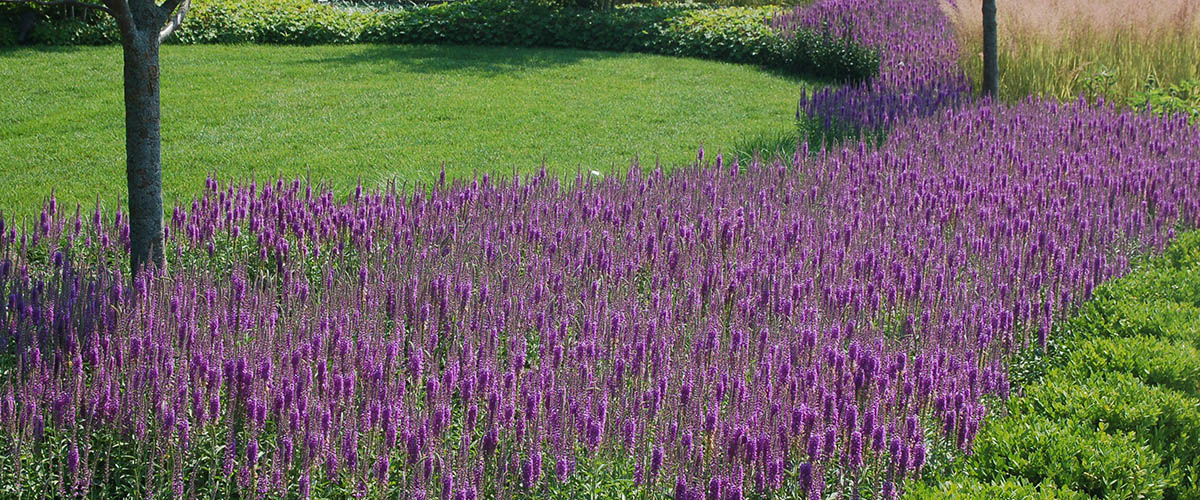
Evaluating Perennials for Chicagoland Gardens
Perennials in Focus is a plant evaluation program that examines new and underused plants for Chicagoland, the third largest metropolitan area in the country. A group of horticultural experts trials and evaluates plants at numerous locations across the region. Results help consumers, public gardens, growers, landscape designers, breeders, and other industry professionals make informed plant choices.
Evaluating Prairie Perennials for Slope Stabilisation
Prairie perennials are valued for their seasonal colour, wildlife benefits and ability to form dense colonies. Their underground systems deserve equal attention when a planting is intended to hold soil on a bank, roadside verge or garden embankment. Root depth, density, branching pattern and establishment speed all influence how well a plant contributes to slope stabilisation.
Findings from the Chicagoland region can provide useful clues, yet Australian gardeners need to interpret them through local soil, rainfall and plant availability. A perennial that survives frozen winters and moist spring soils in Illinois may behave very differently during a dry Melbourne summer, a humid Brisbane season or a sudden storm in Sydney.
Why Root Architecture Matters
Slope failure usually involves several factors: surface runoff, soil texture, compaction, burrowing, foot traffic and the loss of protective vegetation. Deep roots can anchor individual plants through upper soil layers, while fine, fibrous roots bind smaller soil particles and reduce the speed at which water moves across the surface.
A plant with a deep central root may tolerate drought and contribute vertical reinforcement, but it can leave gaps between plants. A spreading rhizomatous perennial may create a stronger surface mat, though aggressive runners can become difficult to manage. The most useful planting often combines several root forms with litter, mulch and carefully directed drainage.
Root depth should therefore be assessed alongside root volume and distribution. A plant reaching 800 millimetres into soil is not automatically a better stabiliser than one producing a dense network through the top 300 millimetres, especially where erosion begins at the surface.
Reading Depth in Prairie Plants
Prairie species evolved in open grasslands where seasonal moisture, competition and periodic disturbance shaped their root systems. Many warm-season grasses develop substantial roots, while herbaceous flowering plants may offer a mixture of taproots, fibrous roots and short underground stems. These characteristics can make prairie-style planting valuable on broad, sunny slopes.
Trial records should distinguish between observed depth and expected mature depth. A young plant in its first season may have a modest root system even when the species is capable of reaching much further. Records should include planting date, soil profile, irrigation, plant spacing and whether the roots were measured after one, two or three growing seasons.
The garden guidance published by Perennials in Focus can help gardeners connect plant performance with practical maintenance. For slope work, observations should also note crown survival, bare patches, lodging after rain and the persistence of roots under mowing or seasonal dieback.
Designing a Reliable Slope Trial
A useful trial compares plants in the same section of slope rather than relying on catalogue descriptions. Mark plots across the upper, middle and lower slope, because runoff and soil moisture are rarely uniform. Record the gradient, aspect, sun exposure, soil depth and signs of existing erosion before planting.
Measure establishment speed and ground coverage as carefully as root depth. A plant that forms a continuous cover during the first year may reduce splash erosion while slower, deeper-rooted species become established. Photographing the plots after heavy rain can reveal rills, exposed crowns and sediment movement that are easy to miss during routine inspections.
Avoid digging up every specimen. A small number of sampled plants can provide root observations, while the remaining plants demonstrate long-term performance. A soil knife, narrow spade or wash-out inspection can reveal root distribution without destroying a whole planting. Soil resistance should also be recorded, since compacted layers can force roots sideways rather than downwards.
Comparing Perennials for Stabilisation
The following categories are useful when screening prairie perennials for a slope. They are broad working descriptions rather than guarantees, because mature root behaviour changes with soil, climate and management.
| Planting type | Typical root pattern | Main stabilisation value | Potential limitation |
|---|---|---|---|
| Prairie grasses | Dense fibrous roots, often deep and finely branched | Excellent surface binding and rapid soil coverage | Can become dormant or straw-coloured in dry seasons |
| Tap-rooted flowering perennials | Strong central root with fewer lateral roots | Improved drought tolerance and vertical soil penetration | May leave exposed spaces between crowns |
| Rhizomatous perennials | Short underground stems with spreading roots | Fast lateral cover and protection from raindrop impact | Some species may spread beyond the intended area |
| Clumping perennials | Concentrated roots around each crown | Predictable form and easy maintenance | Requires closer spacing to prevent bare soil |
| Mixed prairie planting | Several root depths and growth habits | Layered reinforcement and longer seasonal cover | More complex sourcing, design and maintenance |
Spacing has a direct effect on erosion control. Wider spacing may suit a display garden, but a stabilisation planting needs enough foliage and root occupation to reduce open soil. Temporary fibre matting or biodegradable erosion-control blankets can protect the surface while perennials establish.
Adapting Trials to Australian Conditions
Australian slopes frequently face intense rainfall followed by extended dry periods. In Melbourne, clay soils may become waterlogged in winter and hard in summer; in Perth, sandy soils drain rapidly; around Brisbane, summer storms can deliver concentrated runoff. These differences make local pilot plots more reliable than a simple transfer of overseas performance data.
Water restrictions and household habits also shape establishment. A gardener who waters deeply once or twice a week may achieve better root penetration than someone applying frequent shallow sprays, provided local rules permit it. Mulch can reduce evaporation, but it should be kept clear of crowns and selected carefully on fire-prone sites.
The Australian market includes native grasses, indigenous groundcovers and imported ornamental perennials through specialist nurseries, garden centres and retailers such as Bunnings. Local provenance may be especially important where a slope borders remnant vegetation or supports habitat. A prairie perennial can be effective horticulturally without being appropriate near sensitive bushland.
Legal responsibilities should be checked before earthworks begin. Councils may regulate retaining structures, drainage changes, vegetation removal and sediment entering stormwater systems; Queensland projects, for example, commonly require erosion and sediment controls during construction. In bushfire-prone areas, state and local planning requirements can also affect plant choice, mulch and access around buildings.
Turning Findings into Planting Decisions
A practical assessment should score each perennial across several measures: root depth, fine-root density, percentage ground cover, survival without supplementary water, weed suppression and recovery after heavy rain. Bloom period and flower colour still matter for a public or residential garden, but they should not outweigh structural performance on an unstable bank.
The best plant palette may include deep-rooted specimens placed among dense grasses and spreading groundcovers. Upper slopes often suit drought-tolerant plants with strong anchoring roots, while lower sections may require species that tolerate occasional saturation. Paths, swales and drainage outlets should remain accessible for inspection rather than being hidden beneath a dense planting.
Seasonal appearance is part of the evaluation. Deciduous or dormant perennials can leave soil exposed during winter, while evergreen companions may protect the surface during that period. Gardeners seeking sensory interest can also review the fragrant evening garden checklist, then select only species suited to the slope’s light, moisture and containment requirements.
Begin with a modest test area and monitor it through at least one wet season and one dry season. Keep records of rainfall, irrigation, weed pressure, bare ground and any soil movement. Share those observations with local nurseries, council horticultural teams, growers and community gardens so regional plant recommendations become more evidence-based.
Use root depth as one part of a broader slope assessment, then match it with dense coverage, suitable drainage and plants proven in your climate. Trial a small selection, document the results and choose perennials that protect the soil while meeting the garden’s ecological and visual goals.
In the Garden
Evaluator gardens are located across the Chicagoland area, representing a range of growing conditions. Visit our retail and wholesale partners to find trialled perennials for your own garden.
Retail & Wholesale: Hinsdale Nurseries (Willowbrook, IL), Mariani Nurseries (Kenosha, WI & Garden Prairie, IL), Northwind Perennials (Burlington, WI), The Growing Place (Aurora, IL).
Wholesale Only: Hinsdale Nurseries (Plano, IL), Intrinsic Perennial Gardens (Hebron, IL).
Our Evaluation Program
The 2017–2020 evaluation cycle included Agastache 'Blue Boa', Allium senescens 'Blue Eddy', Amsonia ciliata var. filifolia 'Georgia Pancake', Astilbe 'Chocolate Shogun', Boltonia astroides 'James Crocket', Brunnera 'Alexander's Great', and Geranium cinereum 'Jolly Jewel Purple'. Completed evaluations include Amsonia 'Blue Ice' (2004–07).
On April 10, 2020, the program published snapshot profiles for Vernonia lettermanii 'Iron Butterfly', Stokesia laevis 'Elf', Stachys officinalis 'Pink Cotton Candy', Lobelia 'Monet Moment', Helleborus 'Winter Thrillers', Geum 'Mai Tai', Geranium soboliferum 'Butterfly Kisses', Gentiana x intermedia 'True Blue', Eurybia divaricata, Asparagus 'Purple Passion', and Agastache 'Bolero'.
Browse the full collection of snapshots organized alphabetically — from A–D, E–H, I–Q, and R–Z — to find detailed performance data on perennials trialled across Chicagoland.