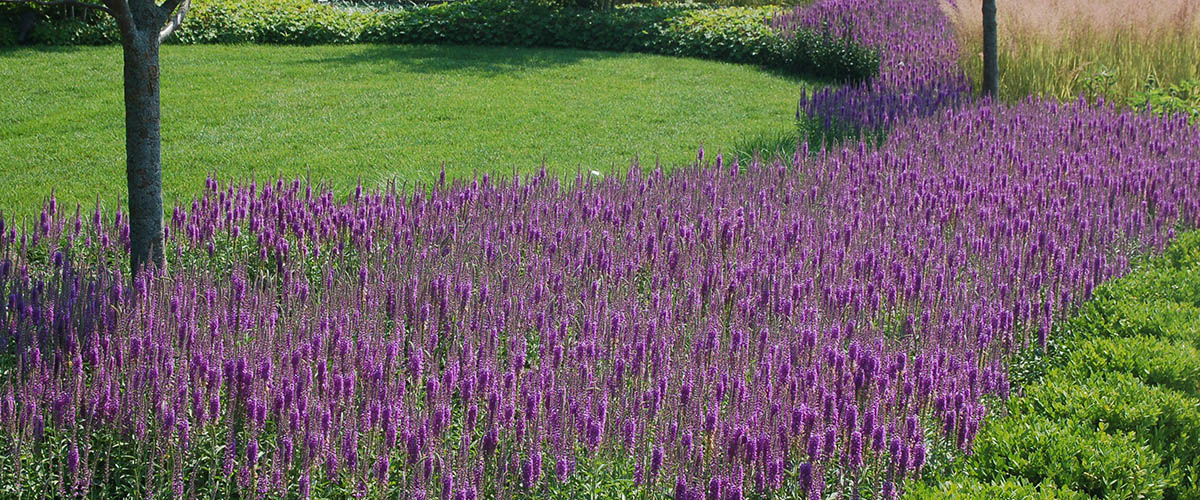
Evaluating Perennials for Chicagoland Gardens
Perennials in Focus is a plant evaluation program that examines new and underused plants for Chicagoland, the third largest metropolitan area in the country. A group of horticultural experts trials and evaluates plants at numerous locations across the region. Results help consumers, public gardens, growers, landscape designers, breeders, and other industry professionals make informed plant choices.
Evaluating Virginia Mountain Mint in Dense Urban Landscapes
Dense city gardens demand perennial plants that can cope with competition, compacted ground, irregular watering and limited sunlight. Pycnanthemum virginianum, commonly known as Virginia mountain mint, is being assessed for those conditions because it combines aromatic foliage, a long flowering period and strong value for pollinating insects.
The Perennials in Focus programme evaluates plants across Chicagoland gardens and seasons, recording practical traits such as flowering time, mature height, spread and visual performance. Those findings are especially useful for Australian gardeners, who can use them as a starting point while allowing for different rainfall patterns, heat levels, soils and local nursery availability.
| Performance factor | Likely value in dense planting | What to monitor in Australia |
|---|---|---|
| Flowering | Small white flowers with purple markings create a soft, extended display | Summer heat may shorten flowering where plants dry out |
| Height and spread | Upright stems provide structure without forming a bulky shrub | Check whether runners or rhizomes need containment |
| Pollinator appeal | Aromatic flowers attract bees and other beneficial insects | Avoid broad-spectrum insecticides near flowering plants |
| Soil tolerance | Adaptable, but strongest growth usually comes with consistent moisture | Improve compacted clay and prevent prolonged winter saturation |
| Maintenance | Stems can be left for winter interest and cut back in late winter | Remove excess growth if pathways or narrow borders become crowded |
Growth Habit And Urban Space
Virginia mountain mint is a herbaceous perennial that generally forms a clump of upright, branching stems. Its narrow leaves release a mint-like fragrance when crushed, while the flowers appear in tight clusters near the upper stems. The pale blooms are less visually dominant than those of coneflowers or salvias, yet they contribute a refined, textural effect in massed borders.
For a narrow verge, courtyard bed or apartment landscape, this restrained habit can be useful. It adds height without creating a heavy canopy, and the stems remain relatively open so neighbouring plants are still visible. In a dense planting, spacing is important: plants set too close together may produce a crowded centre with poor air movement and weaker lower foliage.
The species can spread gradually through underground stems, particularly in fertile, reliably moist soil. That is an advantage when establishing a broad pollinator planting, but it may require division or edging beside paths. In a Melbourne rain garden or a Sydney garden with a seasonally damp swale, it may expand more readily than in a dry, sandy suburban bed.
Flowering Performance And Seasonal Interest
The flowers are typically white to pale lavender, with purple spotting that guides insects towards the nectar and pollen. Blooming often occurs during the North American summer, with the precise timing influenced by winter conditions, spring temperatures and site exposure. Chicagoland trial observations can therefore indicate a useful flowering window, but Australian gardeners should expect timing to shift across climate zones.
In cooler southern regions, including Canberra and parts of Victoria, the plant may flower from late spring into summer after a period of steady growth. In warmer areas, it may begin earlier, although extreme heat can reduce the display if the root zone dries. A layer of organic mulch can moderate soil temperature, but it should be kept away from the crowns to reduce the risk of rot.
The flowers work particularly well with grasses, rudbeckias, asters, native daisies and other fine-textured perennials. For a garden designed around Australian seasonal rhythms, combine it with plants that flower at different times rather than expecting Virginia mountain mint to carry the entire summer display.
Soil, Water And Heat Tolerance
The plant performs best in soil that holds moisture without remaining waterlogged. This makes preparation crucial in urban sites, where rubble, building fill and compacted subsoil often create alternating periods of drought and saturation. Incorporating compost and loosening the planting zone can improve root development, while a raised or gently mounded bed may help on heavy clay.
Established plants may tolerate short dry periods, but they are unlikely to look their best when exposed to prolonged Australian heat without supplementary irrigation. In Adelaide or western Sydney, summer watering may need to be deeper and more consistent than in the Chicagoland conditions where the plant is commonly evaluated. Drip irrigation or a seeping hose is preferable to frequent shallow sprinkling.
Water should be directed to the root zone rather than sprayed over dense foliage. Good airflow, morning irrigation and sensible spacing help limit fungal problems during humid weather. Gardeners dealing with recurring insect pressure around urban plantings can also consult pest management advice before applying treatments that could affect bees and other flower-visiting insects.
Pollinators And Planting Design
Virginia mountain mint is valuable in ecological planting because its flower clusters provide accessible food for bees, hoverflies, butterflies and other insects. The aromatic foliage may also make it less attractive to browsing mammals than some softer-leaved perennials, although no plant should be treated as completely pest-proof. In Australian gardens, local pollinators may use the flowers differently from North American species, so performance should be observed rather than assumed.
A dense urban border benefits from repeating the plant in groups of three or more. Repetition creates visual continuity and makes its relatively small flower heads easier to appreciate. Place it behind low edging plants or among grasses, leaving enough room for air circulation and access for pruning.
Its stems can provide winter structure and seed-head interest, particularly in colder areas. In frost-prone districts, leave the spent stems standing until late winter, then cut them back before new shoots emerge. In warm climates, trim selectively if old stems collapse during wet weather or interfere with neighbouring plants.
Avoid treating every spreading perennial as a problem. A controlled colony can fill gaps, suppress bare soil and offer more continuous habitat than isolated specimens. Use root barriers or regular division where the plant approaches paving, drainage channels or the root zones of small shrubs.
Assessing Long-Term Value
A useful evaluation goes beyond the first season’s flowers. Record survival through hot weather, the time required to establish, the amount of irrigation needed and whether the plant keeps a tidy form after heavy rain. Also note how easily it combines with other perennials and whether its spread is manageable in the available space.
For growers and retailers, the plant’s market potential may depend on clear labelling. Australian customers are more familiar with culinary mint, so the distinction between Virginia mountain mint and aggressive edible mint should be explained. Nursery stock should be sold with information about mature size, moisture preferences, flowering time and the need for a sunny to lightly shaded position.
Home gardeners can make better decisions by keeping simple seasonal notes and comparing plants across several years. The garden trial notes provide a useful model for observing bloom period, plant form and site response rather than relying on a single photograph or catalogue description.
For public gardens and landscape professionals, the species is most promising where pollinator planting, texture and moderate height are priorities. It may be less suitable for exposed, permanently dry sites or beds that receive intense reflected heat from dark paving and masonry. Trialling a small group before wider installation can reveal how it responds to the specific microclimate.
Use Virginia mountain mint as a measured component of a resilient urban planting scheme: give it prepared soil, reliable moisture during establishment and enough space to develop. Record its flowering and spread through local seasons, then share those observations with nurseries, designers and community gardens to build a more useful Australian evidence base.
In the Garden
Evaluator gardens are located across the Chicagoland area, representing a range of growing conditions. Visit our retail and wholesale partners to find trialled perennials for your own garden.
Retail & Wholesale: Hinsdale Nurseries (Willowbrook, IL), Mariani Nurseries (Kenosha, WI & Garden Prairie, IL), Northwind Perennials (Burlington, WI), The Growing Place (Aurora, IL).
Wholesale Only: Hinsdale Nurseries (Plano, IL), Intrinsic Perennial Gardens (Hebron, IL).
Our Evaluation Program
The 2017–2020 evaluation cycle included Agastache 'Blue Boa', Allium senescens 'Blue Eddy', Amsonia ciliata var. filifolia 'Georgia Pancake', Astilbe 'Chocolate Shogun', Boltonia astroides 'James Crocket', Brunnera 'Alexander's Great', and Geranium cinereum 'Jolly Jewel Purple'. Completed evaluations include Amsonia 'Blue Ice' (2004–07).
On April 10, 2020, the program published snapshot profiles for Vernonia lettermanii 'Iron Butterfly', Stokesia laevis 'Elf', Stachys officinalis 'Pink Cotton Candy', Lobelia 'Monet Moment', Helleborus 'Winter Thrillers', Geum 'Mai Tai', Geranium soboliferum 'Butterfly Kisses', Gentiana x intermedia 'True Blue', Eurybia divaricata, Asparagus 'Purple Passion', and Agastache 'Bolero'.
Browse the full collection of snapshots organized alphabetically — from A–D, E–H, I–Q, and R–Z — to find detailed performance data on perennials trialled across Chicagoland.