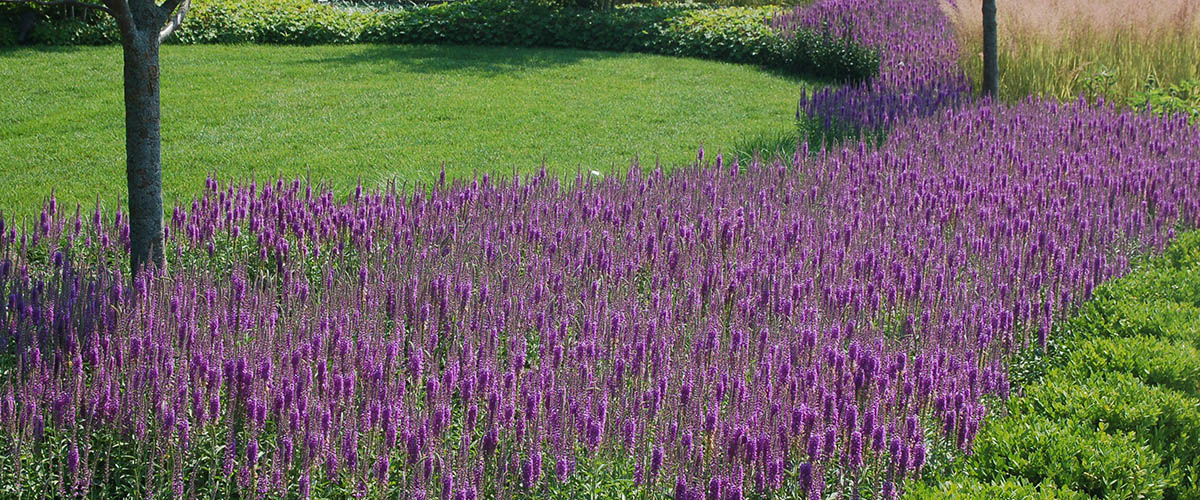
Evaluating Perennials for Chicagoland Gardens
Perennials in Focus is a plant evaluation program that examines new and underused plants for Chicagoland, the third largest metropolitan area in the country. A group of horticultural experts trials and evaluates plants at numerous locations across the region. Results help consumers, public gardens, growers, landscape designers, breeders, and other industry professionals make informed plant choices.
Spring Mowing Timing and Aster Performance in Restored Prairies
In restored prairies, a few weeks can change the balance between flowering perennials, cool-season weeds and emerging grasses. Spring mowing is often used to reduce last year’s thatch, interrupt annual weeds and keep young woody plants from taking hold. Yet the same operation can remove developing aster shoots before they have enough stored energy to recover.
Evaluating the impact of spring mowing timing on aster growth requires more than comparing a freshly cut plot with an unmown one. The useful question is how mowing date affects the whole seasonal performance of asters: emergence, stem number, plant height, spread, flowering period, flower colour, seed production and persistence. Findings from the Chicagoland region can guide gardeners and land managers elsewhere, provided local climates, species and regulations are taken seriously.
Why Mowing Date Matters
Asters are hardy herbaceous perennials, but their tolerance of cutting varies with species, plant age and weather. In the Chicago area, dormant crowns begin responding as soil warms in late winter and spring. A cut in early April may remove little active growth, while a cut in mid-May can shorten stems, reduce branching or force plants to use reserves for regrowth.
The effect is also linked to mowing height and equipment. A high cut that removes standing litter differs from a close pass that clips crowns and low foliage. Heavy machinery can compact wet prairie soil, damage shallow roots and create bare patches where opportunistic weeds germinate. Recording ground conditions alongside mowing dates helps separate the effect of timing from the effect of traffic.
Asters may respond in ways that are not immediately visible. Plants cut later can appear tidy and compact during summer, but flower later or produce fewer blooms. Early mowing may encourage a more open canopy, allowing light to reach basal leaves. These changes matter to native bees, butterflies and seed-eating birds, as well as to the visual quality of a restoration.
Building A Useful Trial
A robust trial should include several mowing windows rather than a simple cut-versus-no-cut comparison. For example, plots can be mown in early spring, mid-spring and late spring, with an unmown control retained for reference. Each treatment should be repeated across comparable areas, since slope, soil moisture and previous disturbance can strongly influence perennial growth.
The evaluation should begin before mowing. Map the number of aster plants in each plot, estimate their crown diameter and identify the main species present. Follow-up observations can record emergence date, surviving stems per plant, maximum height, spread, flowering date, number of flower heads and evidence of browsing or disease. Photographs taken from fixed positions add a practical visual record for growers and public gardens.
A longer trial is more informative than a single season. Spring weather in Chicagoland can shift from frozen soil to rapid warmth, and one unusually wet or dry year may distort the result. Repeating the work across at least two or three growing seasons reveals whether aster recovery is dependable or dependent on favourable weather.
This type of structured observation reflects the value of wind tolerance trials, where plant performance is judged through repeatable characteristics rather than appearance at one moment. The same discipline can make prairie maintenance decisions easier to compare across sites.
Measuring Growth Beyond Height
Height is a convenient measure, but it should not dominate the assessment. Aster plants may remain short after late mowing while still producing abundant flowers, or they may grow tall and leafy with limited reproductive output. Count flowering stems and flower heads, and note whether the display is concentrated in a brief flush or spread across several weeks.
Plant spread is equally important in a restored community. Asters that maintain a broad, healthy crown can compete with invasive or undesirable species more effectively than plants producing a few tall shoots. Record bare soil around each plant, nearby grass density and the presence of annual weeds. These observations show whether mowing is improving the plant’s position within the prairie or merely changing its shape.
Flowering time should be recorded carefully. A delayed bloom can be valuable where it extends late-season resources for pollinators, but it may be a disadvantage if frost arrives before buds open. In Australia, the equivalent assessment might involve late-winter or early-spring maintenance depending on location, because seasons are reversed and warmer regions can bring forward new growth.
Seed production deserves attention in mature restorations. If mowing removes flower heads or repeatedly interrupts flowering, the population may rely more heavily on existing crowns and less on natural recruitment. Marking a small sample of plants for seed-set observations can indicate whether a visually successful treatment is supporting long-term renewal.
Applying Findings in Australian Landscapes
Australian practitioners should avoid transferring a Chicago mowing calendar directly to Melbourne, Sydney or Adelaide. Local frost patterns, rainfall, soil types and native grass growth create different windows for dormant-season maintenance. A Melbourne site may retain cool, moist conditions into spring, while an Adelaide prairie-style planting can dry rapidly after winter rains. In Sydney, warmer winters may bring earlier growth and make a late cut more disruptive.
Water restrictions are another everyday reality. Councils and household gardeners may limit irrigation during dry periods, so a mowing treatment that performs well under moist Midwestern conditions may not recover reliably without supplemental water. Trial notes should include rainfall or irrigation, soil moisture and heat events, especially where asters are being tested in low-input gardens.
The Australian plant market also changes how results are used. Native plant nurseries, specialist perennial growers and council procurement teams often need dependable information about flowering period, mature size and maintenance demands before committing to a plant. A compact aster that flowers late and withstands limited irrigation may have value in an urban Melbourne border, while a taller selection could suit a public garden only if staking and access requirements are manageable.
Biosecurity obligations must be considered before introducing or spreading unfamiliar plant material. Requirements differ between states and territories, and some plants are restricted or treated as environmental weeds under local legislation. Before trialling a non-local aster or moving divisions between sites, consult the relevant state biosecurity rules, council policies and weed declarations. Good records of plant origin, disposal and seed movement protect both the trial and surrounding bushland.
Turning Results Into Maintenance Decisions
The best mowing date is rarely a universal calendar date. It is a practical window based on plant development. Managers can inspect the prairie for basal rosettes, active shoots and soil firmness before sending equipment through. If asters have begun rapid vertical growth, delaying the cut or raising the deck may prevent unnecessary damage.
Mowing can also be targeted rather than applied uniformly. Areas dominated by cool-season weeds may need earlier treatment, while patches containing valuable aster seedlings can be protected or cut at a higher setting. Creating unmown refuge strips gives insects shelter and allows managers to compare flowering and seed production without abandoning weed control across the whole site.
The results should be translated into a maintenance brief that staff can use. It might specify a preferred date range, minimum cutting height, acceptable soil conditions, equipment limits and follow-up inspections. A simple brief is especially useful when contractors maintain council reserves or public gardens and the person operating the mower is not involved in the original plant evaluation.
For home gardeners, the lesson is equally practical: do not automatically cut every perennial bed as soon as winter growth looks untidy. Leave selected stems or small sections standing until insects have emerged and new growth is easy to identify. Where a prairie-style garden contains asters, grasses and self-seeding annuals, staggered cutting can provide habitat while keeping paths and sightlines clear.
Interpreting Results Over Time
A strong result should show consistency across seasons and sites. If early mowing produces taller asters in one wet year but fewer flowers during drought, the recommendation needs to include that limitation. Separate observations by species and cultivar whenever possible, because a compact North American aster may respond differently from a tall, late-flowering type.
It is also useful to assess the wider plant community. Record grass cover, forb diversity, weed pressure, litter depth and signs of erosion. A mowing treatment that benefits asters but encourages bare soil and invasive seedlings may not be suitable for restoration goals. Conversely, a modest reduction in aster height could be acceptable if the treatment improves overall diversity and reduces woody encroachment.
Sharing results in a clear regional format helps others make informed choices. Include site conditions, mowing equipment, treatment dates, weather, plant measurements and photographs. For Australian readers, add the local climate zone, irrigation approach and state or territory context. That makes the evidence more transferable to gardens and reserves around Brisbane, Canberra, Perth or Hobart without pretending that every prairie responds identically.
Well-designed observations can guide growers, landscape professionals, retailers, public gardens and land managers towards maintenance that supports both appearance and ecological function. Trial spring mowing windows, measure aster performance through the full season, and publish the results so each new planting benefits from evidence rather than habit.
In the Garden
Evaluator gardens are located across the Chicagoland area, representing a range of growing conditions. Visit our retail and wholesale partners to find trialled perennials for your own garden.
Retail & Wholesale: Hinsdale Nurseries (Willowbrook, IL), Mariani Nurseries (Kenosha, WI & Garden Prairie, IL), Northwind Perennials (Burlington, WI), The Growing Place (Aurora, IL).
Wholesale Only: Hinsdale Nurseries (Plano, IL), Intrinsic Perennial Gardens (Hebron, IL).
Our Evaluation Program
The 2017–2020 evaluation cycle included Agastache 'Blue Boa', Allium senescens 'Blue Eddy', Amsonia ciliata var. filifolia 'Georgia Pancake', Astilbe 'Chocolate Shogun', Boltonia astroides 'James Crocket', Brunnera 'Alexander's Great', and Geranium cinereum 'Jolly Jewel Purple'. Completed evaluations include Amsonia 'Blue Ice' (2004–07).
On April 10, 2020, the program published snapshot profiles for Vernonia lettermanii 'Iron Butterfly', Stokesia laevis 'Elf', Stachys officinalis 'Pink Cotton Candy', Lobelia 'Monet Moment', Helleborus 'Winter Thrillers', Geum 'Mai Tai', Geranium soboliferum 'Butterfly Kisses', Gentiana x intermedia 'True Blue', Eurybia divaricata, Asparagus 'Purple Passion', and Agastache 'Bolero'.
Browse the full collection of snapshots organized alphabetically — from A–D, E–H, I–Q, and R–Z — to find detailed performance data on perennials trialled across Chicagoland.