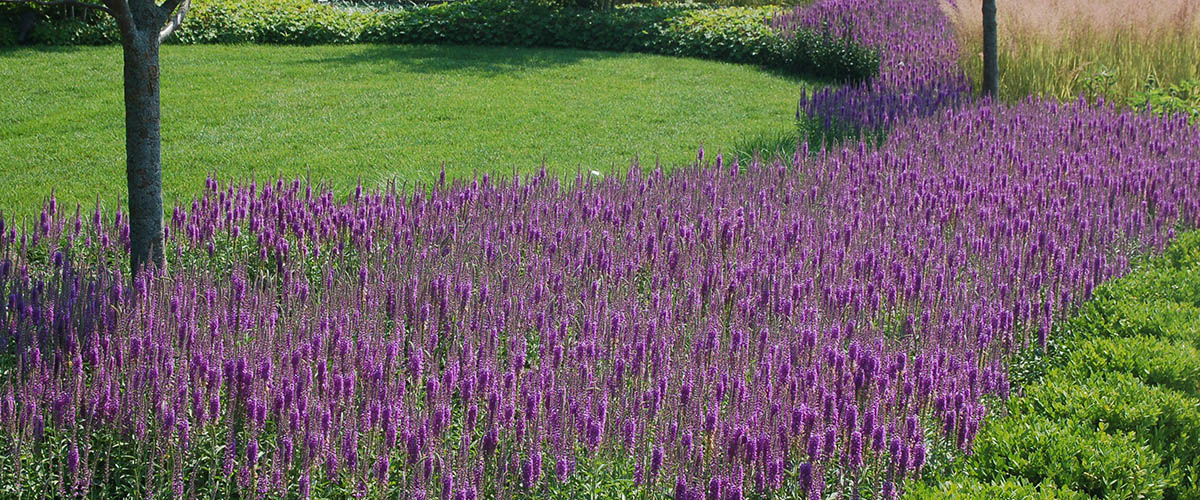
Evaluating Perennials for Chicagoland Gardens
Perennials in Focus is a plant evaluation program that examines new and underused plants for Chicagoland, the third largest metropolitan area in the country. A group of horticultural experts trials and evaluates plants at numerous locations across the region. Results help consumers, public gardens, growers, landscape designers, breeders, and other industry professionals make informed plant choices.
Evaluating Lobelia Siphilitica in Full Sun Urban Gardens
Lobelia siphilitica, commonly called great blue lobelia, is valued for its vivid blue flowers, upright form and late-summer contribution to perennial borders. In its native range across eastern North America, it often grows in moist meadows, woodland edges, stream margins and other soils that remain reasonably cool and damp.
For gardeners in Australia, the plant raises a useful question: can a moisture-loving perennial keep flowering when reflected heat, hot paving and dry winds turn a full-sun urban garden into a demanding environment? The answer depends on water availability, soil depth, night temperatures and how “full sun” is experienced at the planting site.
Regional trials in the Chicagoland area provide a disciplined way to assess these variables. Through the program’s regional evaluation mission, horticultural professionals record performance over multiple seasons rather than relying on a single nursery description or an attractive first flush of flowers.
Understanding The Plant’s Natural Preferences
Great blue lobelia is a clump-forming herbaceous perennial with narrow, toothed leaves and flower spikes that can reach roughly 60 to 120 centimetres, depending on cultivar and growing conditions. Its blue, violet-blue or occasionally white flowers are arranged along tall stems and are especially attractive to bees, butterflies and other flower-visiting insects.
The species usually performs best in full sun to light shade with fertile, humus-rich soil. Moisture is central to its performance. It can tolerate bright light when the root zone stays consistently hydrated, yet it is less suited to a hot, dry position where shallow soil heats rapidly and irrigation is irregular.
What Heat Tolerance Really Measures
Heat tolerance should be assessed as a combination of plant survival, visual quality and reproductive performance. A plant may remain alive through a hot spell while developing scorched foliage, shortened stems, fewer flower buds or a premature decline. For an ornamental perennial, survival alone is an incomplete result.
A useful assessment records daytime temperature, overnight recovery, soil moisture and exposure to reflected heat from brick, concrete or dark mulch. Urban heat islands can raise temperatures around buildings and paved courtyards well above those measured at a nearby open garden. Lobelia siphilitica that looks excellent in a spacious trial bed may behave differently beside a north-facing wall in Melbourne or Sydney.
Selecting A Suitable Full-Sun Position
In a Chicagoland trial, full sun generally means at least six hours of direct light during the growing season. The intensity of that light changes through the day, however. Morning sun with afternoon protection may be less stressful than six hours of western exposure beside a heat-reflecting wall.
For Australian gardens, an open bed with deep soil, organic matter and reliable irrigation is a stronger candidate than a narrow strip beside a driveway. In Brisbane, humidity and warm nights may increase fungal pressure, so spacing for airflow matters. In Perth, free-draining sandy soil can lose water quickly, making compost, mulch and efficient drip irrigation important for establishment.
Building A Reliable Trial
A fair heat-tolerance trial should compare several plants under the same conditions, preferably across more than one garden. Record planting date, plant size, soil type, irrigation method, hours of direct sun and any shade from nearby trees or structures. Replication helps distinguish a genuine plant response from an isolated failure caused by poor establishment or root damage.
During the season, assess flowering date, number and length of flower spikes, leaf colour, stem strength and recovery after heat events. Notes taken before, during and after a hot spell are more useful than a single rating in late summer. Photographing the same plants from the same angle can also reveal gradual thinning, lodging or loss of foliage.
Interpreting Water And Soil Responses
The main heat-related risk for great blue lobelia is often water stress rather than high temperature alone. A plant in moist loam may remain turgid and flower well through a warm week, while one in compacted or shallow soil can wilt repeatedly even at a lower air temperature. Repeated wilting reduces both appearance and future flowering potential.
Consistent moisture does not mean permanently saturated soil. Poor drainage can lead to weak roots, crown problems and winter losses. A productive trial therefore looks for the balance between moisture retention and drainage: soil that holds water around the root zone while allowing excess water to move away after heavy rain or irrigation.
Connecting Chicagoland Findings To Australia
Chicagoland results are valuable because they show how a perennial performs through warm summers, cold winters and changing rainfall patterns in a defined regional setting. They should be treated as evidence about the plant’s tendencies, rather than as a direct guarantee for every Australian garden. A Chicago summer and a Perth summer create very different combinations of heat, humidity, wind and soil moisture.
Australian gardeners can use the findings as a starting point, then match them to local conditions. Melbourne growers may find the plant manageable in deep, irrigated soil but less dependable during extended dry summers. In Sydney, afternoon shade or a position protected from radiant heat may preserve flower quality. Garden centres and specialist perennial nurseries may stock great blue lobelia seasonally, while mainstream retailers such as Bunnings are more likely to carry plants when demand and regional supply align.
Comparing Performance With Practical Alternatives
The strongest planting decision weighs flower colour and wildlife value against maintenance requirements. If a site cannot provide steady summer moisture, a drought-adapted blue-flowering perennial may deliver a more consistent result. That does not make Lobelia siphilitica a poor plant; it means the plant should be placed where its ecological preferences fit the garden.
The comparison below can guide trial planning for Australian conditions while keeping the original regional evaluation criteria in view. Ratings are relative expectations, not fixed scores, because cultivar, soil and irrigation can alter performance.
| Plant | Flowering Character | Full-Sun Heat Response | Moisture Requirement | Useful Australian Setting |
|---|---|---|---|---|
| Lobelia siphilitica | Tall spikes of blue flowers in summer | Fair with dependable moisture; stress likely in dry, reflected heat | Moderate to high | Irrigated borders, rain gardens and cool Melbourne or southern garden sites |
| Salvia nemorosa | Dense spikes in blue, purple or pink | Generally good once established | Low to moderate | Sunny cottage borders and water-conscious plantings |
| Agastache species | Upright flower spikes with aromatic foliage | Often very good in hot, well-drained sites | Low to moderate | Dry gardens in Adelaide, Perth and inland districts |
| Veronica species | Spikes in blue, violet or white | Variable, usually good with drainage | Moderate | Mixed perennial borders with seasonal irrigation |
For a professional or community trial, great blue lobelia is worth retaining where its tall form, intense flower colour and pollinator appeal fill a clear design role. Its performance should be reported alongside the care it required, including irrigation frequency and whether afternoon shade was present.
Track the plant through establishment, peak summer heat and the period after flowering. A strong result is a plant that maintains healthy foliage, produces usable flower stems and recovers promptly after stress without demanding daily attention. Those observations give Australian gardeners more practical information than a simple label describing the species as sun-loving.
Gardeners, growers and landscape professionals can contribute to better perennial choices by recording how plants behave in real urban conditions. Trial Lobelia siphilitica in a clearly described site, measure moisture and flowering over the season, and share observations with local horticultural networks and plant retailers so future recommendations reflect Australian gardens as well as formal regional trials.
In the Garden
Evaluator gardens are located across the Chicagoland area, representing a range of growing conditions. Visit our retail and wholesale partners to find trialled perennials for your own garden.
Retail & Wholesale: Hinsdale Nurseries (Willowbrook, IL), Mariani Nurseries (Kenosha, WI & Garden Prairie, IL), Northwind Perennials (Burlington, WI), The Growing Place (Aurora, IL).
Wholesale Only: Hinsdale Nurseries (Plano, IL), Intrinsic Perennial Gardens (Hebron, IL).
Our Evaluation Program
The 2017–2020 evaluation cycle included Agastache 'Blue Boa', Allium senescens 'Blue Eddy', Amsonia ciliata var. filifolia 'Georgia Pancake', Astilbe 'Chocolate Shogun', Boltonia astroides 'James Crocket', Brunnera 'Alexander's Great', and Geranium cinereum 'Jolly Jewel Purple'. Completed evaluations include Amsonia 'Blue Ice' (2004–07).
On April 10, 2020, the program published snapshot profiles for Vernonia lettermanii 'Iron Butterfly', Stokesia laevis 'Elf', Stachys officinalis 'Pink Cotton Candy', Lobelia 'Monet Moment', Helleborus 'Winter Thrillers', Geum 'Mai Tai', Geranium soboliferum 'Butterfly Kisses', Gentiana x intermedia 'True Blue', Eurybia divaricata, Asparagus 'Purple Passion', and Agastache 'Bolero'.
Browse the full collection of snapshots organized alphabetically — from A–D, E–H, I–Q, and R–Z — to find detailed performance data on perennials trialled across Chicagoland.