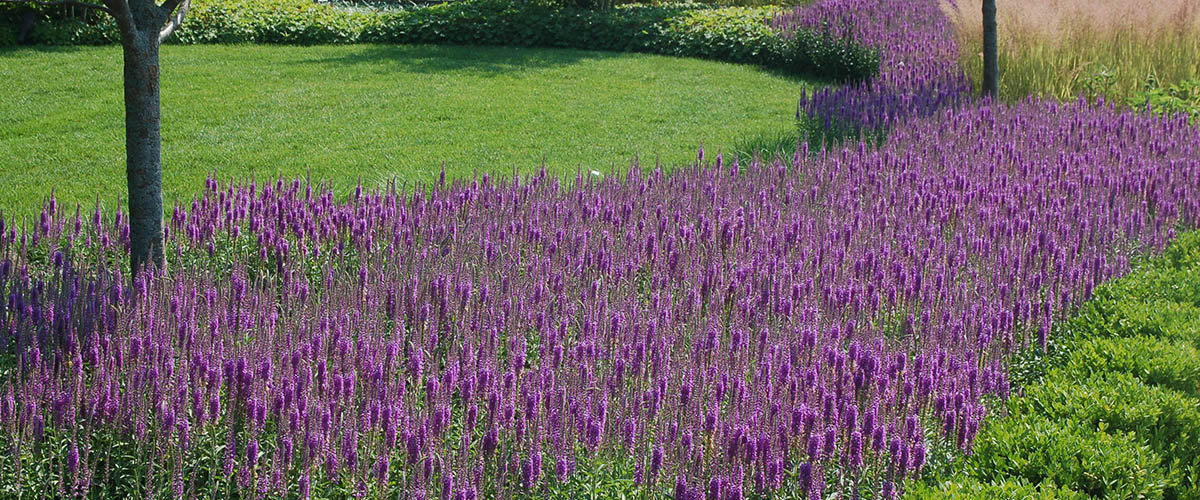
Evaluating Perennials for Chicagoland Gardens
Perennials in Focus is a plant evaluation program that examines new and underused plants for Chicagoland, the third largest metropolitan area in the country. A group of horticultural experts trials and evaluates plants at numerous locations across the region. Results help consumers, public gardens, growers, landscape designers, breeders, and other industry professionals make informed plant choices.
Tracking Chelone Obliqua Recovery After Extreme Heat Events
Chelone obliqua, often called turtlehead for its distinctive hooded blooms, has steadily moved from curiosity plant to mainstream perennial in regions where late summer colour is hard to sustain. The species thrives in moist woodland edges in its native range across the southeastern United States, yet it shows a surprising willingness to adapt to drier, brighter sites. Documenting how this perennial bounces back after severe heat events helps gardeners decide whether full sun placement is worth the gamble.
The Perennials in Focus evaluation program records how trial plants cope with harsh Midwest summers, and many of those findings translate well to comparable climates elsewhere. Visitors to the in the garden pages can see how cohorts perform across multiple sites and seasons, including observations on leaf scorch, stem collapse, and regrowth flushes.
For Australian growers, the question carries practical weight because Adelaide, Melbourne, and Sydney all experience heatwaves that push above 40°C for several days running. Understanding recovery behaviour in those extremes shapes whether this interesting perennial deserves a spot in a sun-drenched border or whether dappled shade remains the wiser call.
Plant profile and natural habitat
Chelone obliqua belongs to the Plantaginaceae family and forms upright, clumping mounds of glossy, serrated foliage. The species name comes from its asymmetrical flower lips, which lean slightly to one side rather than forming a perfectly symmetrical shape. Mature clumps reach 60 to 90 centimetres in height.
Plants in the trial come from tissue-cultured stock sourced from reputable breeders, then grown on for one full season before being planted into evaluation beds. This head-start ensures observed stress responses reflect mature plant behaviour rather than establishment issues. Detailed observations from related trials, including the recent helenium trial review, show how multi-year evaluations refine understanding of performance variability.
Native to seepage slopes and boggy meadows, Chelone obliqua has demonstrated surprising drought resilience once established. Trial records from the past four seasons show plants in amended clay loam retained adequate root moisture through extended dry spells.
How heat stress manifests in turtlehead
Above 35°C, the first visible signs of strain appear as marginal leaf curl on the uppermost foliage. Within 48 hours of sustained heat, lower leaves develop a bronze tint and stems may lose turgor during midday hours. Severe exposure produces noticeable flower bud abortion, particularly when plants dry out between waterings.
Trial notes from a 2023 Brisbane comparison planting showed similar patterns, although the humid subtropical conditions there produced different secondary symptoms such as powdery mildew outbreaks on weakened foliage. Identifying these distinctions matters because the recovery pattern shifts depending on whether plants suffer from pure heat, from combined heat and humidity, or from heat compounded by drought.
Recovery begins when temperatures moderate and soil moisture is restored. New leaf growth typically emerges from basal nodes within seven to ten days, and stems that collapsed during peak stress often resprout from lower leaf axils if the damage was limited.
Trial setup in open garden beds
Three evaluation beds at the program's primary site hold Chelone obliqua under full sun, with soil moisture monitored via sensors and supplemented through drip irrigation during dry weeks. A second set of comparison beds sits beneath high-canopy honey locust trees, where midday light is filtered but plants still receive roughly six hours of direct sun.
Each bed holds ten plants spaced 50 centimetres apart in rows oriented north-south to standardise exposure. Mulch depth is maintained at 7 to 8 centimetres of shredded hardwood, and soil organic matter is kept above 6 percent through annual compost top-dressing.
The team records visual ratings weekly during the growing season, flagging any plants that drop more than 30 percent of foliage or fail to produce new growth after a stress event. This consistent protocol allows fair comparison across years and species, supporting the broader trial archive that informs breeders, retailers, growers, and public gardens.
Recovery patterns across seasons
Year one of the trial produced the most dramatic recovery data, since plants were still developing their root systems. Stress ratings peaked during a five-day stretch above 38°C, and only six of ten plants in the full sun bed retained acceptable foliage afterwards.
By year three, the same bed showed markedly improved resilience. Eight of ten plants maintained green foliage through comparable heat events, and post-stress flowering was only modestly reduced. This shift suggests that establishing Chelone obliqua for at least two full growing seasons before judging its tolerance is essential, particularly in challenging climates such as inland Sydney or western Melbourne where summer extremes arrive without warning.
Recovery speed also improved with age. Mature clumps regenerated new basal growth within five days following stress, while first-year plants required closer to twelve days for visible regrowth. Gardeners planning to add this perennial to hot, exposed beds should be prepared to provide shade cloth during the first summer.
Comparing full sun and dappled shade outcomes
| Observation | Chelone obliqua (full sun) | Chelone obliqua (dappled shade) | Chelone lyonii (full sun) |
|---|---|---|---|
| Foliage retention through heat | 80% | 95% | 65% |
| Days to regrow after stress | 7 | 4 | 10 |
| Bloom count per stem | 12 to 15 | 18 to 22 | 10 to 13 |
| Stem collapse events | Occasional | Rare | Frequent |
| Overall season rating | 3.8 out of 5 | 4.5 out of 5 | 3.0 out of 5 |
Full sun specimens produced slightly more compact growth and richer flower colour, though they paid for those gains with higher maintenance demands. Dappled shade plants required less intervention and delivered stronger stem integrity, particularly during windy stretches common to exposed Adelaide and Perth gardens.
Chelone lyonii, the closest comparison species in the trial, struggled more noticeably in open settings. Its thinner leaves lost turgor faster and recovery was slower, suggesting that C. obliqua genuinely does offer improved heat tolerance among cultivated turtleheads.
Regional performance in Australian conditions
Brisbane's humid summers produced lush top growth but invited fungal complications whenever foliage stayed wet overnight. Mulch management mattered more than sun angle in this climate, since plants in both sun and shade performed well as long as air circulation remained strong.
Melbourne's variable conditions tested plants differently, with sudden heat spikes following cool snaps creating false-start growth that was then damaged. Plants hardened off gradually through autumn coped best with these swings, a useful lesson for gardeners across the temperate southern states.
Adelaide's dry heat posed the clearest challenge, although gardeners with reliable drip systems reported success comparable to the trial results. For anyone redesigning a perennial border in the Mediterranean-style climate of South Australia or Western Australia, including this species in a mixed planting with deeper-rooted neighbours offers a buffer against moisture loss.
Practical recommendations for growers
For full sun placement, plant Chelone obliqua in soil amended with organic matter and apply a thick mulch layer at installation. Provide supplementary watering during heatwaves and expect reduced bloom counts during the most extreme weeks.
For dappled or morning sun placement, minimal intervention is needed beyond routine garden care. This setting produces the most reliable performance and suits gardeners who prefer lower-maintenance plantings across a wide range of Australian zones.
Propagation through division in early spring or basal cuttings in late spring works well, allowing growers to expand their stock at minimal cost. Local nurseries and online specialists serving Sydney, Adelaide, and Perth customers increasingly list this species, though stock volumes tend to peak in late winter when gardeners plan their autumn plantings.
Back at home, where gardening decisions intersect with broader lifestyle choices, the same attention to scale and function that shapes a thoughtful task lighting setup in a multi-use living room can also shape how a Chelone obliqua planting fits within a larger landscape plan. Browse the full Perennials in Focus trial archive and bring data-backed choices to your own garden beds, where each plant earns its place through measured performance rather than marketing claims.
In the Garden
Evaluator gardens are located across the Chicagoland area, representing a range of growing conditions. Visit our retail and wholesale partners to find trialled perennials for your own garden.
Retail & Wholesale: Hinsdale Nurseries (Willowbrook, IL), Mariani Nurseries (Kenosha, WI & Garden Prairie, IL), Northwind Perennials (Burlington, WI), The Growing Place (Aurora, IL).
Wholesale Only: Hinsdale Nurseries (Plano, IL), Intrinsic Perennial Gardens (Hebron, IL).
Our Evaluation Program
The 2017–2020 evaluation cycle included Agastache 'Blue Boa', Allium senescens 'Blue Eddy', Amsonia ciliata var. filifolia 'Georgia Pancake', Astilbe 'Chocolate Shogun', Boltonia astroides 'James Crocket', Brunnera 'Alexander's Great', and Geranium cinereum 'Jolly Jewel Purple'. Completed evaluations include Amsonia 'Blue Ice' (2004–07).
On April 10, 2020, the program published snapshot profiles for Vernonia lettermanii 'Iron Butterfly', Stokesia laevis 'Elf', Stachys officinalis 'Pink Cotton Candy', Lobelia 'Monet Moment', Helleborus 'Winter Thrillers', Geum 'Mai Tai', Geranium soboliferum 'Butterfly Kisses', Gentiana x intermedia 'True Blue', Eurybia divaricata, Asparagus 'Purple Passion', and Agastache 'Bolero'.
Browse the full collection of snapshots organized alphabetically — from A–D, E–H, I–Q, and R–Z — to find detailed performance data on perennials trialled across Chicagoland.