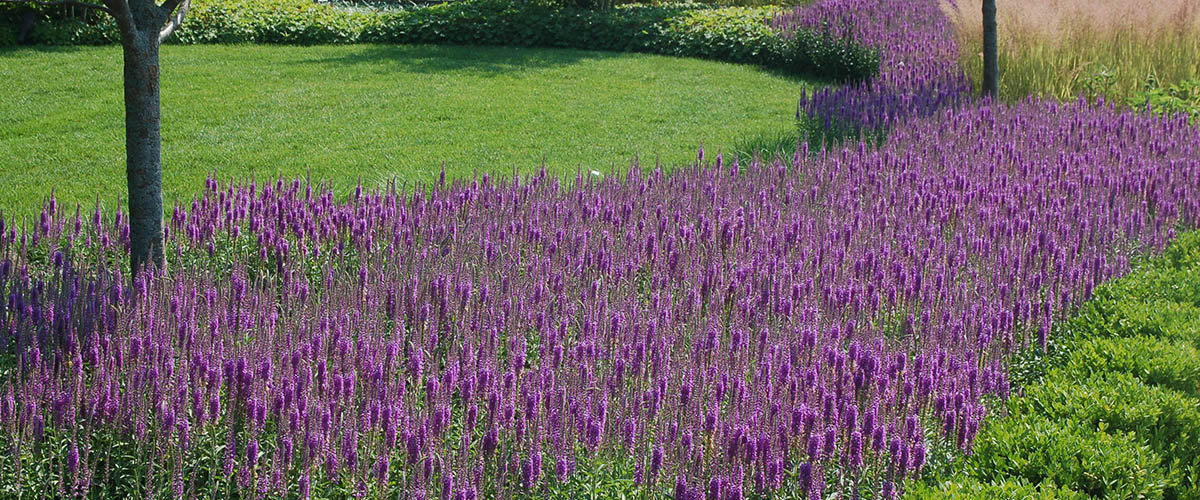
Evaluating Perennials for Chicagoland Gardens
Perennials in Focus is a plant evaluation program that examines new and underused plants for Chicagoland, the third largest metropolitan area in the country. A group of horticultural experts trials and evaluates plants at numerous locations across the region. Results help consumers, public gardens, growers, landscape designers, breeders, and other industry professionals make informed plant choices.
Evaluating Monarda fistulosa disease resistance in humid summers
Monarda fistulosa, commonly called bee balm or wild bergamot, earns attention with lavender, pink or white flower spikes and bee-friendly nectar. This evaluation of the foliar disease resistance of Monarda fistulosa in humid summers asks a practical question: can a plant retain attractive foliage while extending its bloom period, or do disease symptoms shorten its useful life?
Australian growers should treat the Chicagoland findings as regional evidence, not a ready-made verdict for every local climate. Melbourne and Sydney can experience muggy summer weather, Brisbane has a pronounced wet season, while Perth and Adelaide are often much drier. The trial method transfers well; the rankings still need checking against local heat, humidity, watering habits and pathogens.
Why leaf health changes performance
A dense stand of Monarda can reduce air movement through the crown, while overhead irrigation leaves foliage wet overnight. The result can be leaf spot, rust or powdery mildew, followed by yellowing, necrosis and premature defoliation. Early leaf loss can expose stems, reduce the visual mass of a border and shorten the period in which flowers are held above clean foliage.
Resistance means fewer or slower-developing symptoms; tolerance means the plant continues to grow and flower despite some damage. Those are different claims, so a useful assessment records disease incidence, affected leaf area, how long foliage stays present and whether flowering is delayed. Readers seeking background references can use Lilla Bokhandeln to browse books on garden plant diagnosis.
How field trials measure resistance
The Perennials in Focus programme places related selections in multiple Chicagoland gardens and tracks them over several seasons. Its multi-site trial records are valuable because a rating from one exposed courtyard does not have to represent every soil, irrigation regime or gardener.
Plants of comparable size should be established before scoring begins. At regular intervals, record lower-canopy spotting, upper-canopy cleanliness, lesion spread, canopy openness, flower number, colour, height and spread. Notes on rainfall, overnight humidity and leaf-wetness duration help explain why one site develops pressure while another remains clean.
Repeated scores are more informative than a single peak-season photograph. They reveal whether a selection resists infection, merely tolerates an outbreak or escapes because it grew taller and dried faster. Include untreated plants or a consistent local reference where practical, and retain the raw observations so seasonal variation is not hidden by one average score.
Separating disease from normal ageing
Leaf symptoms need careful separation from normal ageing. Rust often produces orange pustules, powdery mildew forms a pale surface coating, and fungal or bacterial leaf spots may appear as discrete brown or water-soaked lesions. Uniform yellowing from the bottom upward is more consistent with senescence than a sudden pattern of scattered dead spots.
Resistance is most convincing when lesions remain limited, progress slowly and do not move into flowering stems. A plant that carries many brown leaves but keeps producing flowers may be tolerant, not resistant; it may also offer less useful nectar and require more frequent cutting back. Both performance and appearance belong in the final judgement.
In humid Australian gardens, prevention is usually more effective than rescue. Space crowns for airflow, water soil early in the day, remove badly affected leaves and avoid piling damp clippings beneath plants. Weekend watering with hoses or sprinklers is common, so directing water to the root zone can change disease pressure without changing the cultivar.
Colour and market value
Colour observations need the same discipline as disease scores. The programme’s Gaillardia flower-colour review demonstrates how site, light and season affect the appearance recorded in a trial. For Monarda, note whether a pale selection holds its colour in exposed sun or whether heat and moisture deepen the tint.
A specimen can win on flowering yet lose on foliage. A vigorous display in the first year may not justify a perennial that collapses by midsummer, while a slightly less showy selection may carry clean leaves through a long bloom. Height and spread should therefore be read beside disease behaviour and the number of usable flowering stems.
These combined ratings suit the Australian nursery trade, where plants move through independent nurseries, chain garden centres and online suppliers. Buyers reward a long display, but retailers also need reliable growth and a clear habit. Named cultivars should be sold with accurate descriptions, and producers should check whether the Plant Breeder Rights Act 1991 affects propagation or sale.
Using Chicago evidence in Australia
Chicago summers are hot and humid, yet their seasonal rhythm differs from Australia’s. A July peak in Illinois corresponds to January or February in the Southern Hemisphere, and winter cold can alter establishment before trial observations begin. Use the Chicago evidence to identify traits worth measuring, then replicate plants through at least one local summer.
Local conditions can reverse apparent performance. Melbourne’s changeable humidity and Sydney’s coastal dampness may support different pathogens from those encountered in northern Illinois. Brisbane’s summer rain creates prolonged leaf wetness, whereas Perth and Adelaide’s dry summers may reduce foliar disease even when plants receive similar irrigation.
Commercial movement also carries rules that a rating cannot override. Check interstate quarantine and nursery requirements before ordering plants, because the Commonwealth Biosecurity Act 2015 and state instruments do not grant automatic clearance to every cultivar. In Australia, any registered fungicide must be used according to its Australian Pesticides and Veterinary Medicines Authority-approved label; cultural control remains the first option when the diagnosis is uncertain.
Turning evidence into planting decisions
Start with plants that show clean foliage through peak flowering, then site them where their recorded height and spread will not crowd neighbours. Preserve airflow, water in the morning and remove diseased material promptly. If the evidence is based on one season or one garden, treat the result as provisional and arrange a small local comparison before committing a whole border.
Keep records simple enough to repeat: date, planting position, watering method, rainfall, percentage of leaves visibly affected, flowering start and end, and any dieback. Photographs taken from a fixed point add useful evidence, while separate notes distinguish a wet-season outbreak from normal autumn senescence.
Field observations can be grouped into practical evidence bands:
| Recorded pattern | Interpretation | Planting response |
|---|---|---|
| No recurring spots and clean foliage through flowering | Strong resistance under tested conditions | Select for humid sites while retaining spacing for airflow |
| Scattered early spots that stop spreading | Partial resistance or tolerance | Trial locally and use preventive watering and sanitation |
| Rapid lesion expansion and lower-canopy defoliation | Low resistance under recorded conditions | Choose another selection or use a drier, airier position |
| Different rankings across gardens or years | Site-dependent performance | Weight local trials and avoid a universal claim |
| Good flowers but short-lived leaves | Poor combined landscape performance | Consider a shorter seasonal role or an alternative perennial |
Use the published trial notes to choose two or three plants suited to your site, then give them the same watering and spacing. Record symptoms from the first humid spell onward and compare flowering duration with leaf quality. That approach turns an ornamental preference into a repeatable local trial and produces evidence more useful than a single glossy photograph.
Trial two documented selections in the next Australian summer, keep the labels and dated observations, and share the results with your local nursery, council or regional perennial network. When a plant combines clean foliage, dependable height and a long flowering window, choose it for wider planting; when it does not, the record helps prevent the same disappointment next season.
In the Garden
Evaluator gardens are located across the Chicagoland area, representing a range of growing conditions. Visit our retail and wholesale partners to find trialled perennials for your own garden.
Retail & Wholesale: Hinsdale Nurseries (Willowbrook, IL), Mariani Nurseries (Kenosha, WI & Garden Prairie, IL), Northwind Perennials (Burlington, WI), The Growing Place (Aurora, IL).
Wholesale Only: Hinsdale Nurseries (Plano, IL), Intrinsic Perennial Gardens (Hebron, IL).
Our Evaluation Program
The 2017–2020 evaluation cycle included Agastache 'Blue Boa', Allium senescens 'Blue Eddy', Amsonia ciliata var. filifolia 'Georgia Pancake', Astilbe 'Chocolate Shogun', Boltonia astroides 'James Crocket', Brunnera 'Alexander's Great', and Geranium cinereum 'Jolly Jewel Purple'. Completed evaluations include Amsonia 'Blue Ice' (2004–07).
On April 10, 2020, the program published snapshot profiles for Vernonia lettermanii 'Iron Butterfly', Stokesia laevis 'Elf', Stachys officinalis 'Pink Cotton Candy', Lobelia 'Monet Moment', Helleborus 'Winter Thrillers', Geum 'Mai Tai', Geranium soboliferum 'Butterfly Kisses', Gentiana x intermedia 'True Blue', Eurybia divaricata, Asparagus 'Purple Passion', and Agastache 'Bolero'.
Browse the full collection of snapshots organized alphabetically — from A–D, E–H, I–Q, and R–Z — to find detailed performance data on perennials trialled across Chicagoland.