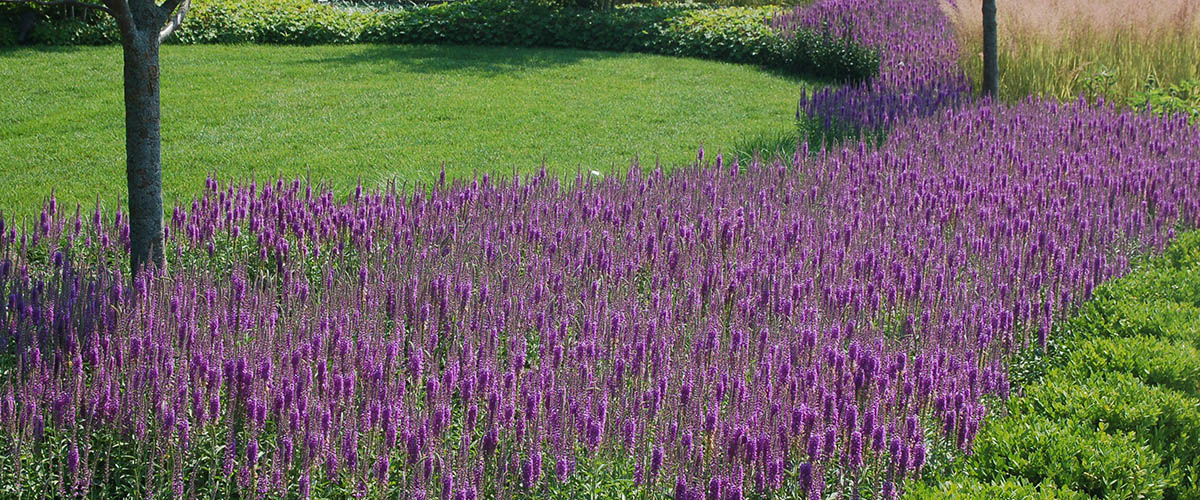
Evaluating Perennials for Chicagoland Gardens
Perennials in Focus is a plant evaluation program that examines new and underused plants for Chicagoland, the third largest metropolitan area in the country. A group of horticultural experts trials and evaluates plants at numerous locations across the region. Results help consumers, public gardens, growers, landscape designers, breeders, and other industry professionals make informed plant choices.
Evaluating Achillea Cultivars for Deer-Resistant Meadow Planting
Yarrow, or Achillea millefolium and its close garden selections, is often recommended for sunny, low-maintenance planting. Its aromatic foliage, tough stems and flat flower heads make it a natural candidate for open meadows, cottage-style borders and wildlife-friendly landscapes. Yet “deer resistant” is a relative term, especially when plant availability, weather and browsing pressure change from site to site.
A useful evaluation needs to compare cultivars under the same conditions rather than relying only on nursery descriptions. Flower colour, plant height, foliage density, flowering duration and ability to recover after browsing all matter. A cultivar that is ignored during a lush summer may become vulnerable during drought or winter scarcity.
The Perennials in Focus approach is particularly relevant because it records plant performance over multiple seasons and locations in the Chicagoland region. Its regional trials can help growers and designers understand how new or underused perennials behave, while Australian gardeners should interpret those findings through their own climate, soils and pest pressures.
For gardeners in Melbourne, Canberra or the Adelaide Hills, yarrow may face hot, dry summers and irregular rainfall rather than Chicagoland’s cold winter conditions. In Sydney and Brisbane, humidity and heavier summer growth can alter flowering and foliage quality. The deer response may remain useful as a guide, but local observation is essential.
Why cultivar-level testing matters
Deer do not treat every yarrow selection identically. Differences in leaf texture, essential oils, plant maturity and flower production may influence whether a clump is sampled. Young plants are usually more vulnerable than established specimens, and freshly planted crowns can be browsed before their characteristic scent and density develop.
A trial should therefore include repeated observations, not a single score. Record visible browsing, stripped stems, grazed flower heads and recovery after damage. It is also valuable to compare each Achillea cultivar with known palatable and unpalatable plants growing nearby. Deer may ignore yarrow when other food is abundant, then browse it when pasture, garden foliage or roadside weeds become scarce.
The evaluation should distinguish deer damage from rabbit, wallaby or insect feeding. In parts of Australia, kangaroos and wallabies may create browsing patterns that resemble deer damage, while rabbits often target low young growth. Correct identification protects the reliability of the cultivar assessment.
Cultivars worth including in an open-meadow trial
A practical planting could include ‘Moonshine’, ‘Paprika’, ‘Cerise Queen’, ‘Terracotta’, ‘Strawberry Seduction’, ‘Saucy Seduction’ and ‘Summer Pastels’. These selections offer variation in flower colour and form, from lemon yellow and brick red to rose, salmon and soft pastel shades. Including the straight species, where available, gives the trial a useful baseline.
‘Moonshine’ is commonly recognised for its grey-green foliage and yellow flower heads, while ‘Paprika’ is valued for strong red tones that soften as the flowers age. ‘Cerise Queen’ provides saturated pink colour, and ‘Terracotta’ can shift through warm orange and rust shades. Colour stability matters in a meadow because faded heads may remain decorative even after peak flowering.
Compact selections deserve a place beside taller cultivars. Shorter plants may receive less wind damage and fit residential verges or narrow beds, while tall forms can compete more effectively with grasses. However, a low-growing plant may be easier for deer or other herbivores to reach, so height should be assessed alongside browsing evidence rather than treated as a protection.
How to score deer resistance consistently
Use a simple rating system at fixed intervals, such as early growth, first flowering, peak summer and late season. A score can combine the percentage of stems browsed, the severity of damage and the speed of regrowth. Photographing marked plants from the same angle makes comparisons more dependable than memory-based notes.
Keep planting conditions as even as possible. Randomise cultivars within the meadow, repeat each selection in several positions and avoid placing one cultivar beside a fence or sheltered corner where animals concentrate. Plants should receive similar irrigation during establishment, since drought-stressed yarrow may show different attractiveness and recovery from well-watered plants.
| Cultivar or group | Useful trait to observe | Meadow evaluation point | Australian relevance |
|---|---|---|---|
| ‘Moonshine’ | Grey foliage and yellow flowers | Does dense foliage deter repeated browsing? | Strong visual contrast in dry-style gardens |
| ‘Paprika’ | Red flower heads that fade attractively | Are flowering stems grazed before peak colour? | Suits warm-toned borders in Adelaide or Perth |
| ‘Cerise Queen’ | Bright pink blooms | Does heavy flowering affect stem strength? | Useful for pollinator-focused displays |
| ‘Terracotta’ | Orange, copper and rust shades | Does colour persist after minor damage? | Complements native grasses and gravel planting |
| ‘Strawberry Seduction’ | Compact habit and vivid flowers | Is lower growth more exposed to browsing? | Suitable for smaller suburban gardens |
| Species-type yarrow | Broad genetic reference | How does it recover compared with named forms? | Helpful where plant supply varies between nurseries |
Reading results across seasons and sites
A cultivar that performs well in a Chicagoland trial may behave differently in Australia because day length, summer rainfall and soil temperatures vary. Chicagoland’s cold winters can test crown survival and dormancy, whereas an Australian trial may reveal performance under heat, dry winds or prolonged winter wet. Neither setting automatically predicts the other.
For Australian growers, it is useful to repeat observations across at least one dry summer and one wetter season. Melbourne’s cool changes may favour prolonged flowering, while inland sites can bring intense heat and rapid moisture loss. In Sydney, fungal problems or rank growth may influence plant density, and in Perth sandy soils may require a different establishment strategy.
The strongest selections will usually combine low browsing, upright stems, good crown survival and an attractive post-flowering structure. Seed heads can provide texture and food for some small birds, although gardeners should check whether a particular cultivar spreads freely or remains well behaved in their conditions.
Managing the meadow around yarrow
Deer resistance is partly a community effect. A mixed meadow containing aromatic herbs, grasses and other less-palatable perennials may suffer less concentrated damage than a bed planted with one preferred species. Yarrow can be combined with ornamental grasses, salvias, catmint, lavender and selected Australian plants, provided each companion suits the soil and moisture regime.
Establishment is the most sensitive stage. Water plants thoroughly while roots develop, suppress competing weeds and use temporary fencing where browsing pressure is high. A barrier may be more effective than repellents during the first growing season, particularly on rural properties or blocks adjoining remnant vegetation.
Avoid assuming that a dry-looking meadow needs no maintenance. Remove weak stems, divide congested clumps when necessary and monitor irrigation so plants do not remain waterlogged. In Australia, local councils and retail nurseries increasingly promote waterwise and pollinator-friendly planting, but plant labels still vary in how clearly they describe mature spread, climate tolerance and browsing resistance.
Turning trial observations into plant choices
The most useful result is not a universal winner but a clear description of where each cultivar fits. A tall yarrow with durable stems may suit a broad public planting, while a compact selection may perform better in a home garden where flower colour matters more than meadow height. Retailers can use the findings to stock selections with realistic descriptions rather than broad claims of complete deer protection.
Garden designers should also report what happened after damage. A plant that loses several stems but flowers again within weeks may be more valuable than one that suffers little initial browsing but fails to recover. Record bloom duration, spread, seed-head appeal and compatibility with grasses alongside the deer score.
Home gardeners and professionals can compare regional evidence through the Perennials in Focus trials before choosing plants, then validate promising cultivars in small local plantings. That approach respects the difference between tested performance and guaranteed behaviour.
Choose several Achillea cultivars, label them clearly and observe them through establishment, flowering and dormancy. Share reliable notes with local growers, garden groups and nurseries so future meadow plantings are based on repeated evidence rather than a single catalogue claim. Over time, this practical record can identify the yarrows that provide dependable colour, structure and recovery under real Australian browsing pressure.
In the Garden
Evaluator gardens are located across the Chicagoland area, representing a range of growing conditions. Visit our retail and wholesale partners to find trialled perennials for your own garden.
Retail & Wholesale: Hinsdale Nurseries (Willowbrook, IL), Mariani Nurseries (Kenosha, WI & Garden Prairie, IL), Northwind Perennials (Burlington, WI), The Growing Place (Aurora, IL).
Wholesale Only: Hinsdale Nurseries (Plano, IL), Intrinsic Perennial Gardens (Hebron, IL).
Our Evaluation Program
The 2017–2020 evaluation cycle included Agastache 'Blue Boa', Allium senescens 'Blue Eddy', Amsonia ciliata var. filifolia 'Georgia Pancake', Astilbe 'Chocolate Shogun', Boltonia astroides 'James Crocket', Brunnera 'Alexander's Great', and Geranium cinereum 'Jolly Jewel Purple'. Completed evaluations include Amsonia 'Blue Ice' (2004–07).
On April 10, 2020, the program published snapshot profiles for Vernonia lettermanii 'Iron Butterfly', Stokesia laevis 'Elf', Stachys officinalis 'Pink Cotton Candy', Lobelia 'Monet Moment', Helleborus 'Winter Thrillers', Geum 'Mai Tai', Geranium soboliferum 'Butterfly Kisses', Gentiana x intermedia 'True Blue', Eurybia divaricata, Asparagus 'Purple Passion', and Agastache 'Bolero'.
Browse the full collection of snapshots organized alphabetically — from A–D, E–H, I–Q, and R–Z — to find detailed performance data on perennials trialled across Chicagoland.