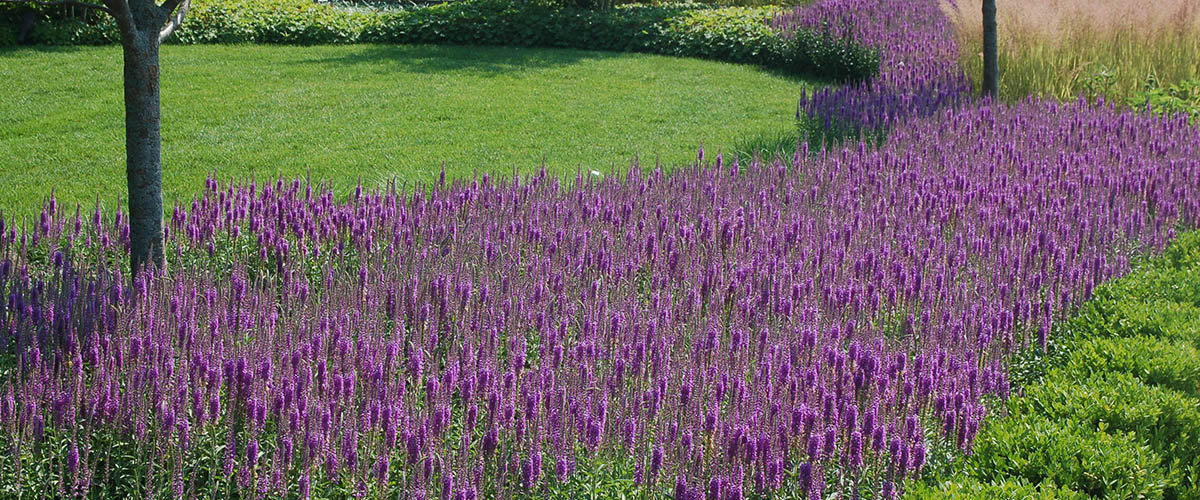
Evaluating Perennials for Chicagoland Gardens
Perennials in Focus is a plant evaluation program that examines new and underused plants for Chicagoland, the third largest metropolitan area in the country. A group of horticultural experts trials and evaluates plants at numerous locations across the region. Results help consumers, public gardens, growers, landscape designers, breeders, and other industry professionals make informed plant choices.
Deadheading Shasta daisies for a reliable second flush
Leucanthemum superbum, sold across Australia as the Shasta daisy, delivers a generous run of white, yellow-centred flowers and asks very little in return. Most gardeners meet it with the same routine: when a head fades, it gets snipped off and dropped in the compost. That tidy habit has a hidden consequence, because a spent flower is not a passive leftover. It is a seed pod in the making, and everything the plant does next depends on whether you take it away. Learn more about Perennialsinfocus.com.
Removing fading heads can push the plant toward a second round of buds, and that possibility is why the question keeps surfacing in plant evaluation work. A repeat display is worth a great deal in an Australian climate, where the first flush can arrive late, frost can shorten the main show, and a hard dry summer can end flowering altogether. A plant that gives a second flush is worth more than one that finishes and sulks. Learn more about The Best Baptisia Australis Selections For Reliable Early Summer Spikes Facts.
Why a second flush matters in Australian gardens
Australian seasons run opposite to those in the northern hemisphere, so the flowering calendar most UK and US growers take for granted is inverted here. In a Melbourne garden, Shasta daisies typically open their first flowers around October and November, hold them through December, and then face the January heat. Sydney's humid subtropical summer and Perth's dry continental one test the plant differently: humidity encourages mildew and botrytis on crowded foliage, dry heat bakes the leaf margins and stops new buds forming. In Adelaide, Tasmania and inland Victoria, the plant simply behaves like the temperate perennial it is.
That variability is why garden centres, mail-order nurseries and landscape contractors ask about plant behaviour rather than plant looks alone. A label can promise a colour and a height; it cannot promise what happens after the first flush. Retail buyers want a daisy that keeps the display going through a long party season and the crowded end-of-year calendar, while growers want to know whether a variety is worth dividing and selling on to other nurseries.
Locally, the language reflects the practicality of it. Gardeners talk about "deadheading the daisies", "giving them a trim", "cutting them back hard" and "keeping the plant tidy", and nursery staff use the same phrases when they explain aftercare on a bench. The terminology matters because "deadhead" covers two very different jobs: trimming off the spent flower alone, or taking the whole stem back. Only one of those is the same operation.
What deadheading actually changes on the plant
A Shasta daisy head is a composite inflorescence made of dozens of small florets. Once those florets brown, the plant begins moving energy into seed and the stem below the head firms up. Snipping the spent head where the stalk meets the leafy growth redirects that energy and tells the plant its primary shoot is finished. The response depends on what is happening at the base, where the stem branches lower down and where dormant lateral buds sit close to the crown.
Deadheading promptly, while the petals have just dropped and before the seed fills, gives the best chance of a follow-up flush. Leave the spent heads on and the plant sets seed, slows down and often stops producing new buds, with foliage that may yellow as it commits to a single crop. Some Australian growers prefer a middle path: deadhead most of the plant and leave a handful of heads standing through the hottest weeks, because bare seed heads still feed hoverflies, small native bees and other beneficial insects when little else is flowering. The trade-off is a less tidy plant and self-seedlings in spring, which Shasta daisies produce freely in mild districts.
Cutting the whole stem back by half is a separate intervention. It removes buds that might have opened later, but it tidies the clump, stimulates fresh basal growth and sets up a strong, uniform second display. In a long, cool season that works beautifully. In a short, hot one, the plant may spend its energy on foliage instead of flowers and never rebloom.
How Chicagoland trials measure this behaviour
The Perennials in Focus programme exists because a single garden tells you very little. Chicagoland winters are cold enough to test dormancy and summers are hot and humid enough to test stress, so volunteers grow the same plant across several sites and several seasons, recording bloom period, flower colour, height and spread each time.
Rebloom adds a further layer of observation. Alongside the standard records, a trial can note whether a plant flowered again after deadheading, how long the gap was, how many stems carried flowers in the second flush, and whether that flush matched the first in quality. Those notes are what separate a variety that keeps its promise from one that flatters for a fortnight.
Multi-garden records also catch what a home garden misses: a plant that dies at one site, collapses under a wet spring, or quietly goes unrecorded at the others. Comparable region-specific guidance has already been published for other perennials, and the same scrutiny applied to Shasta daisy selection would settle the deadheading question with evidence rather than folklore.
What the different approaches produce
Three treatments usually get compared, because they are the ones a gardener can actually execute. The pattern below reflects what trial records and grower reports tend to show across temperate sites.
| Approach | First flush | Rebloom potential | What to watch |
|---|---|---|---|
| Spent heads left in place | Strong, full display | Low; seed set dominates, few new buds | Grey-brown heads, self-sown seedlings, declining foliage |
| Spent heads only removed | Strong, full display | Moderate to good; smaller, later second flush | Cutting too high may clip emerging lateral buds |
| Whole stems cut back by half | Strong, but display shortened | Good; fresh, uniform second round of flowers | New growth can be leafy rather than floral in hot, dry summers |
| Cut back to the crown | First flush lost entirely | Good where the season is long | No flowers for weeks in cooler districts |
The pattern that emerges is simple. Deadheading is not a magic switch. It works because the plant responds to the removal of seed heads by investing in whatever buds are already waiting below. If basal tillers are present and enough season remains, those buds open. If the plant has been allowed to seed heavily, or the summer has already arrived, the same treatment yields leaves instead of flowers.
Reading northern trials through Australian conditions
Chicago sits in roughly USDA zone 5 to 6, with hard winters and warm, humid summers, and the trial data reflects that. Australian conditions vary more widely than any single American zone, so the findings transfer best as a general pattern rather than a calendar.
Ballarat, Canberra and Tasmania are the closest matches, with cold winters and a genuine cool spring. Melbourne's swings between a warm, dry spell and a cold, wet week are the main adjustment: a plant that flowers in June there may run a fortnight ahead of schedule, and rain at peak bloom costs more in botrytis than it would on a drier Chicago site. Perth's Mediterranean summer inverts the problem, where the limiting factor is moisture and heat rather than cold, and Sydney's humid summers bring mildew pressure that the trial sites rarely meet in the same form.
Two local factors deserve weight in any reading. Irrigation changes everything: a drip-fed Shasta daisy in a raised bed behaves differently from the same plant on a fortnightly soak, and the second flush depends more on steady moisture than on the deadheading itself. Day length also runs long through the Australian summer solstice, keeping flower buds initiating where a northern plant might be winding down, so local growers often get repeat flowering from plants that seem to have finished by northern standards. The programme's other findings, such as early summer Baptisia spikes, carry the same caveats.
Running your own deadheading test
Home trials can stay simple and still be worth recording. Mark several plants of the same variety, assign one treatment to each, and note the date of the first flush, the date each head is deadheaded, and the date new flowers appear. Counting the second flush, measuring height and spread, and photographing each clump from the same angle gives a record you can compare year to year.
That record also fits a wider information chain, and knowing how the chain works makes answers easier to find. Regional trial sites sit at the centre, with blogs, club newsletters and community threads feeding in and out. It is the routing logic that online tournament platforms use as a satellite ticket pathway, where a small entry leads into a much larger field: one gardener, one plant and one well-kept record is the smallest useful entry in that chain.
If you already grow Shasta daisies, pick one clump this week and treat it differently from its neighbours. Note the dates, count the buds that follow, and share the result through your local garden club or with the trial programme's recorders. A season of your own evidence is worth more than a season of guesswork, and the answer you produce will fit your block, your soil and your weather better than any catalogue.
In the Garden
Evaluator gardens are located across the Chicagoland area, representing a range of growing conditions. Visit our retail and wholesale partners to find trialled perennials for your own garden.
Retail & Wholesale: Hinsdale Nurseries (Willowbrook, IL), Mariani Nurseries (Kenosha, WI & Garden Prairie, IL), Northwind Perennials (Burlington, WI), The Growing Place (Aurora, IL).
Wholesale Only: Hinsdale Nurseries (Plano, IL), Intrinsic Perennial Gardens (Hebron, IL).
Our Evaluation Program
The 2017–2020 evaluation cycle included Agastache 'Blue Boa', Allium senescens 'Blue Eddy', Amsonia ciliata var. filifolia 'Georgia Pancake', Astilbe 'Chocolate Shogun', Boltonia astroides 'James Crocket', Brunnera 'Alexander's Great', and Geranium cinereum 'Jolly Jewel Purple'. Completed evaluations include Amsonia 'Blue Ice' (2004–07).
On April 10, 2020, the program published snapshot profiles for Vernonia lettermanii 'Iron Butterfly', Stokesia laevis 'Elf', Stachys officinalis 'Pink Cotton Candy', Lobelia 'Monet Moment', Helleborus 'Winter Thrillers', Geum 'Mai Tai', Geranium soboliferum 'Butterfly Kisses', Gentiana x intermedia 'True Blue', Eurybia divaricata, Asparagus 'Purple Passion', and Agastache 'Bolero'.
Browse the full collection of snapshots organized alphabetically — from A–D, E–H, I–Q, and R–Z — to find detailed performance data on perennials trialled across Chicagoland.