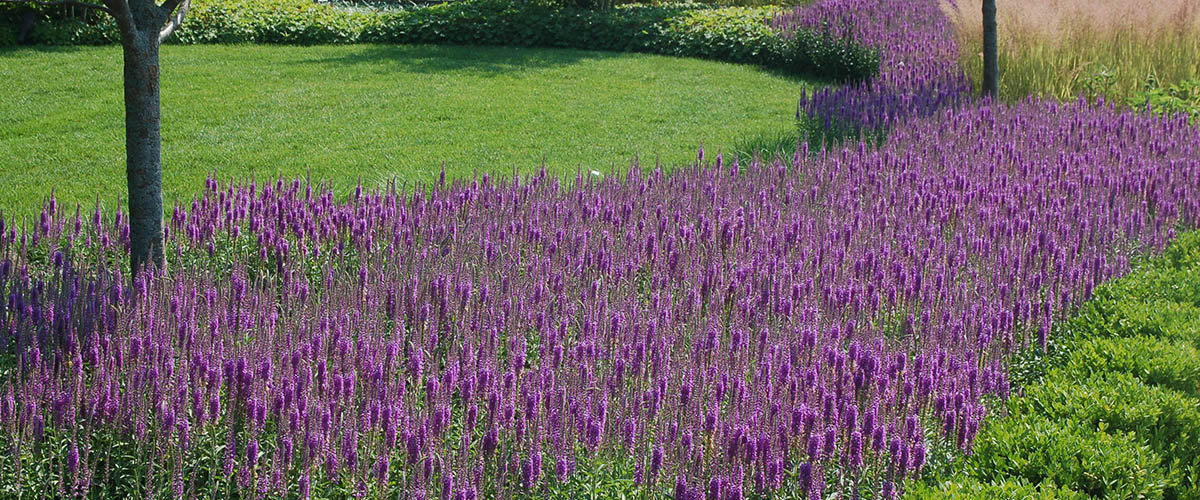
Evaluating Perennials for Chicagoland Gardens
Perennials in Focus is a plant evaluation program that examines new and underused plants for Chicagoland, the third largest metropolitan area in the country. A group of horticultural experts trials and evaluates plants at numerous locations across the region. Results help consumers, public gardens, growers, landscape designers, breeders, and other industry professionals make informed plant choices.
Purple coneflower petal shade in open-pollinated crops
Determining the petal shade variation of Echinacea purpurea in open-pollinated crops begins with a botanical detail: the broad “petals” are ray florets, and their magenta-to-purple colour is produced largely by anthocyanin pigments. Seedlings can differ in pigment concentration, while individual flowers often fade as they age.
Purple coneflower is familiar in Australian pollinator borders and cottage-style gardens, but it is an introduced North American perennial rather than an Australian native. A packet described simply as “purple” may contain plants with rose, lavender, deep violet or wine-coloured rays. The result can be attractive variation, yet it may disappoint a grower expecting a uniform named selection.
Perennials in Focus demonstrates why regional evaluation matters. Its regional perennial evaluations record bloom period, flower colour, height and spread across Chicagoland sites, giving temperate benchmarks for the species. Those records are useful, but Chicago winters, heat and rainfall do not reproduce the reversed seasons and variable conditions experienced across Australia.
A sound assessment links maternal identity, seed lot, flowering stage and growing environment. The central question is not merely which flower looks darkest, but whether a shade remains recognisable within a crop, across seasons and in the gardens where the plants will actually be sold.
Reading the colour range
Colour descriptions should separate ray florets from the raised central cone, which usually changes from green to bronze as seeds mature. For the rays, record hue alongside depth and brightness: dusty lilac, clear pink, saturated magenta and dark violet may all fall within the expected purple-coneflower range. This avoids treating every non-blue flower as a failure.
Shade is also a moving target within one plant. Rays commonly pale after peak bloom, while cool nights, bright light, heat, drought or high soil pH can alter pigment expression. Colour should therefore be assessed on newly opened flowers at a consistent time of day, ideally under diffuse light, and compared with a physical colour reference or calibrated images.
Why open-pollinated crops vary
“Open-pollinated” describes how seed was produced, not how uniform the offspring must be. In a crop containing several maternal genotypes, insects can move pollen between flowers and redistribute traits for ray colour, height, flowering time and habit. Self-pollen may also contribute, so a seed batch can contain several overlapping genetic combinations rather than a single predictable phenotype.
Harvest and record-keeping matter. Keep maternal plants, crosses and harvested seed lots separate, and note pollinator activity, flowering dates and unusual weather. A useful trial compares bulk open-pollinated seed with seed from selected female plants under the same conditions. Seed appearance alone is a poor guide to flower shade, so evaluate the progeny before naming the crop.
Measuring shade under growing conditions
Use replicated, randomised plots with the same age, soil preparation, irrigation and spacing for each entry. Several plants per maternal family reduce the chance that one exceptional stem defines the result, while a second site or season tests repeatability. Include a familiar comparator plant so colour and vigour can be judged against a common baseline.
At flowering, take readings from several flowers on each plant at the same stage and time. A colourimeter can record L*a*b* values, while repeatable photographs support visual assessment. Record flower age, cloud cover, temperature, soil moisture, plant age, bloom date, height and spread. These observations reveal whether a darker crop is consistently darker or merely flowering during a favourable period.
Australian sites make the comparison especially informative. Melbourne often provides cool, variable springs; Sydney brings humid summers and heavy rain; Adelaide and Perth experience hot, dry summers; and Brisbane offers subtropical growth. Those contrasts can show whether a colour survives stress, yet the basic shade categories remain comparable when plants are measured under controlled conditions.
Using regional trial evidence
Chicagoland results provide a strong temperate reference because the programme evaluates plants across multiple gardens and seasons. Look for consistency across years rather than a single striking photograph, and separate data on flower colour from observations about habit and flowering duration. A cultivar that performs well in cool Illinois conditions may still flower later, shorter or paler in Australian warmth.
Regional findings become more useful when translated into local records. Retail buyers in Australia need confidence that named selections retain their identity from seed or propagation stock, while gardeners need realistic information about height, spread and bloom period. Trial reports can inform those choices, but they should be paired with local follow-up rather than treated as a universal rating.
Selecting for repeatable colour
Start with maternal plants whose rays already match the target shade, then use controlled pollination to produce families for comparison. Where selfing is reliable, it can indicate whether a plant tends to breed true; crosses between selected parents can test whether colour is dominant, recessive or unstable. Grow the progeny through more than one season before expanding a line, because temperature-dependent colour can disguise genetic differences.
Keep detailed records of every cross, including pollen source, date, seed quantity and seedling performance. Outside records from overseas perennial field trials can add useful context, but they do not replace Australian progeny tests. Where stability remains uncertain, sell the plant as a mixed open-pollinated population and describe the expected colour range instead of promising one exact shade.
Comparing crop and retail options
Local seed traders, mail-order nurseries and garden centres serve different needs. Some sell mixed seed for economical pollinator planting; others offer selected seed lines or vegetatively propagated plants under a cultivar name. Before imported seed enters the Australian market, check current Department of Agriculture, Fisheries and Forestry biosecurity, import and customs requirements, including any permit, inspection or phytosanitary documentation.
The production route determines what level of colour consistency a buyer can reasonably expect:
| Production route | Expected shade consistency | Colour variation in the crop | Best commercial use |
|---|---|---|---|
| Mixed open-pollinated seed | Low | Broad; individual seedlings differ | Bulk pollinator seed and naturalistic plantings |
| Family-selected open-pollinated seed | Moderate to high | Narrower, although some drift remains | Specialist seed packets and regional growers |
| Controlled named cross | High in the stated generation | Usually predictable; later generations may segregate | Carefully labelled seed sales |
| Vegetative propagation | Very high | Essentially matches the mother plant | Clonal cultivars and display plants |
Turn field notes into action
Define the target before planting: a hue family, acceptable range and standard flowering stage. Then record the maternal plant for each seed lot, assess multiple offspring, and photograph the same stage under consistent light. Repeat the process in a second Australian site or season, and compare results with regional data on bloom period, stature and spread.
Act on the evidence by selecting the most uniform families for your next seed or nursery crop, labelling mixed batches honestly, and sharing performance records with growers and trial programmes. Preserve the best mother plants, test their seed again before scaling up, and list the resulting colour range where uniformity is still developing. That process turns a variable population into a crop with clear, defensible expectations.
In the Garden
Evaluator gardens are located across the Chicagoland area, representing a range of growing conditions. Visit our retail and wholesale partners to find trialled perennials for your own garden.
Retail & Wholesale: Hinsdale Nurseries (Willowbrook, IL), Mariani Nurseries (Kenosha, WI & Garden Prairie, IL), Northwind Perennials (Burlington, WI), The Growing Place (Aurora, IL).
Wholesale Only: Hinsdale Nurseries (Plano, IL), Intrinsic Perennial Gardens (Hebron, IL).
Our Evaluation Program
The 2017–2020 evaluation cycle included Agastache 'Blue Boa', Allium senescens 'Blue Eddy', Amsonia ciliata var. filifolia 'Georgia Pancake', Astilbe 'Chocolate Shogun', Boltonia astroides 'James Crocket', Brunnera 'Alexander's Great', and Geranium cinereum 'Jolly Jewel Purple'. Completed evaluations include Amsonia 'Blue Ice' (2004–07).
On April 10, 2020, the program published snapshot profiles for Vernonia lettermanii 'Iron Butterfly', Stokesia laevis 'Elf', Stachys officinalis 'Pink Cotton Candy', Lobelia 'Monet Moment', Helleborus 'Winter Thrillers', Geum 'Mai Tai', Geranium soboliferum 'Butterfly Kisses', Gentiana x intermedia 'True Blue', Eurybia divaricata, Asparagus 'Purple Passion', and Agastache 'Bolero'.
Browse the full collection of snapshots organized alphabetically — from A–D, E–H, I–Q, and R–Z — to find detailed performance data on perennials trialled across Chicagoland.