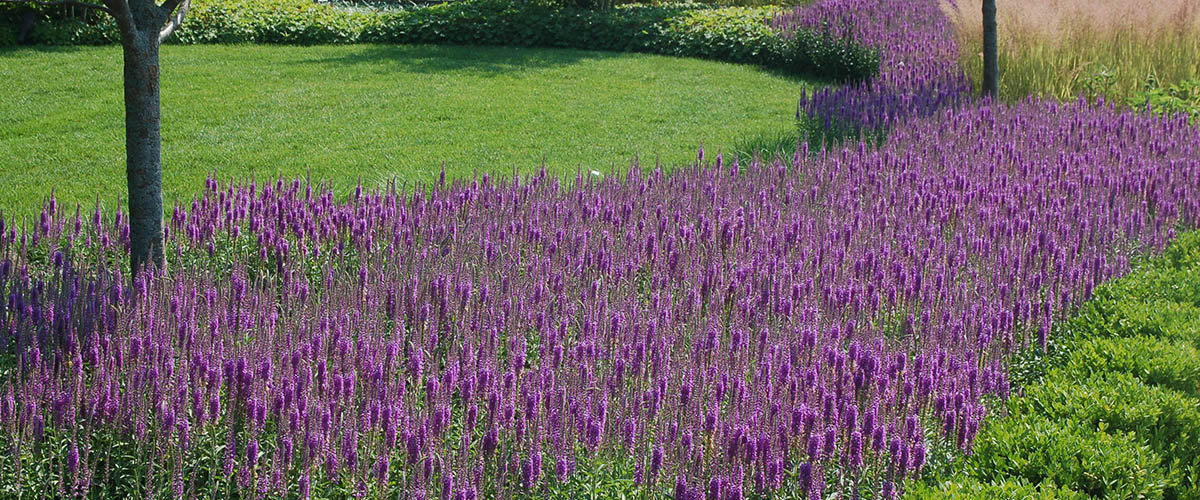
Evaluating Perennials for Chicagoland Gardens
Perennials in Focus is a plant evaluation program that examines new and underused plants for Chicagoland, the third largest metropolitan area in the country. A group of horticultural experts trials and evaluates plants at numerous locations across the region. Results help consumers, public gardens, growers, landscape designers, breeders, and other industry professionals make informed plant choices.
Nectar Sugar in Scarlet Bee Balm for Hummingbirds
Determining the nectar sugar concentration in Monarda didyma flowers for hummingbirds turns a familiar garden perennial into a subject for careful field research. Scarlet bee balm produces tubular, nectar-rich flowers that attract hummingbirds in North America, but its value as a bird-pollinated plant depends on more than colour or a convincing label.
Nectar concentration is commonly reported in degrees Brix, indicating the mass of dissolved solids in a solution. Measuring it alongside nectar volume reveals how much energy each flower supplies. Together, these data help assess the plant for hummingbird gardens and provide useful records for Australian trials.
Why Nectar Concentration Matters
Hummingbirds obtain much of their energy from flower nectar, so the amount and sweetness of available rewards can influence visitation. A flower that offers abundant dilute nectar may satisfy a visiting bird effectively, while a small quantity of concentrated nectar can deliver a comparable energy load in fewer visits.
Concentration describes sweetness, not the total reward. Ten microlitres of nectar at 25 °Brix contains roughly 2.5 milligrams of sugar, assuming a solution density close to one gram per millilitre. A flower yielding twice as much nectar at a lower concentration may provide more sugar overall, making paired measurements essential.
These measurements also support broader plant evaluation. Flowering period, flower colour, height, spread and pest performance remain important garden traits, but nectar chemistry adds an energetic dimension that can explain why particular plants receive regular attention from birds.
Understanding Scarlet Bee Balm
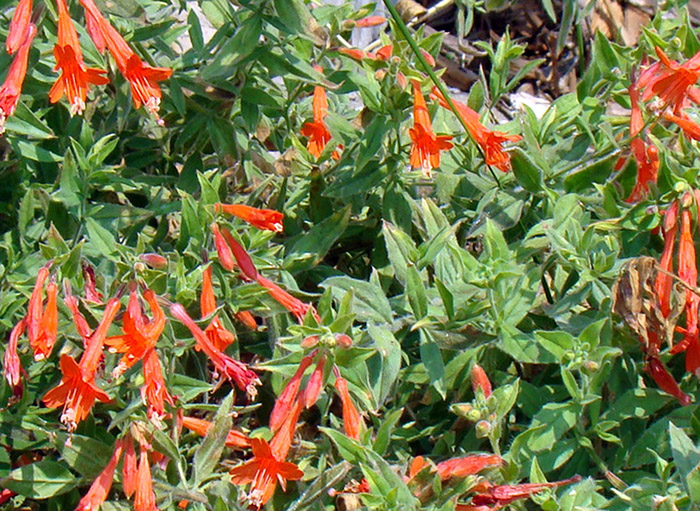
Monarda didyma is a clump-forming herbaceous perennial in the mint family, Lamiaceae. It is native to eastern North America and usually bears square stems, opposite leaves and dense terminal clusters of tubular flowers. Scarlet bee balm cultivars commonly have red, pink, lavender or purple blooms, although flower colour alone does not establish hummingbird preference.
In its native range, the species is visited by ruby-throated hummingbirds and various insects. The bright, elongated corolla tubes are well suited to a hummingbird’s long bill and tongue, while the projecting upper lip and lower nectar guides help direct visitors toward the floral opening.
Named selections can differ in habit and flowering time, so trials should record the exact cultivar rather than grouping every scarlet bee balm under one label. Plants raised from seed may also vary, making provenance and production batch useful details for anyone comparing results.
A Repeatable Measurement Method
Begin by selecting healthy plants at several representative positions. Label each plant, record its cultivar and growing conditions, and sample flowers at a consistent stage, such as newly opened or one day after opening. Excluding insect visitors with fine mesh bags can prevent nectar depletion, while sampling at the same time each day reduces effects caused by temperature and evaporation.
Collect nectar carefully with a micropipette or fine capillary from the base of the corolla tube. Avoid touching the anthers, and note whether the sample represents one floret or the combined nectar from an entire flower cluster. Place each sample in a sealed microcentrifuge tube, record its volume and keep it cool until measurement.
A calibrated handheld refractometer provides a practical field reading, although its temperature compensation must match the sample temperature. Laboratory analysis using high-performance liquid chromatography can identify and quantify individual sugars with greater precision. Sugar composition matters because equal °Brix readings can result from different combinations of sucrose, glucose and fructose.
Each record should include date, time, cultivar, flower stage, nectar volume, °Brix, instrument, calibration solution and weather conditions. Replicate samples reveal inconsistencies that a single reading would conceal. Researchers should also note rain, irrigation, ant activity and unusually hot conditions, all of which can dilute or alter exposed nectar.
Interpreting Brix and Sugar Yield
Reported values for scarlet bee balm commonly fall in the tens of degrees Brix, with readings around the low-to-high twenties serving as a plausible range for planning a pilot. That range is not a guaranteed result for every cultivar or climate. Flowering stage, moisture, time of extraction and the way several florets are combined can all shift the measured concentration.
A useful comparison presents four measures together: concentration, nectar volume, estimated sugar per flower and total sugar per inflorescence. Statistical analysis should then consider plant, site and sampling time rather than treating every flower as an independent replicate without accounting for shared conditions.
Clear documentation is essential if the results are intended to guide other growers. The Chicagoland-based Perennials in Focus program demonstrates the value of recording bloom period, dimensions and site performance across multiple gardens. Australian observers can apply the same disciplined approach while documenting their distinctly Southern Hemisphere growing season.
Australian Conditions and Trial Design
The seasonal calendar reverses many assumptions carried over from North American gardening. Scarlet bee balm commonly flowers in Australia from June to August, placing its main display through winter and early spring. Gardeners in Melbourne, Sydney and Adelaide therefore need to plan planting and maintenance around cooler months rather than treating the northern-hemisphere summer timetable as universal.
Local climate differences make a single national result unreliable. Melbourne’s often wet winter can stress plants in poorly drained soil, while Brisbane’s subtropical conditions bring longer warm-weather growth and greater humidity. Adelaide has dry summers and a distinct pattern of water stress, giving trial observers a useful contrast with both eastern and northern climates.
A practical Australian trial would combine public gardens, private gardens and specialist nurseries. Each site should record soil, aspect, irrigation, winter minimum temperatures and the date of first and last flowering. Independent nurseries and mainstream garden centres can then compare the same cultivars under realistic retail and home-growing conditions, including the familiar language of pot size, flowering period and reliable establishment.
Cultivation remains important throughout the measurement process. Scarlet bee balm generally performs best in full sun with moist but well-drained soil, good air movement and room for its clumps to spread. Drip irrigation can reduce water loss during dry weather, while excessive crowding may encourage powdery mildew or weaken flowering.
Pollinators, Claims and Local Relevance
Australia has no native hummingbirds, and wild hummingbirds are not part of the country’s ordinary garden ecology. Australian nectar measurements can document flower chemistry, but they cannot by themselves demonstrate a response from ruby-throated hummingbirds or another North American species. Preference testing belongs in an appropriate habitat or a carefully managed research setting.
Native honeyeaters provide a more relevant local comparison. Eastern spinebills, crescent honeyeaters and little wattlebirds may visit nectar-bearing flowers, while lorikeets can also influence nectar availability. Their feeding behaviour and anatomy differ from those of hummingbirds, so records should identify birds accurately rather than treating all nectar-feeding animals as equivalents.
This distinction also affects the interpretation of commercial labels. A search result offering casino bonus codes, for example, has no evidential value for pollination, just as an unsupported “hummingbird magnet” badge has none. Only observed visits, measured rewards and documented growing performance should guide recommendations.
Australian gardeners can place results beside locally proven bird-flower species, including suitable forms of correa, grevillea, bottlebrush and kangaroo paw. Their value lies not in imitating a North American plant community, but in supporting resident nectar-feeding birds across the country’s varied climates and seasons.
From Measurements to Garden Decisions
A workable first project requires only calibrated equipment and consistent records. Select several labelled plants, collect a small number of replicate samples, and enter the results alongside bloom colour, flowering date, height, spread and weather. The same approach also allows growers to recognise whether a cultivar is nectar-rich, productive or merely conspicuous.
Australian buyers should use the findings within the right framework. A high concentration supports a discussion about hummingbird nutrition in North America, while local visitation data determines whether resident birds use the plant. When scarlet bee balm underperforms with native fauna, a dependable native alternative may offer better ecological value than an unsupported imported claim.
Start with one flowering clump this season, follow the same sampling method from open bud through peak bloom, and retain the dated observations. Share verified results with local garden groups, trial coordinators and nursery growers so each new flowering period adds stronger evidence to the Australian record.
In the Garden
Evaluator gardens are located across the Chicagoland area, representing a range of growing conditions. Visit our retail and wholesale partners to find trialled perennials for your own garden.
Retail & Wholesale: Hinsdale Nurseries (Willowbrook, IL), Mariani Nurseries (Kenosha, WI & Garden Prairie, IL), Northwind Perennials (Burlington, WI), The Growing Place (Aurora, IL).
Wholesale Only: Hinsdale Nurseries (Plano, IL), Intrinsic Perennial Gardens (Hebron, IL).
Our Evaluation Program
The 2017–2020 evaluation cycle included Agastache 'Blue Boa', Allium senescens 'Blue Eddy', Amsonia ciliata var. filifolia 'Georgia Pancake', Astilbe 'Chocolate Shogun', Boltonia astroides 'James Crocket', Brunnera 'Alexander's Great', and Geranium cinereum 'Jolly Jewel Purple'. Completed evaluations include Amsonia 'Blue Ice' (2004–07).
On April 10, 2020, the program published snapshot profiles for Vernonia lettermanii 'Iron Butterfly', Stokesia laevis 'Elf', Stachys officinalis 'Pink Cotton Candy', Lobelia 'Monet Moment', Helleborus 'Winter Thrillers', Geum 'Mai Tai', Geranium soboliferum 'Butterfly Kisses', Gentiana x intermedia 'True Blue', Eurybia divaricata, Asparagus 'Purple Passion', and Agastache 'Bolero'.
Browse the full collection of snapshots organized alphabetically — from A–D, E–H, I–Q, and R–Z — to find detailed performance data on perennials trialled across Chicagoland.