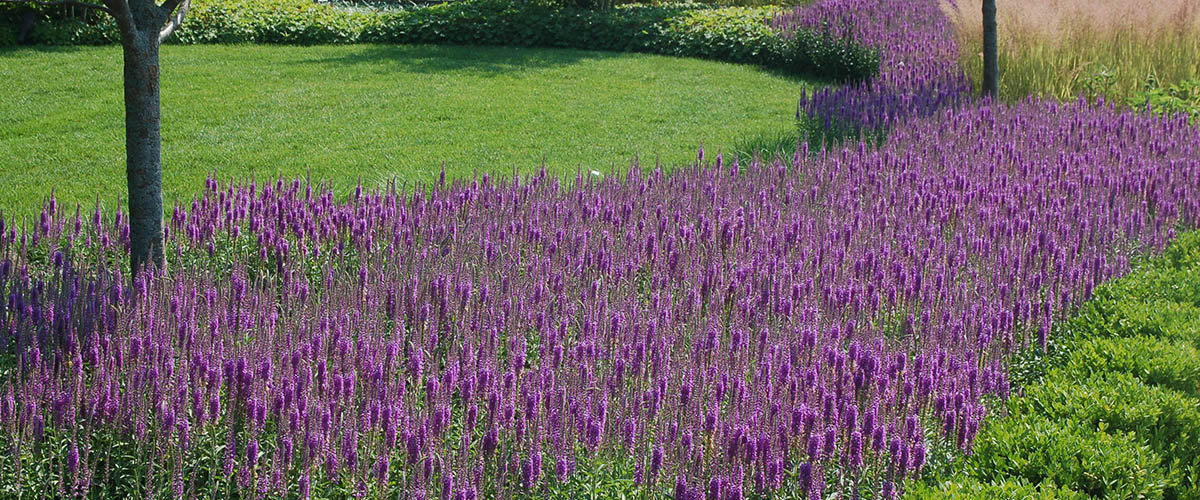
Evaluating Perennials for Chicagoland Gardens
Perennials in Focus is a plant evaluation program that examines new and underused plants for Chicagoland, the third largest metropolitan area in the country. A group of horticultural experts trials and evaluates plants at numerous locations across the region. Results help consumers, public gardens, growers, landscape designers, breeders, and other industry professionals make informed plant choices.
Comparing self-seeding in Aquilegia canadensis
Eastern red columbine is a short-lived North American perennial whose reputation for returning depends largely on seed. In a woodland border, self-seeding is often welcomed, yet a dense colony can compete with intended plants. The useful question is not simply whether Aquilegia canadensis sets seed, but how reliably seedlings emerge, establish and persist under local conditions.
Perennials in Focus tests plants across multiple Chicagoland gardens and seasons, recording bloom period, flower colour, height and spread. That regional approach matters because a plant judged resilient in an exposed trial garden may behave differently beneath deciduous canopy, where roots face summer dryness and winter freeze. Volunteer seedlings add another sign of performance in a particular soil and microclimate.
Australian gardeners should treat those observations as a model rather than a direct verdict. The seasons run opposite those in Illinois: Melbourne has cool winters and often dry summers, Sydney has mild winters and variable humidity, and Adelaide and Brisbane offer distinctly different heat and rainfall patterns. A colony that persists in one city may fail in another because of flowering timing, winter chill or summer moisture.
The comparison below therefore separates biological tendency from garden management. It also treats self-seeding as a potential spread pathway, not automatically a benefit. Record where plants came from, whether they are locally listed, and how seedlings are removed before deciding which colonies to retain.
Seed set is only the beginning
Self-seeding begins when pollinated flowers develop viable seed. Eastern red columbine’s nodding red-and-yellow flowers remain accessible to bees and butterflies, so seed production can continue without hummingbirds, its principal native-range pollinators. In Australia, pollinator visits and weather during flowering may change capsule fill from year to year even when the clump looks healthy.
A full-looking capsule is not proof of success. Mature capsules may contain empty, immature or damaged seed, while viable seed can remain dormant. Germination generally benefits from cool, moist conditions, and seedlings still need suitable light, moisture and space. Beneath deciduous canopy, spring light and autumn rain may favour establishment more than exposed summer conditions.
Dense colonies often form where plants seed in place and surrounding soil is disturbed little. Seed can also travel in compost, mud on boots or container mixtures. Calling the plant merely self-seeding understates the process: seed set, germination, survival and repeat flowering determine whether a population renews itself.
Why woodland borders encourage volunteers
Woodland borders combine shelter with periodic light. Established deciduous trees protect crowns and soil from the hottest afternoon sun, while openings allow columbines to flower and attract pollinators. Along an edge, roots receive more rain and air than under closed canopy. These conditions often produce more viable seed than deep shade, where flowering weakens.
Chicagoland’s freeze and snow can break down stems and bury seed near the soil surface. A sheltered border may also trap leaves, preserving moisture but increasing root competition. Companion observations such as the sedum snow-load trials show why regional stress data matter rather than relying only on catalogue descriptions.
Note whether volunteers cluster beneath the parent, at the sunny edge or only in disturbed soil. Those patterns reveal which factor is doing the work. A border that looks sparse after winter may still contain many seedlings, so judging recruitment from visible spring growth alone is unreliable.
Reading Chicagoland trials from Australia
Climate is the first adjustment. Melbourne’s cool winter often supplies the chill that columbine seed benefits from, while dry summers can end flowering abruptly unless soil is irrigated. Sydney’s warmer, more humid winters may encourage earlier germination, and summer rain can promote fungal losses in dense colonies. Adelaide’s hot, dry summers call for moisture beneath mulch, whereas Brisbane’s wet subtropical summers can favour foliage over flowers.
Everyday practice changes results. Australian gardeners commonly plant perennials in autumn, water deeply and less frequently, and replace declining clumps after flowering. Mulch, leaf litter and cutting back old stems alter both seed survival and seedling competition. A site regularly cleared of seedlings cannot be compared with an untouched one.
Availability matters too. Specialist perennial nurseries and online sellers in Australia may offer Aquilegia canadensis or related columbines under common names, making identity easy to confuse. Buy from a reputable source, retain the label and check whether the species is listed locally.
State and local rules vary. The federal Biosecurity Act 2015 primarily governs imports into Australia, while state weed statutes and council bylaws can control plants already held. Do not release surplus seedlings into bushland; confirm the species with a council or state weeds officer before planting near natural vegetation.
Comparing sites and managing seedlings
Use matched observations rather than one spectacular spring display. Mark mature clumps, count flowering stems and closed capsules, then return after germination to record seedlings in defined patches. Record dates, shade duration, rainfall or irrigation, soil moisture and any weeding. If using an external record resource, keep those fields consistent across sites.
Check survival at three stages: emergence, establishment as a rosette and survival to flowering. Many seedlings but few flowering plants do not prove a self-sustaining colony. Removing rosettes or cutting capsules before they open reduces recruitment; leaving selected capsules and undisturbed soil usually increases it.
Across regions, the tendency is conditional: moderate to high where flowering and spring moisture are dependable, and low where heat, disease, deadheading or frequent weeding prevents recruitment. The following comparison identifies the patterns to check.
| Comparison point | Chicagoland woodland border | Australian woodland border | Record to make |
|---|---|---|---|
| Winter and spring | Snow, freeze and spring moisture influence survival | Cool-winter cities provide winter chill, while subtropical cities vary | Minimum winter temperature and emergence date |
| Flowering | Cool spring weather may concentrate the display | Timing shifts by city, and heat can shorten the flowering window | First and last flowers, plus pollinator visits |
| Seed capsules | Late frost or dry weather may reduce seed fill | Hot, dry or very wet weather affects capsule maturity | Number of flowers and filled capsules |
| Seedling pressure | Volunteers may become visible after snowmelt | Irrigation, mulch and rainfall influence dense patches | Seedlings within a fixed patch |
| Establishment | Freeze tests the survival of first-year rosettes | Heat stress or humid disease may dominate losses | Survival after six and twelve months |
Turning observations into plant choices
Keep a self-seeding colony when its return suits the design, flowers match the named plant and seedlings can be controlled. Label the parent, isolate the first generation and remove plants that differ in flower colour or form. Divide or replace ageing clumps if seedlings are scarce, since the species often behaves as a biennial or short-lived perennial rather than a permanent woodland resident.
Where spread is unwanted, deadhead selected stems before capsules mature and remove rosettes before flowering. Do not rely on hot composting unless the pile reliably destroys seed, and avoid moving contaminated soil into bushland. For garden centres, growers and breeders, clear labels about mature size, flowering window and expected seedlings are as valuable as display photography.
Regional evidence becomes more useful when shared. The programme’s garden observation notes provide context for recording plant performance, and local garden groups can compare the same measures.
Act on this season’s flowering: mark one mature clump, protect a measured patch for seedling observations and keep the remaining stems controlled. Share dated counts and management notes with Perennials in Focus, local horticulture groups and relevant councils so future woodland-border decisions reflect behaviour rather than a single memorable display.
In the Garden
Evaluator gardens are located across the Chicagoland area, representing a range of growing conditions. Visit our retail and wholesale partners to find trialled perennials for your own garden.
Retail & Wholesale: Hinsdale Nurseries (Willowbrook, IL), Mariani Nurseries (Kenosha, WI & Garden Prairie, IL), Northwind Perennials (Burlington, WI), The Growing Place (Aurora, IL).
Wholesale Only: Hinsdale Nurseries (Plano, IL), Intrinsic Perennial Gardens (Hebron, IL).
Our Evaluation Program
The 2017–2020 evaluation cycle included Agastache 'Blue Boa', Allium senescens 'Blue Eddy', Amsonia ciliata var. filifolia 'Georgia Pancake', Astilbe 'Chocolate Shogun', Boltonia astroides 'James Crocket', Brunnera 'Alexander's Great', and Geranium cinereum 'Jolly Jewel Purple'. Completed evaluations include Amsonia 'Blue Ice' (2004–07).
On April 10, 2020, the program published snapshot profiles for Vernonia lettermanii 'Iron Butterfly', Stokesia laevis 'Elf', Stachys officinalis 'Pink Cotton Candy', Lobelia 'Monet Moment', Helleborus 'Winter Thrillers', Geum 'Mai Tai', Geranium soboliferum 'Butterfly Kisses', Gentiana x intermedia 'True Blue', Eurybia divaricata, Asparagus 'Purple Passion', and Agastache 'Bolero'.
Browse the full collection of snapshots organized alphabetically — from A–D, E–H, I–Q, and R–Z — to find detailed performance data on perennials trialled across Chicagoland.