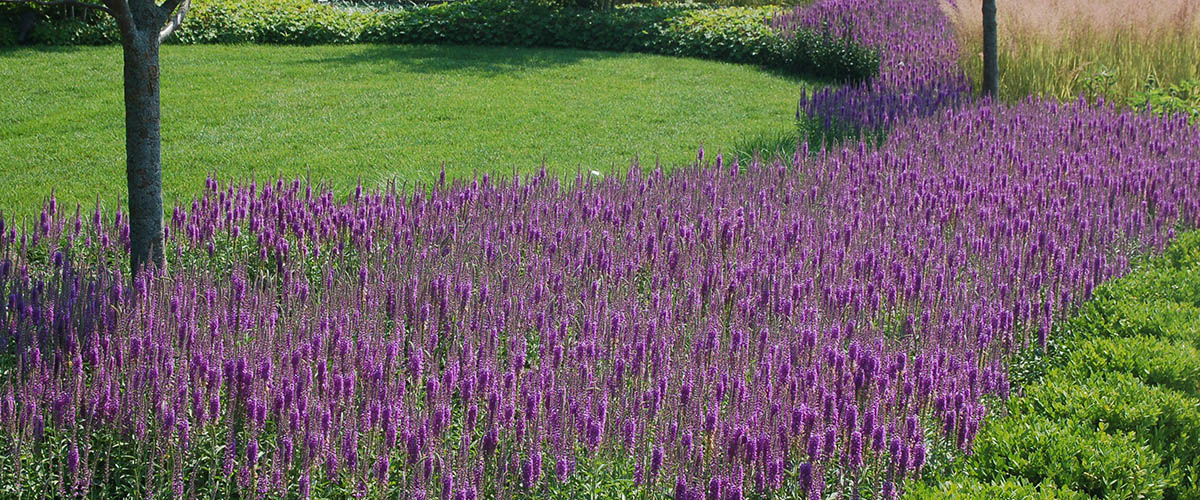
Evaluating Perennials for Chicagoland Gardens
Perennials in Focus is a plant evaluation program that examines new and underused plants for Chicagoland, the third largest metropolitan area in the country. A group of horticultural experts trials and evaluates plants at numerous locations across the region. Results help consumers, public gardens, growers, landscape designers, breeders, and other industry professionals make informed plant choices.
Comparing Rust Risk Across Bee Balm Colour Forms
Monarda didyma, commonly called scarlet bee balm or bergamot, is valued for its vivid flower heads, aromatic foliage and appeal to bees and other pollinators. In a mixed planting, however, the visual difference between red, pink, lavender and white forms does not necessarily indicate a difference in rust resistance. The key comparison is between named cultivars and their growing conditions, not flower colour alone.
For gardeners in Australia, findings from a Chicagoland perennial evaluation are useful as a starting point rather than a direct prediction. A cultivar that stays clean through humid Midwestern summers may still respond differently in a wet Sydney season, a cool Melbourne garden or a hot Brisbane border. The most reliable approach is to combine trial observations with local site knowledge.
| Flower form | Useful comparison point | What to monitor |
|---|---|---|
| Red or scarlet | Often vigorous, with dense stems and foliage in established clumps | Lower leaves, interior stems and post-flowering decline |
| Pink | Can vary greatly between cultivars in height and canopy density | Early yellowing, orange pustules and premature leaf drop |
| Lavender or mauve | Flower colour may remain attractive even when foliage begins to deteriorate | Foliage quality behind the flower display |
| White | Pale blooms can make surrounding foliage damage more noticeable | Contrast between clean leaves and rust-marked leaves |
| Any colour | Colour is not a dependable indicator of genetic rust resistance | Cultivar identity, disease severity and recovery after cutting back |
Why Flower Colour Is An Incomplete Guide
Rust susceptibility is controlled primarily by plant genetics, leaf structure, air movement and the interaction between the host and the pathogen. Flower pigmentation has no simple relationship with the amount of rust a cultivar will develop. Two plants with nearly identical crimson flowers may differ considerably in foliage health, while pink and white selections can perform very differently under the same conditions.
This matters because retail descriptions often group Monarda by colour, height or flowering time. Those traits are useful for design, but they do not replace a named cultivar and a performance record. In the Perennials in Focus program, plant characteristics are assessed across multiple gardens and seasons, giving growers a better basis for separating a colour effect from a cultivar effect.
A strong comparison should therefore record cultivar name, plant source, planting position and age. If a trial lists only “red bee balm” or “pink bee balm”, the observation is difficult to reproduce and should be treated as a broad visual note rather than a rust-resistance result.
Recognising Rust Before It Distorts Results
Monarda rust commonly appears as small yellow, tan or orange marks on the underside of leaves, followed by dusty rust-coloured pustules. Upper leaf surfaces may develop yellowing or brown patches as the infection progresses. Severe cases lead to early leaf drop, sparse stems and a tired appearance shortly after flowering.
The timing of symptoms is as important as their presence. A plant with a few lower-leaf spots late in the season may still provide excellent garden value. A cultivar that becomes largely defoliated before its main bloom has a more serious performance problem, particularly when grown for a summer display or pollinator border.
Observers should avoid confusing rust with sun scorch, nutrient imbalance, drought stress or natural senescence. Photographing both leaf surfaces and recording the date of the first symptoms can help. If possible, samples should be checked by a qualified plant diagnostician, since several foliar disorders can look similar in a quick garden inspection.
Climate Changes the Meaning of Resistance
Rust risk rises when foliage remains damp for long periods, air movement is poor and nights stay mild. Dense clumps, overhead irrigation, crowded mixed borders and regular summer rainfall can all create favourable conditions. In contrast, an open position with morning sun and rapid drying may keep a moderately susceptible cultivar presentable.
Australian conditions make this comparison especially important. A Monarda that performs well in a Chicago trial may face humid nights in coastal New South Wales, intense summer heat in Adelaide or intermittent rainfall followed by high temperatures in Perth. Melbourne gardeners may see a longer period of cool, damp conditions, while Brisbane growers must consider both humidity and rapid vegetative growth.
Watering customs also influence disease pressure. Drip irrigation or careful watering at soil level is preferable to wetting the foliage with a hose or sprinkler. In areas affected by water restrictions, deep, targeted irrigation is generally more efficient than frequent surface watering and can help maintain a healthier balance between drought stress and excessive leaf wetness.
Building A Fair Cultivar Trial
A useful trial begins with plants of similar size and age, planted in comparable soil and exposed to the same light and watering routine. Repeating each cultivar in several positions is even better, because one sheltered corner can make a susceptible plant appear resistant. The trial should include more than one season whenever possible.
Record flowering start, peak display, plant height, spread and foliage quality alongside rust symptoms. A simple disease scale can be used: clean foliage, minor spotting, moderate infection with some leaf loss, or severe infection with major defoliation. Notes should also mention whether the plant recovered after pruning or produced healthy new growth.
The evaluation should compare the whole garden performance, not just the lowest disease score. A cultivar with moderate rust but an exceptionally long flowering period may be more useful than a clean plant with weak stems or a short display. This broader approach reflects the practical value of regional perennial trials, where appearance, habit and seasonal persistence are considered together.
Applying Trial Findings In Australian Gardens
When selecting Monarda for a Sydney or Brisbane garden, give priority to named cultivars with documented performance and an open, well-ventilated habit. Avoid planting bee balm in a narrow pocket between walls, fences and dense shrubs. In a Melbourne or Canberra setting, allow enough space for morning sun and quick drying after rain, while protecting the plants from severe afternoon heat if foliage regularly wilts.
Plant spacing deserves attention because bee balm can expand rapidly in fertile soil. Dividing congested clumps in autumn or early spring improves air circulation and reduces the dense interior growth where symptoms often begin. Removing badly affected leaves and clearing fallen foliage can reduce the amount of infectious material around the plant, although hygiene should be combined with sound site selection rather than treated as a complete cure.
Monarda also works well as part of a layered summer border, where its height and pollinator value complement grasses, salvias and other perennials. Guidance on using perennial structure for seasonal screening is relevant when planning these combinations; the discussion of a summer privacy screen shows how plant habit and seasonal timing can be considered together.
Choosing Reliable Plants For Market And Landscape Use
For Australian nurseries and garden retailers, rust observations can become a valuable selling point when they are presented carefully. Rather than claiming that a particular flower colour is rust-proof, labels can identify the cultivar, describe its preferred conditions and explain that disease pressure varies with climate. This is more credible for customers shopping at local independent nurseries, specialist perennial growers or large retailers such as Bunnings.
Landscape professionals should also consider how long the foliage needs to remain attractive. In a residential border, flower colour may be the first priority, but in a public garden or commercial landscape, premature defoliation can create maintenance costs and an untidy gap. A slightly shorter cultivar with sturdy stems and good leaf retention may provide better value than a taller selection that collapses after a wet spell.
Colour stability is another separate trait. A flower that holds its shade through changing light or heat is not automatically resistant to rust, just as foliage health does not guarantee consistent bloom colour. The evaluation of flower colour stability illustrates why colour performance should be recorded as its own characteristic rather than folded into general plant health.
Use cultivar-level records, repeated observations and local climate experience when comparing red, pink, lavender and white Monarda forms. For home gardens, select the plant that combines attractive flowers, suitable height, good airflow and acceptable foliage retention for the site. For growers and public gardens, contribute clear seasonal data so future recommendations become more relevant to Australian conditions as well as the original trial region.
In the Garden
Evaluator gardens are located across the Chicagoland area, representing a range of growing conditions. Visit our retail and wholesale partners to find trialled perennials for your own garden.
Retail & Wholesale: Hinsdale Nurseries (Willowbrook, IL), Mariani Nurseries (Kenosha, WI & Garden Prairie, IL), Northwind Perennials (Burlington, WI), The Growing Place (Aurora, IL).
Wholesale Only: Hinsdale Nurseries (Plano, IL), Intrinsic Perennial Gardens (Hebron, IL).
Our Evaluation Program
The 2017–2020 evaluation cycle included Agastache 'Blue Boa', Allium senescens 'Blue Eddy', Amsonia ciliata var. filifolia 'Georgia Pancake', Astilbe 'Chocolate Shogun', Boltonia astroides 'James Crocket', Brunnera 'Alexander's Great', and Geranium cinereum 'Jolly Jewel Purple'. Completed evaluations include Amsonia 'Blue Ice' (2004–07).
On April 10, 2020, the program published snapshot profiles for Vernonia lettermanii 'Iron Butterfly', Stokesia laevis 'Elf', Stachys officinalis 'Pink Cotton Candy', Lobelia 'Monet Moment', Helleborus 'Winter Thrillers', Geum 'Mai Tai', Geranium soboliferum 'Butterfly Kisses', Gentiana x intermedia 'True Blue', Eurybia divaricata, Asparagus 'Purple Passion', and Agastache 'Bolero'.
Browse the full collection of snapshots organized alphabetically — from A–D, E–H, I–Q, and R–Z — to find detailed performance data on perennials trialled across Chicagoland.