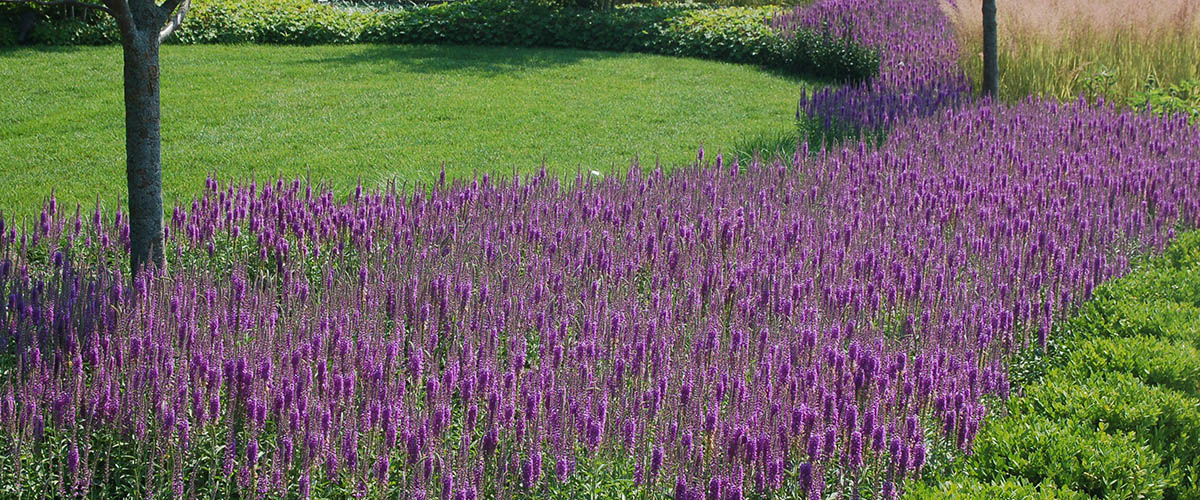
Evaluating Perennials for Chicagoland Gardens
Perennials in Focus is a plant evaluation program that examines new and underused plants for Chicagoland, the third largest metropolitan area in the country. A group of horticultural experts trials and evaluates plants at numerous locations across the region. Results help consumers, public gardens, growers, landscape designers, breeders, and other industry professionals make informed plant choices.
How Three Rudbeckia Hirta Strains Handle Wet Seasons
Wet summers can reveal differences between black-eyed Susan plants that remain hidden during warm, well-drained growing seasons. Extended rain, heavy dew, and slow-drying foliage create conditions that favor rust and other leaf diseases, while saturated soil can weaken plants before symptoms become obvious.
For Chicagoland gardeners, the most useful question is not simply which Rudbeckia hirta has the largest flowers. A dependable selection must maintain healthy foliage, produce flowers on schedule, and recover after repeated rain. Comparing ‘Indian Summer’, ‘Prairie Sun’, and ‘Cherry Brandy’ offers a practical way to examine those qualities across a demanding season.
The results should be read as regional performance guidance rather than a permanent ranking. Weather, spacing, soil, irrigation, and disease pressure vary from garden to garden. A cultivar that performs well in one site may respond differently where air movement is limited or drainage is poor.
Why wet weather exposes differences
Rust develops most readily when leaves stay damp for long periods. Rainfall itself does not guarantee an outbreak, but frequent showers and humid nights can extend the period when spores germinate and infect tissue. Dense plant growth also traps moisture around lower leaves, creating a favorable microclimate.
Wet ground adds another layer of stress. Rudbeckia hirta tolerates average garden conditions, yet consistently saturated soil can reduce root vigor and cause premature yellowing. Plants under stress may show more noticeable disease damage because they replace affected leaves slowly and have fewer resources for new growth.
A regional trial should therefore evaluate rust resistance alongside plant architecture. A compact plant with congested foliage may experience greater disease pressure than a taller, more open plant, even when both have similar genetic tolerance. The useful measurement is how the whole plant performs through repeated wet periods.
The three strains under scrutiny
‘Indian Summer’ is valued for its large golden flowers and strong visual impact. Its broad leaves and substantial flower heads make it an attractive choice for mass planting, but those same traits can create a relatively dense canopy. In a wet season, lower foliage should be watched closely for small rust pustules, yellowing, and early leaf drop.
‘Prairie Sun’ brings bright yellow flowers with green centers and often develops a vigorous, upright habit. Its open structure can improve air circulation, particularly when plants are not crowded. In comparative observations, this type may retain a cleaner appearance during humid weather, although vigorous growth can still produce dense foliage if moisture and fertility are high.
‘Cherry Brandy’ is distinctive for its red to burgundy flower color and strong appeal in mixed borders. Dark flowers do not indicate disease resistance, so foliage health must be judged separately from ornamental effect. Its value in a wet season depends on whether it continues flowering after lower leaves become marked or shed.
These three selections also differ in how visible damage appears. Large leaves can make scattered symptoms easy to notice, while a plant with many overlapping stems may conceal early infection. Regular inspection from the base upward is more reliable than judging the display from a distance.
How rust resistance should be judged
Rust symptoms commonly begin as yellow or pale spots on the upper leaf surface, followed by raised orange, brown, or rust-colored pustules beneath. The disease may move upward as the season progresses. A few affected leaves do not necessarily disqualify a plant; the stronger indicator is the speed and extent of spread.
A useful field assessment records both severity and persistence. Plants should be compared after several wet intervals, not after a single storm. A strain that develops minor symptoms but continues producing healthy new foliage may be more useful than one that looks clean early in the season and then declines rapidly in August.
Flowering performance also matters. Note the first bloom, the number of flower stems, and whether plants continue opening buds after repeated rainfall. The program snapshots provide a helpful model for recording visible traits consistently across sites and seasons.
A side-by-side field comparison
The following comparison describes qualities to examine during a wet Chicagoland season. It is a practical evaluation framework, not a substitute for replicated disease ratings from a specific trial.
| Strain | Typical ornamental strength | Wet-season foliage to monitor | Expected field interpretation |
|---|---|---|---|
| ‘Indian Summer’ | Very large golden flowers and strong color impact | Broad lower leaves and canopy density | Attractive and productive, but may show more visible lower-leaf spotting when moisture persists |
| ‘Prairie Sun’ | Upright habit and yellow flowers with green centers | Dense new growth after high fertility or frequent rain | Often benefits from good air movement; evaluate whether vigorous growth stays open |
| ‘Cherry Brandy’ | Unusual red-burgundy flowers for contrast | Foliage health beneath a visually dominant flower display | Useful for color diversity; judge resistance by leaf retention and continued bloom rather than flower color |
The most meaningful winner is the strain that balances disease tolerance with garden value. A plant may receive a favorable assessment if rust remains limited to older leaves, flowering continues, and the crown produces healthy growth. Conversely, severe defoliation, weak stems, or an abrupt end to flowering should lower its rating even if the plant started the season impressively.
What growers should record during trials
Observations become more useful when they are made at consistent intervals. Weekly notes can capture the moment symptoms appear, while broader ratings every two or three weeks show whether the problem is accelerating. Photographing the same plants from the same angle helps distinguish true changes from differences in lighting or camera position.
Record rainfall patterns, irrigation, spacing, and nearby plants as well. Rudbeckia grown beside dense perennials may experience a different humidity level from plants in an open bed. Avoid applying a fungicide to only one strain if the goal is comparison, since treatment can obscure natural differences in tolerance.
Useful observations include:
- Date of first visible rust symptoms
- Percentage of foliage affected at peak disease pressure
- Amount of lower-leaf loss by late summer
- Continued flower production after repeated rainfall
- Stem strength, lodging, and recovery after storms
These notes can support better choices for residential borders, cut-flower beds, retail recommendations, and public plantings. They also help separate a genuinely resilient strain from a plant that simply benefited from a favorable location.
Placing resistant plants in the garden
Site preparation can reduce disease pressure for every strain. Choose a location with morning sun and moving air, avoid overhead irrigation when possible, and space plants according to their mature spread rather than their container size. Removing badly affected leaves can improve appearance, although pruning should not strip the plant of most of its foliage.
Balanced fertility is important as well. Excess nitrogen can produce soft, lush growth that dries slowly and creates a crowded canopy. Good drainage supports stronger roots, but the soil should still retain enough moisture to prevent repeated drought stress between storms.
Rudbeckia can also be combined with plants that provide contrasting form without creating a solid wall of foliage. Ideas for extending seasonal color appear in this guide to combining annuals and perennials, where spacing and succession help keep plantings attractive beyond the peak Rudbeckia display.
Choosing the best performer for your site
For a sunny, open bed, ‘Prairie Sun’ may be especially appealing when upright structure and foliage retention are priorities. ‘Indian Summer’ remains a strong choice where large golden flowers are the main design goal, provided plants receive enough room for air circulation. ‘Cherry Brandy’ offers distinctive color and should be evaluated for how well its foliage supports late-season flowering.
No single strain will be ideal for every garden. The best selection is the one that keeps an acceptable balance between rust severity, bloom continuity, habit, and visual appeal under the moisture conditions typical of the site.
Use consistent ratings during the next wet season and share observations through regional plant evaluation networks. Careful local records can help gardeners and professionals identify Rudbeckia hirta selections that remain attractive, productive, and dependable when summer weather stays unusually damp.
In the Garden
Evaluator gardens are located across the Chicagoland area, representing a range of growing conditions. Visit our retail and wholesale partners to find trialled perennials for your own garden.
Retail & Wholesale: Hinsdale Nurseries (Willowbrook, IL), Mariani Nurseries (Kenosha, WI & Garden Prairie, IL), Northwind Perennials (Burlington, WI), The Growing Place (Aurora, IL).
Wholesale Only: Hinsdale Nurseries (Plano, IL), Intrinsic Perennial Gardens (Hebron, IL).
Our Evaluation Program
The 2017–2020 evaluation cycle included Agastache 'Blue Boa', Allium senescens 'Blue Eddy', Amsonia ciliata var. filifolia 'Georgia Pancake', Astilbe 'Chocolate Shogun', Boltonia astroides 'James Crocket', Brunnera 'Alexander's Great', and Geranium cinereum 'Jolly Jewel Purple'. Completed evaluations include Amsonia 'Blue Ice' (2004–07).
On April 10, 2020, the program published snapshot profiles for Vernonia lettermanii 'Iron Butterfly', Stokesia laevis 'Elf', Stachys officinalis 'Pink Cotton Candy', Lobelia 'Monet Moment', Helleborus 'Winter Thrillers', Geum 'Mai Tai', Geranium soboliferum 'Butterfly Kisses', Gentiana x intermedia 'True Blue', Eurybia divaricata, Asparagus 'Purple Passion', and Agastache 'Bolero'.
Browse the full collection of snapshots organized alphabetically — from A–D, E–H, I–Q, and R–Z — to find detailed performance data on perennials trialled across Chicagoland.