Evaluating Perennials for Chicagoland Gardens
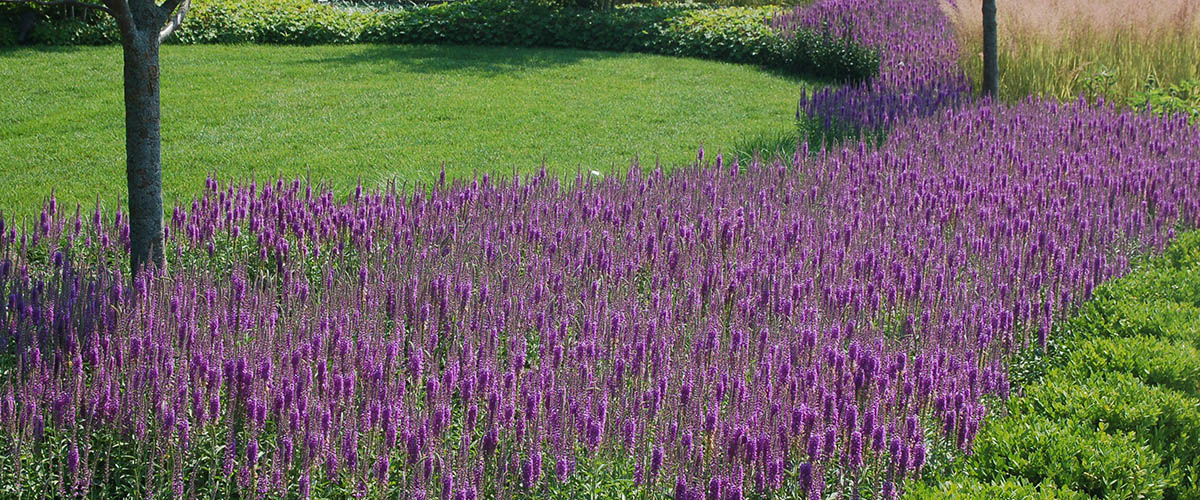
Perennials in Focus is a plant evaluation program that examines new and underused plants for Chicagoland, the third largest metropolitan area in the country. A group of horticultural experts trials and evaluates plants at numerous locations across the region. Results help consumers, public gardens, growers, landscape designers, breeders, and other industry professionals make informed plant choices.
Root Competition Tolerance: Canadian Burnet versus Tall Meadow-Rue
Tall moisture-loving perennials occupy a distinctive niche in garden design, often placed where tree roots create demanding conditions. Sanguisorba canadensis, commonly called Canadian burnet, and Thalictrum pubescens, known as tall meadow-rue, both thrive in damp meadow and woodland edge environments in their native range. When introduced to Australian gardens, their ability to handle root competition matters because so many home landscapes sit beneath mature eucalypts. Understanding how each species competes below ground helps gardeners in Melbourne, Sydney, and Hobart choose the right candidate for shaded, root-laden beds.
Both perennials reach 1.5 to 2 metres when grown in favourable conditions and reward gardeners with airy floral displays in mid to late summer. Their tolerance of crowded root zones diverges in measurable ways, and that difference sits at the centre of any responsible planting decision in Australian temperate and subtropical regions. Trials simulating dry, root-heavy soils beneath established gum trees provide reliable data for growers, retailers, and landscape professionals.
The challenge is amplified across Australia by large evergreen species that transpire heavily through summer, drying the upper soil precisely when moisture-loving plants need consistent water. Gardeners in Mediterranean climates, including Adelaide and parts of Perth, often face summer watering restrictions. Choosing perennials adapted to such pressures can mean the difference between a thriving border and a struggling patch of foliage.
This article draws on multi-season observations to clarify how Canadian burnet and tall meadow-rue respond to neighbouring root systems and to explain what Australian gardeners should expect when siting either species near trees or large shrubs.
Habitat background and native ecology
Sanguisorba canadensis originates in eastern North America, where it inhabits wet meadows, fens, and transition zones between grassland and shrubby thickets. The species evolved alongside tall forbs competing aggressively for moisture and light, which is one reason it tolerates dense planting in cultivation. Its rhizomatous root system extends laterally and forms a dense mat in the upper soil horizon, capturing resources before deeper-rooted neighbours can intercept them.
Thalictrum pubescens occupies a different niche, favouring damp woodland edges, stream banks, and moist thickets across the northeastern United States and eastern Canada. Its root system is more fibrous and less spreading than Sanguisorba's, drawing moisture from a moderately deep zone. Because it evolved in partly shaded habitats sharing territory with woody roots, it tolerates filtered light, though its response to root zone dryness differs.
These background differences matter in Australian gardens because most planting sites mimic either meadow or woodland edge conditions. A bed beneath a mature eucalyptus in suburban Brisbane or Canberra resembles the woodland edge habitat of Thalictrum more closely than the open meadow habitat of Sanguisorba. Origin becomes a clearer predictor when evaluating which species will thrive without intensive intervention.
Moisture demands and root architecture
Canadian burnet produces thick, creeping rhizomes that knit together, creating a colony that holds its own against perennial neighbours. The plant prefers consistently moist soil and tolerates brief dryness, recovering quickly. Its wiry stems rise from a crown just below the soil surface, with feeder roots extending horizontally and vertically. In Australian sandy or sandy-loam soils, the rhizomatous habit allows it to spread where summer humidity along the east coast supports growth.
Tall meadow-rue develops a clumping root system with thick, fleshy roots descending more deeply than the rhizomes of Sanguisorba. The plant tolerates seasonal moisture variation but struggles when the root zone dries for extended periods during active growth. In Australian gardens with reactive clay subsoils, such as those across Melbourne's inner suburbs, Thalictrum often performs better than expected because clay holds moisture at depth.
The practical difference between these two root architectures becomes apparent when competing with surface-feeding roots of eucalypts and other Australian natives. Canadian burnet occupies the upper soil layer and intercepts rainfall before tree roots can claim it. Tall meadow-rue reaches deeper and tolerates periods when surface moisture has been drawn down by neighbouring trees.
Performance against established tree roots
Field trials in temperate gardens demonstrate that Canadian burnet establishes more readily in the presence of mature tree roots than tall meadow-rue. The rhizomatous habit of Sanguisorba allows it to weave between roots and exploit small pockets of moisture that would otherwise be unavailable. Once established, the plant competes effectively with surface tree roots, particularly during the cool seasons when many Australian deciduous trees are dormant and eucalypts are less actively transpiring.
Thalictrum pubescens performs respectably near tree roots but shows stress during extended dry periods, particularly when planted too close to mature eucalypts in sandy soils. The plant responds well to organic mulch and supplementary watering during the first two seasons, after which its deeper root system provides greater resilience. Gardeners in Hobart and southern Victoria, where summer rainfall is more reliable, often find Thalictrum performs strongly without supplementary irrigation once established.
Performance differences also emerge beneath evergreen canopies. Canadian burnet tolerates dry shade better than tall meadow-rue, though both species benefit from occasional supplementary watering during prolonged dry spells. Gardeners who rely on drip irrigation often see better results with Thalictrum, because the deeper root system responds well to slow, deep moisture delivery. Spotting underground pipe leaks before they compromise irrigation matters as much as plant selection, because fluctuating moisture levels undermine even the best-adapted perennial.
Trials across Australian temperate gardens
Multi-site observations in temperate Australia have tracked both species through three growing seasons, with plantings established in root-heavy beds beneath eucalypts and ornamental trees. Gardeners working with retailers such as the Diggers Club and local wholesale growers in Victoria and New South Wales have reported that Canadian burnet establishes more vigorously in the first season, particularly in mulched beds where turf grass competition has been suppressed.
Tall meadow-rue has performed best in sites with reliable moisture and partial shade, particularly along the cooler south coast of Victoria and in elevated gardens around Canberra. The species shows slower establishment but maintains presence through drier periods once its root system matures. In commercial landscape settings where irrigation is managed carefully, both species have proven their worth, though Canadian burnet offers greater tolerance of inconsistent watering.
The comparison extends beyond root competition to overall garden performance. Both perennials support beneficial insects and pair well with ornamental grasses and late-season perennials. Gardeners interested in expanding plantings with related ground covers may find value in Comparing the Spread of Phlox Subulata versus Phlox Stolonifera as Ground Covers Overview, which explores similar competitive dynamics in a different growth habit.
Practical siting and long-term outlook
Choosing between Canadian burnet and tall meadow-rue comes down to the specific conditions of the planting site and the maintenance a gardener is willing to provide. Sites with heavy root competition, dry shade, or irregular watering favour Canadian burnet, especially in regions with hot, dry summers such as parts of South Australia and inland New South Wales. Sites with reliable moisture and partial shade favour tall meadow-rue, particularly along the temperate south coast and in elevated regions.
Both species respond well to organic mulch, which moderates soil temperature and conserves moisture. Both benefit from division every three to four years, rejuvenating growth and offering opportunities to expand plantings into adjacent areas. The summary below highlights the key differences in root competition tolerance and cultural requirements that have emerged from multi-season observations across Australian trial sites.
| Characteristic | Sanguisorba canadensis | Thalictrum pubescens |
|---|---|---|
| Root type | Rhizomatous, spreading | Clumping, fibrous, deeper |
| Root competition tolerance | High | Moderate |
| Moisture preference | Consistent moisture | Consistent moisture, deeper access |
| Shade tolerance | Moderate to high | Moderate to high |
| Establishment speed | Faster | Slower |
| Drought resilience once established | High | Moderate |
| Preferred Australian regions | East coast, temperate zones | Cool temperate, elevated regions |
| Best planting context | Dry shade, root-heavy beds | Reliable moisture, partial shade |
For gardeners planning new borders beneath tree canopies, either species offers genuine value when sited with its particular strengths. Pair Canadian burnet with ornamental grasses, late-blooming asters, and moisture-retentive mulches. Pair tall meadow-rue with ferns, hostas, and woodland-edge perennials to suit shaded courtyards and estate gardens.
Trial participants, home growers, and landscape professionals across Australia are invited to contribute observations through the Perennials in Focus program. Sharing regional results helps expand the evidence base for these moisture-demanding perennials and informs better plant choices, from coastal Sydney courtyards to cool-climate estates in the Adelaide Hills.
In the Garden
Evaluator gardens are located across the Chicagoland area, representing a range of growing conditions. Visit our retail and wholesale partners to find trialled perennials for your own garden.
Retail & Wholesale: Hinsdale Nurseries (Willowbrook, IL), Mariani Nurseries (Kenosha, WI & Garden Prairie, IL), Northwind Perennials (Burlington, WI), The Growing Place (Aurora, IL).
Wholesale Only: Hinsdale Nurseries (Plano, IL), Intrinsic Perennial Gardens (Hebron, IL).
Our Evaluation Program
The 2017–2020 evaluation cycle included Agastache 'Blue Boa', Allium senescens 'Blue Eddy', Amsonia ciliata var. filifolia 'Georgia Pancake', Astilbe 'Chocolate Shogun', Boltonia astroides 'James Crocket', Brunnera 'Alexander's Great', and Geranium cinereum 'Jolly Jewel Purple'. Completed evaluations include Amsonia 'Blue Ice' (2004–07).
On April 10, 2020, the program published snapshot profiles for Vernonia lettermanii 'Iron Butterfly', Stokesia laevis 'Elf', Stachys officinalis 'Pink Cotton Candy', Lobelia 'Monet Moment', Helleborus 'Winter Thrillers', Geum 'Mai Tai', Geranium soboliferum 'Butterfly Kisses', Gentiana x intermedia 'True Blue', Eurybia divaricata, Asparagus 'Purple Passion', and Agastache 'Bolero'.
Browse the full collection of snapshots organized alphabetically — from A–D, E–H, I–Q, and R–Z — to find detailed performance data on perennials trialled across Chicagoland.