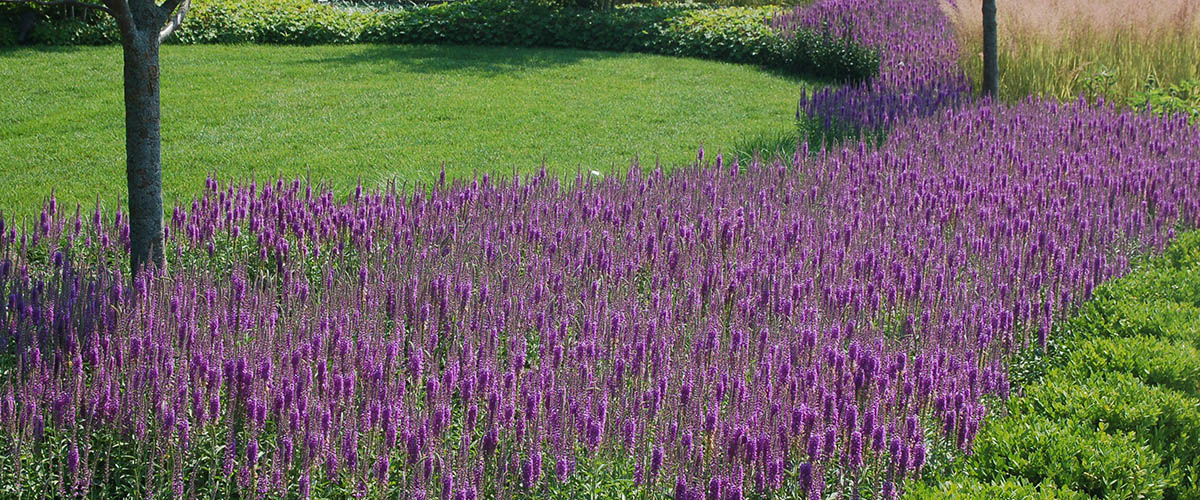
Evaluating Perennials for Chicagoland Gardens
Perennials in Focus is a plant evaluation program that examines new and underused plants for Chicagoland, the third largest metropolitan area in the country. A group of horticultural experts trials and evaluates plants at numerous locations across the region. Results help consumers, public gardens, growers, landscape designers, breeders, and other industry professionals make informed plant choices.
Vernonia Gigantea And Verbena Hastata For Pollinator Gardens
Pollinator visitation is a useful way to compare flowering perennials, but a simple count rarely tells the whole story. The number of insects recorded on a plant depends on flower shape, bloom timing, weather, surrounding vegetation, observer consistency and the range of pollinators present in a garden. For Chicagoland trials, these details help distinguish a plant that attracts many visitors in a short burst from one that provides reliable activity across several weeks.
Vernonia gigantea and Verbena hastata are both upright, moisture-tolerant North American perennials with strong late-season value. Their similar preference for rich, damp soil can make them appear interchangeable, yet their flower architecture and growth habits create different opportunities for bees, butterflies and hoverflies. Australian gardeners can use the comparison as a guide while adjusting expectations for local climates, seasons and insect communities.
| Feature | Vernonia gigantea | Verbena hastata |
|---|---|---|
| Common name | Giant ironweed | Blue vervain |
| Typical flower display | Dense clusters of purple flower heads | Branched spikes of small blue-violet flowers |
| General habit | Tall, upright and strongly structural | Tall, airy and more open |
| Moisture preference | Moist, fertile soil; tolerates seasonal wetness | Moist to moderately wet soil |
| Likely appeal | Bees, butterflies and other insects seeking clustered flowers | Bees, butterflies, hoverflies and small generalist visitors |
| Visitation pattern to investigate | Concentrated activity when large flower heads open | Repeated visits along successive flowering whorls |
| Main trial question | Does the larger display attract more insects at peak bloom? | Does the longer, distributed display sustain visits for longer? |
Why Visitation Rates Matter
A visitation rate usually means the number of insect visits recorded during a defined observation period, often per plant or per square metre. It becomes meaningful only when observers use the same time interval, weather limits, plant size and counting rules. A mature clump of giant ironweed should not be compared casually with a newly planted blue vervain seedling.
The most useful records combine quantity with identity. Counting “insects” alone can conceal important differences between honey bees, native solitary bees, butterflies, moths and hoverflies. A plant visited by fewer insects may still offer valuable habitat if those visitors include specialist or less frequently recorded pollinators.
Flower Structure And Visitor Behaviour
Vernonia gigantea produces broad, conspicuous flower heads made up of many small florets. Its purple colour is easy to detect against green foliage, and a mature plant can present a substantial visual target above the border. Bees may move quickly between florets within a single head, while butterflies can use the plant as a prominent nectar source during the later summer period.
Verbena hastata presents flowers differently. Its small blooms are arranged along narrow, branching spikes, creating a candelabra-like outline. This arrangement spreads nectar access across many points, so visitors may travel up and down the stems rather than remain on one large head. Repeated flowering along the branches may produce a steadier-looking flow of activity, even if each individual flower receives only brief attention.
What Chicagoland Trials Can Reveal
A regional evaluation is valuable because both species are judged under comparable conditions. The Perennials In Focus committee brings together horticultural professionals who can record flowering period, plant form, spread and seasonal performance across multiple gardens. Those observations provide a stronger basis for pollinator comparisons than a single photograph or nursery description.
Trial results should be read alongside plant size and bloom density. Vernonia gigantea may record a high peak visitation rate when its flower heads open together, while Verbena hastata may distribute visits across a longer period. A chart showing weekly totals could therefore favour one plant at peak season and the other across the complete flowering window.
Translating Results For Australian Gardens
Australian conditions alter both flowering calendars and insect activity. A Chicagoland trial conducted in July or August takes place during an Australian winter, so Melbourne, Canberra and Adelaide gardeners should shift the timing rather than copy the calendar month. Sydney and Brisbane may experience milder conditions, although heat, humidity and summer rainfall can change how long flowers remain fresh.
The local pollinator community also differs. Blue-banded bees are familiar visitors in many parts of Australia, while stingless bees are especially relevant in warmer northern areas. European honey bees, native solitary bees, hoverflies and butterflies may all use these plants, but their abundance will depend on nearby habitat. A damp garden in Melbourne may produce a different visitor list from a sunny suburban verge in Perth.
Australian availability is another practical consideration. Local nurseries may stock blue vervain or giant ironweed intermittently rather than year-round, and seasonal plant markets often offer better opportunities to find uncommon perennials. Before purchasing, check whether the plant suits the site’s water supply, summer temperatures and winter drainage rather than relying only on a pollinator label.
Building A Fair Observation Method
For a home comparison, plant two similarly sized groups in comparable soil and light. Record the number of open flower heads, plant height and visible bloom area before counting insects. Observe each plant for the same ten-minute period, preferably several times during the flowering season and at different times of day.
Avoid counting during rain, strong wind or unusually cold conditions. Temperature matters because many bees become active only after the morning has warmed, while butterflies may appear later. Note visitor type where possible, but do not disturb insects for identification. A phone photograph taken from a distance can help confirm whether a visitor was a bee, fly, butterfly or beetle.
The in-the-garden guidance offers a useful way to connect formal evaluation with everyday planting decisions. Gardeners can record flowering dates, insect activity and plant health in the same notebook, creating a local evidence base that becomes more useful each season.
Selecting For Garden Conditions
Choose Vernonia gigantea where a tall vertical accent is welcome and the soil remains reliably moist. It can suit the back of a perennial border, a rain garden edge or a naturalistic planting beside a pond. Give it enough space to develop without shading smaller plants, and expect its height to make a strong statement once late-season flowers appear.
Verbena hastata can work well where a lighter silhouette is preferred. Its open stems allow neighbouring plants to remain visible, and the branching flower spikes can bridge the gap between low-growing groundcovers and taller perennials. It still performs best with consistent moisture, especially while establishing, but may fit more comfortably into a mixed border.
Planting both creates a useful succession rather than a strict contest. The ironweed can provide a concentrated late-season resource, while blue vervain may add repeated access points along its spikes. The right pairing depends on soil and scale, much like relationship advice depends on compatibility rather than surface appeal.
Reading The Results Beyond A Single Number
A high visitation rate does not automatically make a plant the better garden choice. Dense flower clusters may attract many insects for a short period, while a more modest display can support visits over a longer flowering window. Consider peak visits, total active weeks, visitor diversity and the amount of garden space required.
Also assess practical performance. A plant that remains upright after storms, flowers reliably and survives local conditions may contribute more to a pollinator planting than a spectacular but short-lived performer. Seed production, self-sowing and maintenance needs can influence whether a plant remains suitable for a small suburban garden or a larger public landscape.
For Australian readers, compare trial findings with observations from your own region. A plant that excels in damp Chicagoland soil may need irrigation in Adelaide or careful heat management in western Sydney. Conversely, a long warm season could extend flowering and create additional observation opportunities beyond the original trial period.
From Trial Notes To Planting Plans
Use the comparison to make a measured choice: plant giant ironweed for height, clustered late-season colour and strong peak displays, or choose blue vervain for airy structure and a succession of small floral landing points. Where space and moisture allow, combine them with locally suitable flowering species so pollinators have food before and after their main bloom periods.
Start a simple record this season, using consistent observation times and noting weather, flower numbers and visitor groups. Share useful findings with local gardening clubs, native bee networks, nurseries and community planting projects. Evidence gathered from Melbourne courtyards, Sydney back gardens and regional Australian landscapes can add valuable context to published North American trials.
Select healthy plants from reputable local suppliers, provide the moisture and light each species requires, and let repeated observations guide future planting. A thoughtful comparison turns two attractive perennials into a practical experiment that supports better garden design and more dependable pollinator resources.
In the Garden
Evaluator gardens are located across the Chicagoland area, representing a range of growing conditions. Visit our retail and wholesale partners to find trialled perennials for your own garden.
Retail & Wholesale: Hinsdale Nurseries (Willowbrook, IL), Mariani Nurseries (Kenosha, WI & Garden Prairie, IL), Northwind Perennials (Burlington, WI), The Growing Place (Aurora, IL).
Wholesale Only: Hinsdale Nurseries (Plano, IL), Intrinsic Perennial Gardens (Hebron, IL).
Our Evaluation Program
The 2017–2020 evaluation cycle included Agastache 'Blue Boa', Allium senescens 'Blue Eddy', Amsonia ciliata var. filifolia 'Georgia Pancake', Astilbe 'Chocolate Shogun', Boltonia astroides 'James Crocket', Brunnera 'Alexander's Great', and Geranium cinereum 'Jolly Jewel Purple'. Completed evaluations include Amsonia 'Blue Ice' (2004–07).
On April 10, 2020, the program published snapshot profiles for Vernonia lettermanii 'Iron Butterfly', Stokesia laevis 'Elf', Stachys officinalis 'Pink Cotton Candy', Lobelia 'Monet Moment', Helleborus 'Winter Thrillers', Geum 'Mai Tai', Geranium soboliferum 'Butterfly Kisses', Gentiana x intermedia 'True Blue', Eurybia divaricata, Asparagus 'Purple Passion', and Agastache 'Bolero'.
Browse the full collection of snapshots organized alphabetically — from A–D, E–H, I–Q, and R–Z — to find detailed performance data on perennials trialled across Chicagoland.