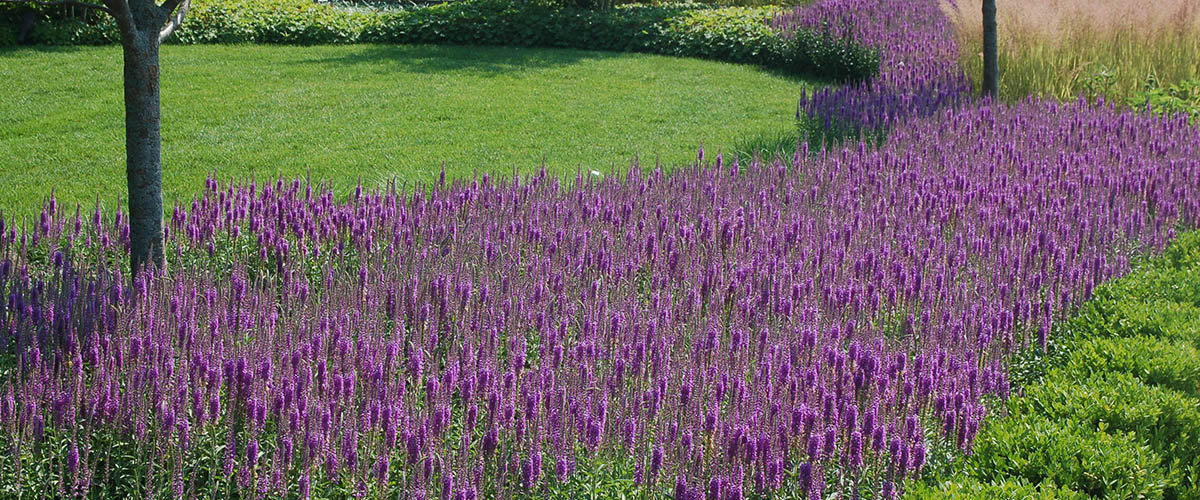
Evaluating Perennials for Chicagoland Gardens
Perennials in Focus is a plant evaluation program that examines new and underused plants for Chicagoland, the third largest metropolitan area in the country. A group of horticultural experts trials and evaluates plants at numerous locations across the region. Results help consumers, public gardens, growers, landscape designers, breeders, and other industry professionals make informed plant choices.
Pill bug damage in Ligularia and Cimicifuga
Comparing pill bug damage on Ligularia dentata versus Cimicifuga racemosa depends on recognising the pest and understanding how differently the two plants show injury. Pill bugs are terrestrial isopods, often called woodlice or roly-polies, and they chew tender leaves, shoots, and occasionally roots when damp cover is available. Both perennials can be affected, but visible damage varies with leaf form, growth stage, and the location of the feeding colony. Learn more about Testing New Iris Sibirica Cultivars For Wet Soil Conditions Basics.
Both plants are herbaceous perennials suited to woodland-style shade and moisture-retentive soil, conditions that can also shelter pests. In Australia, Melbourne’s cool, wet winters and Sydney’s humid summers may encourage active colonies, while Perth’s dry summer often confines them to irrigated shade. Chicagoland trial results provide a useful reference, but local Australian observations should determine which plant performs best in a particular garden.
How pill bugs feed
Pill bugs are crustacean-like rather than true insects, and their feeding differs from caterpillars and the mucus trails left by slugs. They usually feed at night, hiding in damp mulch, leaf litter, pots, and compost during the day. Fresh growth around a perennial’s crown is particularly attractive, and overhead irrigation or thick, wet mulch can keep the soil cool and sheltered for long periods.
Typical injury includes irregular holes, notched or scalloped margins, missing tissue between veins, and damage to emerging flower stems. A shiny trail points more strongly to slugs or snails, although both pests may be present. Check after dusk with a torch, lifting low leaves and looking beneath containers and mulch. Seeing damage the next morning without an animal present does not rule out night feeding.
Ligularia dentata shows broad-leaf damage
Ligularia dentata, commonly called toothed ligularia, has broad leaves that make light feeding conspicuous. Small holes become obvious against the leaf surface, while repeated chewing can leave tattered outlines or skeletonised patches. New leaves emerging from the crown may be pinched, torn, or distorted, reducing both photosynthetic area and the plant’s neat appearance.
Visibility does not prove that Ligularia is more susceptible. Mature leaves can tolerate minor injury, whereas serious losses occur when a colony attacks the crown, petioles, or a new flush of growth. A plant in cool, consistently moist soil may show more obvious damage than one in a dry, sunny corner, where growth is less tender and pest numbers may be lower.
Moisture therefore matters both in attracting the pests and in interpreting the damage. The Perennials in Focus approach of testing plants across multiple sites is valuable, and its related wet-soil iris trial shows how site differences are documented rather than concealed by a favourable nursery pot. In an Australian garden, note whether damage clusters near irrigation emitters, downpipes, or compost piles; that pattern can be more useful than a single garden-wide score.
Cimicifuga racemosa hides damage in its canopy
Cimicifuga racemosa, now commonly sold as Actaea racemosa or black cohosh, has divided foliage on upright stems and tall flower racemes. Pill bugs may remove pieces of individual leaflets, producing damage less dramatic than the broad-leaf injury on Ligularia. Tender basal shoots and flower stems can still be weakened or broken, and damaged buds may shorten the floral display.
The dense canopy means Cimicifuga often advertises light feeding less clearly than Ligularia. Lower leaves can disappear without an obvious effect from above, while the upright habit shelters the crown and gives pill bugs useful cover. Light chewing may not prevent flowering, but a heavy infestation can combine missing foliage with shortened spikes and a looser clump. Inspecting at soil level is more reliable than judging only the upper growth.
Perennials in Focus evaluations record plant performance alongside the traits growers value, including bloom period, flower colour, height, and spread. Keeping any pest observations beside that broader record matters because reduced leaf area, flowering, or vigour may matter more in a public-garden trial than a few cosmetic holes. It also helps distinguish a temporary setback from loss of an established plant, which may regrow from its crown after the pests are controlled.
Australian conditions change the comparison
Climate and habits alter the balance in different Australian regions. Melbourne’s cool, damp winters suit these shade perennials, although summer irrigation can create sheltered pockets under mulch. Sydney gardens may need consistent moisture and careful root-zone cooling during humid weather. In Perth, an irrigated courtyard or pond edge may provide the required soil moisture, while surrounding dryness can suppress colonies once watering stops.
The local plant market adds another layer of uncertainty. Australian garden centres and online nurseries may sell Cimicifuga under Actaea, and a plant labelled Ligularia dentata may arrive in a small pot with few visible roots. The habit of checking recent customer reports can help flag recurring retail problems, as illustrated by Krogar customer feedback, but local grower advice and a healthy root system are more relevant to these species. Check botanical names, foliage condition, and return policies before buying.
Plant movement is governed by Commonwealth, state, and territory biosecurity law. The federal Biosecurity Act 2015 and local quarantine instruments can restrict the movement of plants, soil, and plant pests, so do not accept a bare-root division from an unknown interstate source without checking the rules. Clean tools, use reputable Australian suppliers, and avoid carrying contaminated garden soil between regions.
Reducing damage while protecting performance
Begin with monitoring rather than spraying. Check plants every few evenings for a week, record which leaves are affected, and look under mulch, stones, and containers. Remove hiding places directly around the crown without stripping all useful mulch from the bed. Improve drainage and air movement, water the soil rather than foliage in the evening, and avoid a constantly wet ring of compost against the stems. Minor holes on an otherwise vigorous plant may need no chemical response.
For a small planting, hand-picking after dark is practical and selective. A stiff brush can dislodge isopods into a container, while a flashlight makes them easier to see. Isolate new pots, inspect their packaging, and keep a clean, dry staging area until plants have been checked. Encourage ground-active predators such as beetles, centipedes, and birds, and avoid broad-spectrum insecticides that also remove natural enemies.
If further treatment is needed, select a product registered for that use in Australia and follow the label exactly. The Australian Pesticides and Veterinary Medicines Authority register can confirm permitted products and directions; an insecticide approved for another crop is not automatically suitable for a perennial border. Do not pour concentrated bait onto edible plants. After treatment, keep checking because hidden isopods can survive an initial application.
Record the first bite early. Photograph the plant, mark the affected side, and note whether new leaves emerge cleanly over the following two or three weeks. Comparing the same observations on Ligularia dentata and Cimicifuga racemosa reveals which plant tolerates the site, which provides shelter, and whether changing irrigation or mulch reduces damage without sacrificing bloom and spread.
Choose planting positions that allow a fair test: give Ligularia an evenly moist but well-drained pocket and give Cimicifuga similar shade with protection from drying winds. Keep a simple garden log, buy clean local stock, and inspect new divisions before planting them. These actions turn a general pest comparison into a confident decision for an Australian garden.
In the Garden
Evaluator gardens are located across the Chicagoland area, representing a range of growing conditions. Visit our retail and wholesale partners to find trialled perennials for your own garden.
Retail & Wholesale: Hinsdale Nurseries (Willowbrook, IL), Mariani Nurseries (Kenosha, WI & Garden Prairie, IL), Northwind Perennials (Burlington, WI), The Growing Place (Aurora, IL).
Wholesale Only: Hinsdale Nurseries (Plano, IL), Intrinsic Perennial Gardens (Hebron, IL).
Our Evaluation Program
The 2017–2020 evaluation cycle included Agastache 'Blue Boa', Allium senescens 'Blue Eddy', Amsonia ciliata var. filifolia 'Georgia Pancake', Astilbe 'Chocolate Shogun', Boltonia astroides 'James Crocket', Brunnera 'Alexander's Great', and Geranium cinereum 'Jolly Jewel Purple'. Completed evaluations include Amsonia 'Blue Ice' (2004–07).
On April 10, 2020, the program published snapshot profiles for Vernonia lettermanii 'Iron Butterfly', Stokesia laevis 'Elf', Stachys officinalis 'Pink Cotton Candy', Lobelia 'Monet Moment', Helleborus 'Winter Thrillers', Geum 'Mai Tai', Geranium soboliferum 'Butterfly Kisses', Gentiana x intermedia 'True Blue', Eurybia divaricata, Asparagus 'Purple Passion', and Agastache 'Bolero'.
Browse the full collection of snapshots organized alphabetically — from A–D, E–H, I–Q, and R–Z — to find detailed performance data on perennials trialled across Chicagoland.