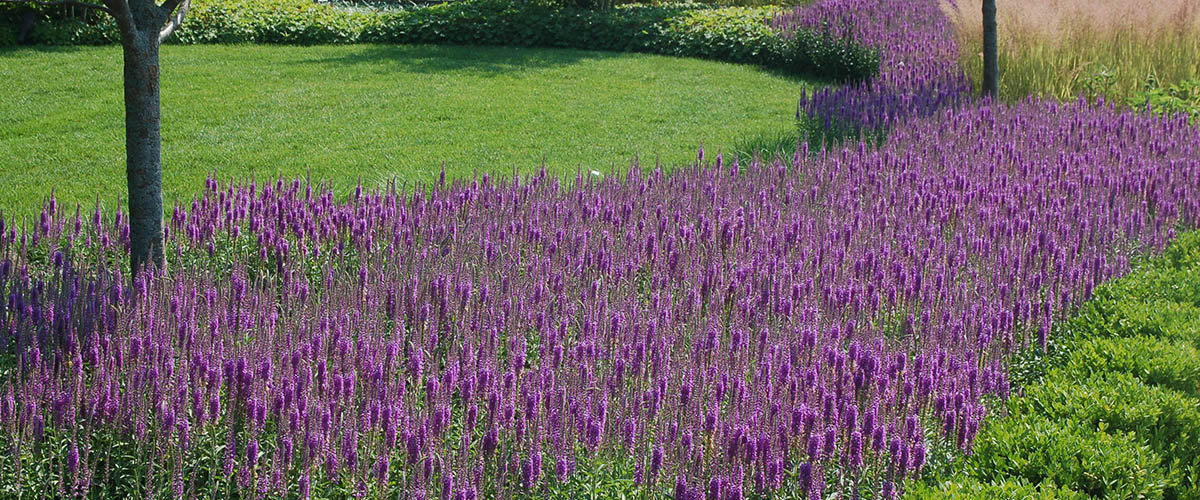
Evaluating Perennials for Chicagoland Gardens
Perennials in Focus is a plant evaluation program that examines new and underused plants for Chicagoland, the third largest metropolitan area in the country. A group of horticultural experts trials and evaluates plants at numerous locations across the region. Results help consumers, public gardens, growers, landscape designers, breeders, and other industry professionals make informed plant choices.
Alchemilla Mollis And Alchemilla Vulgaris: Leaf Spot Compared
Lady’s mantle is valued for its scalloped foliage, frothy chartreuse flowers and ability to soften paths, borders and cottage-style planting. In Australian gardens, Alchemilla can bring a cool-climate character to courtyards, perennial beds and shaded edges, although summer heat and humid weather can change how the plants perform.
Alchemilla mollis is the familiar large lady’s mantle, while Alchemilla vulgaris is generally more compact and less commonly stocked by mainstream nurseries. Both can develop spotted, discoloured or declining leaves, but the visible symptoms do not automatically prove that one species is inherently disease resistant.
The most useful comparison comes from observing plants under the same conditions. Regional trials, repeated seasonal records and careful attention to irrigation, spacing and weather provide a stronger guide than a single photograph or an isolated plant label. Findings from the northern United States can inform Australian decisions, but local climate and garden practice still matter.
Understanding Leaf Spot On Lady’s Mantle
Leaf spot is a broad description rather than the name of one disease. Several fungal or bacterial organisms can produce small brown, tan, blackish or yellow-edged lesions on Alchemilla leaves. Spots may merge as they enlarge, creating ragged areas of dead tissue and reducing the plant’s ornamental value.
Disease pressure usually increases when leaves remain wet for long periods. Dense growth, poor air movement, frequent overhead watering, crowded planting and warm nights can all prolong leaf wetness. Fallen infected leaves may also help maintain inoculum around the crown, particularly where the same plants remain undisturbed for several seasons.
In Australia, conditions can differ sharply between Melbourne, Hobart, Sydney and Perth. A cool, wet spring in Melbourne may favour leaf spot, while irrigation practices in a dry Adelaide garden may be more influential than rainfall. In tropical or subtropical districts, summer humidity can create a different disease pattern from that seen in the Chicagoland trials.
How The Two Species Differ
Alchemilla mollis forms a relatively substantial clump with broad, pleated, fan-shaped leaves. Its foliage often creates a dense canopy, especially in fertile soil with reliable moisture. That fullness is one of its strengths in a border, yet the same density may trap humid air around inner leaves after rain or irrigation.
Alchemilla vulgaris is usually treated as a smaller, more variable species, with less imposing foliage and a finer overall presence. Individual selections can differ considerably, so descriptions based on the species name alone should be treated cautiously. A more open habit may improve ventilation, but it does not guarantee fewer lesions.
Plant size, leaf texture, crown density and genetic background can all affect disease expression. A vigorous A. mollis selection in a well-ventilated bed may remain cleaner than a stressed A. vulgaris plant in a cramped pot. For that reason, “more resistant” should mean consistently fewer or slower-developing symptoms under comparable conditions, not simply a plant that looks cleaner at one inspection.
What Trial Observations Can Show
A useful evaluation records the first appearance of spotting, the percentage of affected foliage, the speed of symptom spread and the plant’s ability to produce clean replacement leaves. It should also note flowering, plant height, spread and overall garden value. The plant trial records from Perennials in Focus illustrate why performance is best assessed across sites and seasons rather than from one nursery bench.
For a fair comparison, A. mollis and A. vulgaris should be grown in the same soil type, light exposure and irrigation regime. Plants should be assessed at several points through spring and summer, with notes made after wet weather and during periods of heat stress. Photographing the same clump from a consistent distance can reveal gradual deterioration that casual observation misses.
Trial results from Chicagoland are especially useful for understanding cold-climate perennial behaviour, overwintering and seasonal growth. They should not be presented as a direct disease guarantee for Australia. A plant that performs well through a humid Midwestern summer may respond differently in Brisbane, while a selection that struggles in a short northern growing season may thrive in a cool Tasmanian garden.
| Feature | Alchemilla mollis | Alchemilla vulgaris |
|---|---|---|
| Typical habit | Larger, fuller clump | Smaller or finer clump, depending on selection |
| Leaf spot risk | Dense foliage may retain moisture in still conditions | Potentially better air movement, but variation is substantial |
| Main visual symptom | Brown or dark lesions that can merge on older leaves | Similar spotting, often influenced strongly by site and stress |
| Best cultural approach | Give generous spacing and avoid wetting the canopy | Maintain airflow and monitor compact plantings |
| Confidence in species-level comparison | Moderate; cultivar and site effects are important | Limited where named selections are inconsistently available |
| Australian suitability | Best in cool or mild regions with summer moisture control | Worth trialling where a smaller plant is preferred |
Environmental Factors That Shift Risk
Light and spacing have a major effect on leaf health. Alchemilla generally appreciates protection from harsh afternoon sun in warmer parts of Australia, yet deep shade can leave foliage damp for longer. Morning sun, good air movement and soil that drains freely without drying abruptly often create a better balance.
Watering at soil level is preferable to wetting the leaves. Drip lines, porous hoses or careful hand watering can reduce splash and leaf wetness, especially in Sydney’s humid periods or during extended wet weather in the Dandenong Ranges. In contrast, a regularly used sprinkler system can spread debris and keep the canopy damp overnight.
Avoid pushing lush growth with excessive nitrogen. Soft, rapidly produced foliage may create a dense canopy and can be more vulnerable to stress when conditions change. Mulching is helpful for conserving moisture, but keep organic mulch away from the crown and remove heavily diseased leaves rather than burying them immediately beside the plant.
Practical Management In Australian Gardens
Begin with clean stock and inspect leaves before bringing plants home. Retail availability may be limited for A. vulgaris, so a specialist perennial nursery or mail-order supplier may offer more reliable identification than a mixed garden-centre bench. Keep new plants separate for a short observation period when introducing them to a collection.
At the first sign of spotting, remove the worst leaves with clean secateurs and dispose of them in household waste where local regulations require it. Do not compost diseased foliage unless the composting system reaches temperatures capable of destroying pathogens. Disinfect tools between visibly affected plants, particularly when working through a dense perennial border.
Fungicides are not a substitute for site correction. Products registered for ornamental leaf diseases may have a role in severe cases, but Australian gardeners should follow the label, check permitted uses and observe any withholding or safety directions. Improving ventilation, reducing overhead irrigation and cleaning up fallen leaves usually provides the most durable foundation.
Choosing Between The Species
Choose A. mollis when a broad, soft-edged foliage mass is needed beneath roses, along a path or in a cool, moisture-retentive border. Its larger leaves and generous flowering display can justify the extra attention required to keep the canopy open. In a small courtyard, however, its size may encourage crowding and make leaf spot more noticeable.
A. vulgaris may suit gardeners seeking a less dominant plant for a narrow bed, alpine-style arrangement or mixed perennial planting. Its smaller scale can make monitoring easier, although availability and naming may be inconsistent. Ask growers for the mature width, provenance and disease observations of the actual selection rather than relying on a species description alone.
Local plant buyers are increasingly attentive to resilient, water-wise and low-maintenance perennials, especially as retail ranges respond to hotter summers and tighter garden spaces. A Melbourne gardener might prioritise winter survival and wet-season foliage, while a Canberra gardener may focus on frost recovery and summer irrigation. Public gardens and specialist growers can help identify selections that have demonstrated value beyond a single retail season.
Perennial evaluation is most helpful when performance notes are shared clearly. The garden plant list can provide a useful place to organise candidate species, observations and sourcing details before making a larger purchase. For visual comparisons of form and seasonal appearance, browse the plant snapshots alongside written performance notes.
Track both species in your own conditions for at least one full growing season, recording rainfall, irrigation, shade, leaf spotting and recovery after trimming. That simple evidence will help reveal whether A. mollis or A. vulgaris is the better fit for your garden, rather than assuming that a smaller leaf or looser habit alone determines disease resistance.
Select clean plants, provide airflow and water the root zone rather than the foliage. Share reliable observations with local growers, garden groups and trial networks so future Australian plant choices can be based on performance in real gardens, not just attractive catalogue images.
In the Garden
Evaluator gardens are located across the Chicagoland area, representing a range of growing conditions. Visit our retail and wholesale partners to find trialled perennials for your own garden.
Retail & Wholesale: Hinsdale Nurseries (Willowbrook, IL), Mariani Nurseries (Kenosha, WI & Garden Prairie, IL), Northwind Perennials (Burlington, WI), The Growing Place (Aurora, IL).
Wholesale Only: Hinsdale Nurseries (Plano, IL), Intrinsic Perennial Gardens (Hebron, IL).
Our Evaluation Program
The 2017–2020 evaluation cycle included Agastache 'Blue Boa', Allium senescens 'Blue Eddy', Amsonia ciliata var. filifolia 'Georgia Pancake', Astilbe 'Chocolate Shogun', Boltonia astroides 'James Crocket', Brunnera 'Alexander's Great', and Geranium cinereum 'Jolly Jewel Purple'. Completed evaluations include Amsonia 'Blue Ice' (2004–07).
On April 10, 2020, the program published snapshot profiles for Vernonia lettermanii 'Iron Butterfly', Stokesia laevis 'Elf', Stachys officinalis 'Pink Cotton Candy', Lobelia 'Monet Moment', Helleborus 'Winter Thrillers', Geum 'Mai Tai', Geranium soboliferum 'Butterfly Kisses', Gentiana x intermedia 'True Blue', Eurybia divaricata, Asparagus 'Purple Passion', and Agastache 'Bolero'.
Browse the full collection of snapshots organized alphabetically — from A–D, E–H, I–Q, and R–Z — to find detailed performance data on perennials trialled across Chicagoland.