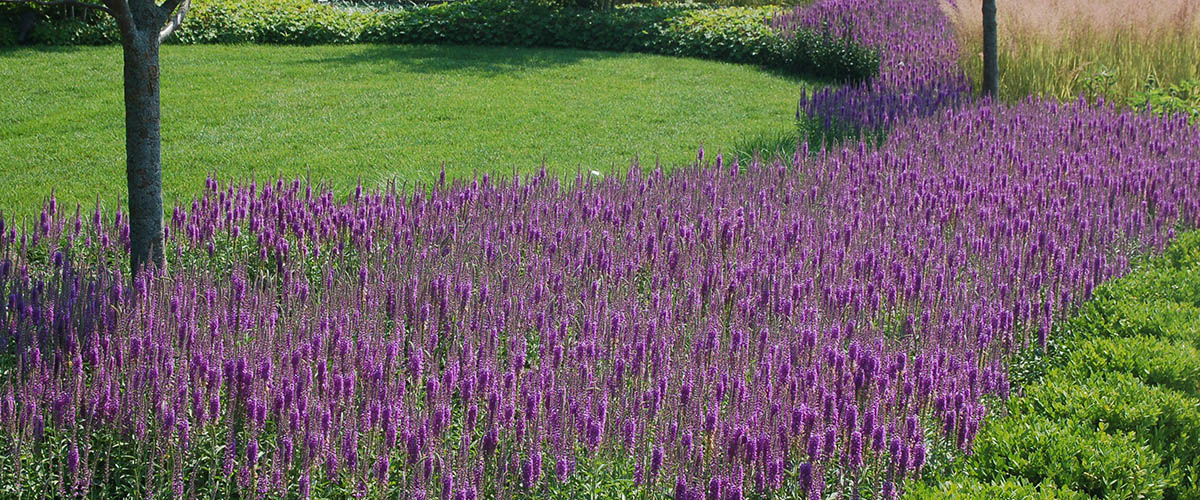
Evaluating Perennials for Chicagoland Gardens
Perennials in Focus is a plant evaluation program that examines new and underused plants for Chicagoland, the third largest metropolitan area in the country. A group of horticultural experts trials and evaluates plants at numerous locations across the region. Results help consumers, public gardens, growers, landscape designers, breeders, and other industry professionals make informed plant choices.
Asarum Canadense Or Asarum Europaeum For Leaf-Littered Shade
Leaf mould is often treated as a nuisance, yet in a woodland-style garden it can be a useful mulch and a source of organic matter. The real issue is whether a perennial can remain healthy beneath a heavy, wet layer of decomposing leaves, particularly where poor air movement keeps the crown damp for weeks.
Asarum canadense and Asarum europaeum are both shade-loving wild gingers with attractive heart-shaped foliage, but they behave differently through the seasons. Their response to leaf litter depends on foliage persistence, crown structure, drainage, winter conditions and the type of leaves accumulating around them.
Growth Habits That Shape Leaf Mold Tolerance
Asarum canadense is a deciduous North American perennial. It emerges in spring, carries broad green leaves through the growing season, and usually retreats underground in autumn. Once the foliage has died back, a moderate cover of soft leaf mould generally causes little concern because the plant’s crown is naturally adapted to seasonal dormancy.
Its disappearing foliage also creates a practical advantage. Gardeners can remove compacted leaves in late winter without damaging a visible evergreen canopy. In a Melbourne or Canberra garden, where winter rain can keep mulch wet, this seasonal clearance may help reduce crown rot and slug shelter.
Asarum europaeum is evergreen or semi-evergreen in many suitable climates. Its glossy, dark leaves remain close to the ground, giving it a polished appearance in a shaded border. However, persistent foliage can become trapped beneath fallen leaves, especially when the litter forms a dense mat over the crown.
That does not make European wild ginger fragile. It is often very capable in cool, humus-rich shade, but its leaf mould tolerance is more dependent on good maintenance. Loose, aerated litter is usually harmless; a saturated blanket pressed against the foliage for months is a different condition.
How Wet Leaf Litter Affects Each Species
Leaf mould causes problems mainly through moisture retention rather than toxicity. A thick layer can reduce airflow, keep stems and crowns continuously wet, and encourage fungal pathogens. It can also provide cover for slugs and snails, which may damage emerging shoots before the gardener notices.
Asarum canadense tends to recover well after seasonal dieback, provided its rhizomes are planted in soil that drains freely enough between rain events. A thin layer of decomposed leaves can protect the dormant crown and gradually improve soil texture. Fresh, matted leaves are less desirable because they may shed water unevenly and form a cold, airless cover.
With Asarum europaeum, the main risk is prolonged contact between wet litter and living leaves. Remove leaves that collect in the centre of the plant, particularly after storms or strong winds. This is especially relevant in Sydney gardens beneath liquidambar or plane trees, where large leaves can stack into a thick sheet.
Leaf type matters as much as volume. Small, partially decomposed leaves break down quickly and permit air exchange. Whole magnolia leaves, plane leaves and leathery evergreen litter may bridge over the plant, trap moisture and take much longer to decay.
Comparing Performance In Different Australian Gardens
Neither species is a universal choice for every Australian climate. Both prefer cool to moderate conditions, rich soil and filtered shade. Asarum canadense can be a sound option where summers are not excessively hot and dry, while Asarum europaeum is often valued for its evergreen presence in cool, sheltered gardens.
In Brisbane and other subtropical areas, summer heat and humidity may be more limiting than leaf mould itself. Plants need deep shade, consistent moisture and excellent drainage, rather than a permanently saturated bed. In Adelaide, irrigation must be carefully balanced: dry soil followed by heavy watering can stress the plants, while compacted winter soil can encourage rot.
In Melbourne, Tasmania and elevated parts of New South Wales, the conditions are generally more sympathetic, particularly in established woodland borders. A local nursery may stock European wild ginger more regularly, while Canadian wild ginger can be less familiar and may need to be sourced through specialist perennial growers.
Australian gardeners should also consider leaf litter from native trees. Eucalyptus leaves are slow to decompose and can create a dry, hydrophobic layer before becoming wet and heavy. They are best shredded or composted before being used around either Asarum species, rather than left in a thick, untouched pile.
| Feature | Asarum canadense | Asarum europaeum |
|---|---|---|
| Foliage habit | Deciduous | Evergreen to semi-evergreen |
| Leaf mould response | Generally forgiving during dormancy | More sensitive to litter sitting on live foliage |
| Best litter treatment | Light seasonal mulch; clear dense mats before spring | Keep the crown and leaves free from compacted litter |
| Preferred setting | Cool, moist, humus-rich shade | Sheltered, cool shade with reliable drainage |
| Main Australian concern | Summer heat and drying soil | Wet winter litter and poor air movement |
| Maintenance level | Low to moderate | Moderate, especially in leaf-heavy beds |
Soil, Drainage And Mulch Management
Both wild gingers perform best in soil that holds moisture without remaining waterlogged. Incorporate mature compost or well-rotted leaf mould before planting, but avoid placing fresh organic material directly against the crown. A raised or gently sloping bed can be valuable in gardens with heavy clay, including many suburban sites around Melbourne.
Planting depth also matters. Rhizomes should sit securely in the soil rather than being buried beneath a deep organic layer. Excessive mulch can encourage crown problems and make it harder to see whether new shoots are emerging normally.
For Asarum canadense, leave a modest layer of fine, decomposed leaf mould over the dormant planting during winter, then remove any coarse material before spring growth begins. For Asarum europaeum, keep mulch around the plant rather than over it. A clear central crown and open foliage reduce the time that moisture remains trapped.
Water at soil level when possible. Drip irrigation or a carefully directed hose is preferable to frequent overhead watering, especially in humid weather. In water-conscious Australian gardens, deep watering followed by a partial drying period is usually more beneficial than shallow daily sprinkling.
Reading Trial Evidence And Garden Observations
Regional plant evaluation is useful because published descriptions rarely capture how a perennial behaves under a specific combination of climate, soil and maintenance. The Perennials In Focus programme records traits such as height, spread, flowering and seasonal performance across multiple gardens, providing a helpful framework for comparing plants rather than relying on a single nursery photograph.
For Australian readers, Chicagoland trial information should be treated as evidence about plant character, not as a direct prediction of performance in Perth, Brisbane or Hobart. A plant that handles cold winters and spring leaf litter in Illinois may respond differently to Australian summer heat, irregular rainfall or local pests.
When comparing garden notes, record the depth and type of litter, the number of wet days, the amount of shade and whether leaves were cleared. A concise, consistent layout makes observations easier to compare; principles of an easy-to-scan layout are useful when organising plant records, even in a horticultural setting.
Photograph plants after winter, during spring emergence and at the end of summer. Notes should distinguish leaf scorch, slug damage, crown collapse and normal seasonal dormancy. Those symptoms can look similar at a glance but require different responses.
Choosing And Maintaining The Better Fit
Choose Asarum canadense when a deciduous groundcover suits the design and a seasonal tidy-up is acceptable. It is particularly attractive beneath trees where a natural woodland appearance is wanted, and its dormant winter crown is less likely to remain hidden beneath wet foliage.
Choose Asarum europaeum when year-round greenery is important and the site offers cool shade, rich soil and attentive litter management. Its glossy leaves can provide a strong visual contrast with ferns, hellebores and fine-textured grasses, but the planting should not be allowed to disappear under compacted debris.
For either species, begin with a small group rather than filling an entire bed. Observe how the plants respond through one complete Australian growing cycle, including the wettest and hottest periods. Buy healthy, correctly labelled stock from reputable nurseries, and check availability because specialist perennials can vary between states and seasons.
The most reliable approach is a light-touch routine: improve drainage before planting, use aged organic matter, clear heavy leaf mats, and avoid keeping the crown constantly wet. Under those conditions, both wild gingers can become valuable shade plants, with Asarum canadense generally offering the easier response to seasonal leaf cover and Asarum europaeum rewarding closer attention to evergreen foliage.
Add one or both species to a trial corner of the garden, record their response to local leaf litter and seasonal moisture, and share the results with fellow growers, retailers or garden groups. Careful observation will reveal which wild ginger is the stronger long-term performer in your Australian conditions.
In the Garden
Evaluator gardens are located across the Chicagoland area, representing a range of growing conditions. Visit our retail and wholesale partners to find trialled perennials for your own garden.
Retail & Wholesale: Hinsdale Nurseries (Willowbrook, IL), Mariani Nurseries (Kenosha, WI & Garden Prairie, IL), Northwind Perennials (Burlington, WI), The Growing Place (Aurora, IL).
Wholesale Only: Hinsdale Nurseries (Plano, IL), Intrinsic Perennial Gardens (Hebron, IL).
Our Evaluation Program
The 2017–2020 evaluation cycle included Agastache 'Blue Boa', Allium senescens 'Blue Eddy', Amsonia ciliata var. filifolia 'Georgia Pancake', Astilbe 'Chocolate Shogun', Boltonia astroides 'James Crocket', Brunnera 'Alexander's Great', and Geranium cinereum 'Jolly Jewel Purple'. Completed evaluations include Amsonia 'Blue Ice' (2004–07).
On April 10, 2020, the program published snapshot profiles for Vernonia lettermanii 'Iron Butterfly', Stokesia laevis 'Elf', Stachys officinalis 'Pink Cotton Candy', Lobelia 'Monet Moment', Helleborus 'Winter Thrillers', Geum 'Mai Tai', Geranium soboliferum 'Butterfly Kisses', Gentiana x intermedia 'True Blue', Eurybia divaricata, Asparagus 'Purple Passion', and Agastache 'Bolero'.
Browse the full collection of snapshots organized alphabetically — from A–D, E–H, I–Q, and R–Z — to find detailed performance data on perennials trialled across Chicagoland.