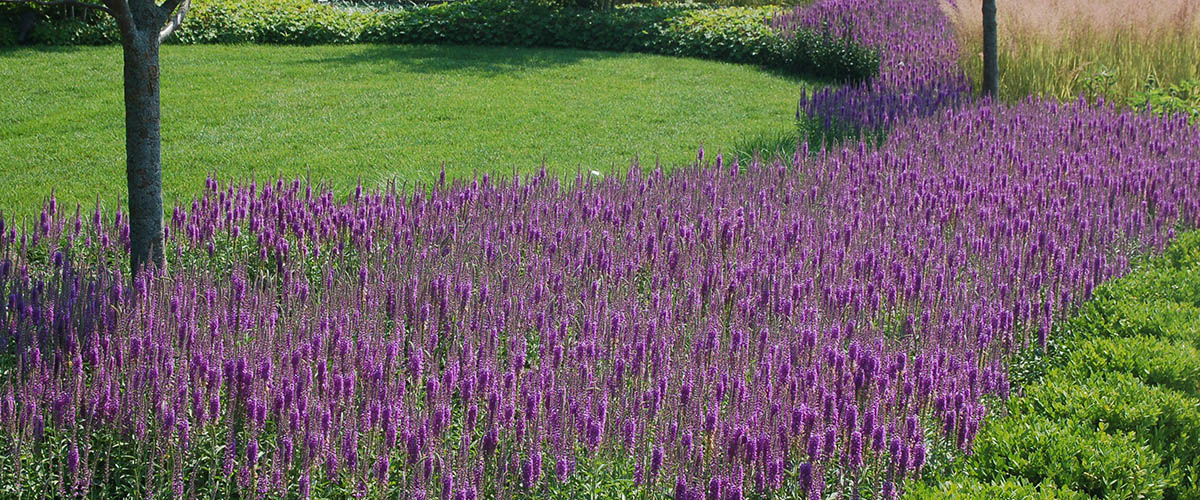
Evaluating Perennials for Chicagoland Gardens
Perennials in Focus is a plant evaluation program that examines new and underused plants for Chicagoland, the third largest metropolitan area in the country. A group of horticultural experts trials and evaluates plants at numerous locations across the region. Results help consumers, public gardens, growers, landscape designers, breeders, and other industry professionals make informed plant choices.
Fern Foliage Textures for Shady Chicago Courtyards
Shady courtyards often need plants that create visual interest without relying on long bloom periods. Ferns are especially useful because their fronds bring structure, movement, and layered green color to spaces where sun-loving perennials may struggle. Their differences in texture can be just as important as their mature height or hardiness.
A narrow urban courtyard may contain reflected heat, compacted soil, limited airflow, and dry shade beneath walls or trees. These conditions make plant selection more specific than simply choosing a fern labeled “shade tolerant.” Frond size, leaflet spacing, surface sheen, and seasonal persistence all influence how a fern will look and perform.
In the Chicago region, comparing species by foliage texture helps gardeners match each plant to the scale and mood of the space. A delicate maidenhair fern creates a very different effect from the strong vertical fronds of an ostrich fern or the leathery evergreen presence of a Christmas fern.
How Texture Changes A Courtyard
Fern texture is determined by several visible traits. Fine-textured species have narrow fronds and small, closely spaced pinnae that create a soft, almost cloudlike appearance. Coarse-textured ferns use broader divisions, heavier stems, or substantial fronds to produce stronger visual weight.
Texture also changes with distance. A finely divided Japanese painted fern may look intricate beside a path, where its silver markings can be appreciated closely. A large ostrich fern is more effective across a courtyard, where its tall, arching form remains legible from several yards away.
Color contributes to the textural impression. Glossy, deep-green fronds appear denser and more substantial, while blue-green, silvery, or matte foliage tends to look lighter. New fiddleheads can add seasonal drama before the mature fronds settle into their characteristic shape.
Fine And Delicate Fronds
Maidenhair fern, Adiantum pedatum, offers one of the most delicate foliage effects for a protected Chicago courtyard. Its fan-shaped leaflets are arranged along dark, wiry stems, giving the plant an airy silhouette. It suits a cool, humus-rich location where the soil remains evenly moist but drains well.
The species is less forgiving of prolonged dryness than tougher garden ferns. In a courtyard, it may perform best where paving directs occasional runoff into the planting bed or where a building provides protection from drying wind. Its open texture is particularly effective beside broad-leaved hostas, brunnera, or large stones.
Japanese painted fern, Athyrium niponicum var. pictum, combines fine division with strong color. Silver-gray fronds, burgundy midribs, and green margins make it appear luminous in low light. Cultivars vary in intensity, so regional evaluation is useful when selecting forms for consistent color and mature spread.
For early-season contrast, Japanese painted fern can be paired with lungwort rather than treated as a solitary focal point. The early spring color guide offers useful context for combining foliage plants with flowers that emerge before the fern reaches full size.
Bold And Architectural Fronds
Ostrich fern, Matteuccia struthiopteris, produces tall, upright fronds that create a bold, architectural texture. Its plume-like shape works well at the rear of a broad courtyard border, but it can overwhelm a narrow bed. The plant also spreads by underground runners in favorable conditions, so it requires adequate room or regular division.
Christmas fern, Polystichum acrostichoides, has a more restrained but substantial appearance. Its dark green, leathery fronds remain attractive through much of winter when protected from excessive exposure. Individual pinnae have a firm, polished quality that contrasts effectively with soft groundcovers and mossy surfaces.
Marginal wood fern, Dryopteris marginalis, provides another durable, medium-to-coarse texture. Its blue-green fronds form a composed, vase-shaped clump rather than a rapidly expanding colony. This makes it useful in smaller courtyards where predictable spread and a calm silhouette are priorities.
Autumn fern, Dryopteris erythrosora, adds seasonal color as new fronds emerge coppery pink or bronze before maturing to green. In Chicago gardens, winter appearance can vary with exposure and weather, so it should be considered a semi-evergreen accent rather than guaranteed year-round foliage.
Comparing Foliage Character
The most suitable fern depends on the scale of the courtyard, the moisture available, and whether the planting needs winter presence. The comparison below focuses on visual texture and practical placement rather than flower display.
| Fern species | Foliage texture | Typical courtyard role | Moisture and light preference |
|---|---|---|---|
| Adiantum pedatum | Very fine, airy, fan-shaped | Intimate foreground or woodland edge | Moist, rich soil; cool shade |
| Athyrium niponicum var. pictum | Fine to medium, colorful, softly divided | Accent near paths and seating | Even moisture; partial to full shade |
| Dryopteris marginalis | Medium-coarse, leathery, blue-green | Reliable specimen or mass | Average moisture; shade to part shade |
| Polystichum acrostichoides | Coarse, glossy, evergreen | Winter structure and foundation planting | Well-drained, humus-rich shade |
| Matteuccia struthiopteris | Bold, tall, strongly vertical | Back of large beds or naturalized areas | Moist soil; ample spreading room |
| Dryopteris erythrosora | Medium, arching, coppery new growth | Seasonal accent in sheltered beds | Moist, protected shade; avoid harsh exposure |
A useful design often combines two or three textures instead of repeating one fern throughout the courtyard. For example, Christmas fern can establish a dark evergreen base, while painted fern supplies lighter color and maidenhair fern softens the front edge.
Matching Ferns To Urban Conditions
Courtyard shade is rarely uniform. A bed beside a north-facing wall may stay cool and damp, while a south-facing masonry wall can become hot and dry even when the planting receives little direct sun. Check soil moisture at several points before choosing species, especially near downspouts and paved surfaces.
Drainage is equally important. Ferns generally appreciate organic matter, but saturated winter soil can damage crowns and roots. Raised beds, carefully amended soil, and a modest mulch layer can improve conditions without burying the growing points. Avoid piling mulch against the crown, particularly with evergreen types.
Air movement affects foliage quality. Enclosed courtyards may reduce wind damage, yet poor circulation can prolong wetness on fronds and encourage disease. Space plants according to their mature width rather than their container size, and remove declining foliage when it becomes damaged or untidy.
The scale of nearby containers also matters. In a compact courtyard, a fern with a controlled mound may be more appropriate than a vigorous spreader. For ideas about using plants with strong form in restricted spaces, the discussion of compact hibiscus hybrids provides a useful contrast, even though hibiscus requires very different light and moisture conditions.
Building Layered Plant Combinations
Place bold ferns where their silhouette can be read clearly. Ostrich fern is most effective behind shorter perennials, while Christmas fern can anchor the base of a wall or evergreen shrub. Medium-sized wood ferns bridge the gap between groundcovers and taller plants.
Fine-textured ferns benefit from close viewing. Use maidenhair fern near a bench, doorway, or narrow path where its dark stems and delicate leaflets reward attention. Painted fern can occupy transitional spaces between paving and planting, especially when its silver foliage echoes stone, concrete, or weathered metal.
Repeat texture carefully. A group of the same fern creates coherence, but mixing every available frond type can make a small courtyard feel busy. Two dominant textures and one supporting accent are usually enough to create depth while preserving a calm design.
A simple palette might include Christmas fern for evergreen structure, Japanese painted fern for color, and a low sedge or foamflower to connect the planting to the hardscape. In consistently moist soil, maidenhair fern can replace the painted fern as the fine-textured element.
Practical Selection Priorities
When choosing ferns for a Chicago courtyard, prioritize observed performance in regional conditions over a dramatic catalog photograph. Mature spread, winter exposure, and moisture consistency often determine success more than the initial appearance of a potted plant.
Use these recommendations when comparing candidates:
- Choose fine-textured ferns for close viewing and bold species for background structure.
- Reserve maidenhair fern for sites with reliable moisture and protection from drying heat.
- Use Christmas fern where evergreen foliage and controlled clumping are valuable.
- Give ostrich fern room to spread, or select a more restrained wood fern for narrow beds.
- Combine contrasting frond textures with repeated foliage colors to keep the composition cohesive.
Record how each fern performs through spring emergence, summer heat, autumn decline, and winter exposure. Notes on frond height, spread, color stability, and recovery after stress can make future selections more dependable, especially when several courtyards have different microclimates.
Start with a small group of regionally suitable ferns, place each where its texture can be appreciated, and observe the planting across the full season. Thoughtful comparisons will turn a dim courtyard into a layered garden with lasting form, movement, and character.
In the Garden
Evaluator gardens are located across the Chicagoland area, representing a range of growing conditions. Visit our retail and wholesale partners to find trialled perennials for your own garden.
Retail & Wholesale: Hinsdale Nurseries (Willowbrook, IL), Mariani Nurseries (Kenosha, WI & Garden Prairie, IL), Northwind Perennials (Burlington, WI), The Growing Place (Aurora, IL).
Wholesale Only: Hinsdale Nurseries (Plano, IL), Intrinsic Perennial Gardens (Hebron, IL).
Our Evaluation Program
The 2017–2020 evaluation cycle included Agastache 'Blue Boa', Allium senescens 'Blue Eddy', Amsonia ciliata var. filifolia 'Georgia Pancake', Astilbe 'Chocolate Shogun', Boltonia astroides 'James Crocket', Brunnera 'Alexander's Great', and Geranium cinereum 'Jolly Jewel Purple'. Completed evaluations include Amsonia 'Blue Ice' (2004–07).
On April 10, 2020, the program published snapshot profiles for Vernonia lettermanii 'Iron Butterfly', Stokesia laevis 'Elf', Stachys officinalis 'Pink Cotton Candy', Lobelia 'Monet Moment', Helleborus 'Winter Thrillers', Geum 'Mai Tai', Geranium soboliferum 'Butterfly Kisses', Gentiana x intermedia 'True Blue', Eurybia divaricata, Asparagus 'Purple Passion', and Agastache 'Bolero'.
Browse the full collection of snapshots organized alphabetically — from A–D, E–H, I–Q, and R–Z — to find detailed performance data on perennials trialled across Chicagoland.