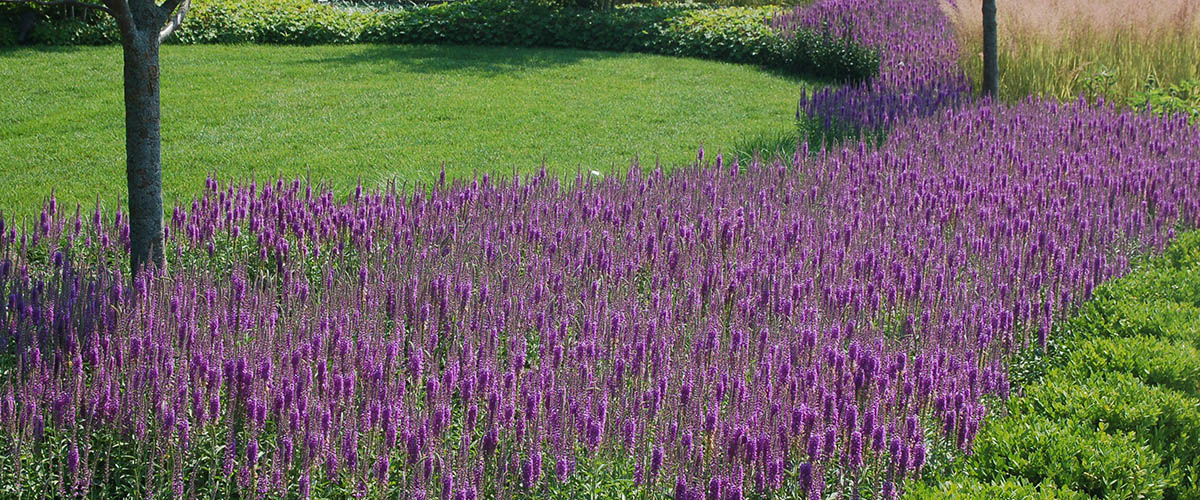
Evaluating Perennials for Chicagoland Gardens
Perennials in Focus is a plant evaluation program that examines new and underused plants for Chicagoland, the third largest metropolitan area in the country. A group of horticultural experts trials and evaluates plants at numerous locations across the region. Results help consumers, public gardens, growers, landscape designers, breeders, and other industry professionals make informed plant choices.
Geranium Maculatum Flower Colour Stability Across Light Levels
Wild cranesbill, the common name for Geranium maculatum, has long drawn the eye of gardeners with its loose clusters of pink to lavender blooms held above palmate, deeply lobed foliage. Native to woodland edges and meadows across eastern North America, the species has become a curiosity for Australian plant enthusiasts exploring perennials beyond the mainstream palette. Yet anyone trialling this herbaceous perennial quickly discovers that its floral display is not static: the shade of pink observed in early spring can look markedly different by midsummer, and the cause often traces back to light exposure.
Horticultural evaluation programs, including those run through Perennials in Focus, examine how perennials perform in real garden conditions rather than in controlled greenhouse settings. For Geranium maculatum, flower colour stability across varying light levels has emerged as one of the most interesting traits to document, particularly in regions where solar radiation behaves differently from the species' native range.
Understanding the Wild Cranesbill Bloom Palette
The typical Geranium maculatum flower opens a soft mauve-pink, occasionally approaching white in some wild populations. Pigmentation is produced primarily by anthocyanins, the same flavonoid compounds responsible for the blue-purple tones seen in many spring ephemerals. These pigments are remarkably responsive to environmental conditions, which means a single clone can present subtly different hues depending on where it is grown.
Within the species' native woodland habitat, blooms often appear cooler and slightly more lavender because the canopy filters out portions of the visible and ultraviolet spectrum. In more open meadows, where direct sun reaches the plants for several hours each day, flowers frequently read as a warmer pink. The variation is rarely dramatic, but it is consistent enough that experienced growers learn to associate certain shades with specific microclimates.
For Australian gardeners working in cool-temperate zones such as the Dandenong Ranges or the Southern Highlands of New South Wales, this responsiveness can be exploited. Plants positioned beneath a eucalypt canopy tend to hold their cooler tones longer into the season, while those in brighter beds may flush a richer rose colour before fading.
Light Intensity, UV, and Pigment Chemistry
Anthocyanin stability is heavily influenced by ultraviolet radiation, which can break down pigments over time and bleach floral tissues. In the intense Australian sun, particularly across the inland and northern regions, UV levels regularly exceed those of the cranesbill's native range. This makes the question of flower colour stability not merely academic but practical for landscape use.
When light reaches a flower petal, it interacts with pigments at a cellular level. Higher light intensity generally increases anthocyanin production as a protective response, which can deepen flower colour. However, prolonged exposure to strong direct light, especially in dry heat, can accelerate pigment degradation and lead to a faded, washed-out appearance by the time the bloom is fully open.
The mechanism explains why trial gardens often record their most vibrant colour readings in the morning hours, before the harshest light has had time to act on the petals. Trial notes from Perennials in Focus evaluations consistently show that cranesbill blooms photographed in early arvo shade retain saturation longer than those left exposed through the peak of the day. Understanding this rhythm helps evaluators schedule observations to capture both peak colour and the rate at which hue drifts.
Trial Observations Across Sun, Part Shade, and Deep Shade
To compare flower colour stability meaningfully, evaluators need consistent plants grown in distinct light environments. The Perennials in Focus protocol places matched container-grown Geranium maculatum in three exposure categories: full sun (six or more hours of direct light), part shade (three to five hours, often morning sun), and deep shade (filtered light only). The plants are evaluated weekly through the bloom period, with colour readings taken at set times and matched against a standardised reference chart.
Full sun sites, particularly those with reflective surfaces nearby, produced the warmest pink tones early in bloom but also showed the fastest fade. By week three of the flowering window, those same plants often read as a pale, almost translucent pink, with petal edges showing visible bleaching.
Part shade sites delivered the most consistent results. Flowers opened a balanced mauve-pink and held that tone through most of the bloom period, with only modest drift toward paler hues by petal drop. Deep shade plantings produced the coolest, most lavender-leaning tones but at the cost of slightly reduced flower count and shorter stems.
Comparing Trial Data From Regional Garden Sites
Averaged observations from three trial gardens in the cooler climates of southeastern Australia, where cranesbill can be grown successfully, are summarised below. Numbers reflect mean colour readings taken at peak bloom and at bloom decline, alongside stem length and overall plant vigour.
| Light Exposure | Peak Bloom Colour | Colour at Decline | Stem Length (cm) | Plant Vigour |
|---|---|---|---|---|
| Full sun | Warm rose pink | Pale pink, edges faded | 45 | Moderate |
| Part shade (morning sun) | Mauve-pink | Light mauve-pink | 52 | High |
| Deep shade | Lavender-mauve | Soft lavender, intact | 41 | Moderate-high |
These figures align with broader evaluations of underused perennials in similar settings, including work on groundcovering species in rock garden contexts where light microclimates strongly influence appearance. Readers interested in that side of the program's research can review the creeping phlox evaluation notes for comparison.
In the trial data, the part-shade entries consistently outperformed other treatments for combined aesthetic and vigour scores, suggesting that filtered morning light offers the best compromise between pigment depth and bloom longevity in temperate Australian conditions.
Practical Guidance for Landscape and Garden Use
For gardeners in Adelaide's Mediterranean climate or the warm temperate zones around Brisbane, careful site selection matters more than for those in cooler Hobart or Ballarat conditions. Where summers run hot and dry, planting Geranium maculatum where it receives bright but indirect light through the hottest part of the day helps flowers hold their colour. A position beneath a deciduous tree, on the eastern side of a structure, or behind a 50 percent shade cloth screen typically produces the most stable results.
Mulching with a coarse organic material keeps root zones cool and supports the steady moisture supply that cranesbill prefers. Stress from drying out compounds the bleaching effect of strong light, so plants that receive supplementary watering during heatwaves tend to keep deeper petal tones for longer.
In naturalistic plantings, Geranium maculatum pairs well with other woodland-edge perennials that enjoy similar light regimes. Ferns, Solomon's seal, and some of the hardy Australian native geraniums provide textural contrast while sharing the same dappled-light preferences. Retailers such as the Diggers Club and several specialist native perennial growers carry compatible species, and many regional botanic gardens including the Royal Botanic Gardens Victoria trial similar combinations for public viewing.
Regional Notes for Australian Growers
Across trial sites in Victoria and New South Wales, Geranium maculatum has shown itself to be a quietly rewarding perennial for shaded border work, particularly where gardens mimic the dappled woodland edges of its native habitat. The species tolerates cooler winters without difficulty and benefits from the consistent moisture found in many southern Australian gardens. In heavier soils, autumn planting allows root systems to establish before the dry summer stress typical of regions like the Adelaide Hills.
The most reliable colour readings have come from plantings positioned to catch the gentler morning light while being sheltered from the harsh afternoon sun, and the data set continues to grow as new trial sites come online. Over time, the program aims to publish region-by-region recommendations that account for local soil types, microclimates, and seasonal rainfall patterns, giving growers practical guidance tuned to their specific conditions.
Horticulturists, garden designers, and home growers across Australia are encouraged to share their own observations of flower colour shifts under different light levels through the program's submission portal. Photographs paired with simple site notes on exposure hours, soil moisture, and mulch practice will help expand the data set and produce increasingly reliable guidance for anyone considering this graceful perennial in their own patch.
In the Garden
Evaluator gardens are located across the Chicagoland area, representing a range of growing conditions. Visit our retail and wholesale partners to find trialled perennials for your own garden.
Retail & Wholesale: Hinsdale Nurseries (Willowbrook, IL), Mariani Nurseries (Kenosha, WI & Garden Prairie, IL), Northwind Perennials (Burlington, WI), The Growing Place (Aurora, IL).
Wholesale Only: Hinsdale Nurseries (Plano, IL), Intrinsic Perennial Gardens (Hebron, IL).
Our Evaluation Program
The 2017–2020 evaluation cycle included Agastache 'Blue Boa', Allium senescens 'Blue Eddy', Amsonia ciliata var. filifolia 'Georgia Pancake', Astilbe 'Chocolate Shogun', Boltonia astroides 'James Crocket', Brunnera 'Alexander's Great', and Geranium cinereum 'Jolly Jewel Purple'. Completed evaluations include Amsonia 'Blue Ice' (2004–07).
On April 10, 2020, the program published snapshot profiles for Vernonia lettermanii 'Iron Butterfly', Stokesia laevis 'Elf', Stachys officinalis 'Pink Cotton Candy', Lobelia 'Monet Moment', Helleborus 'Winter Thrillers', Geum 'Mai Tai', Geranium soboliferum 'Butterfly Kisses', Gentiana x intermedia 'True Blue', Eurybia divaricata, Asparagus 'Purple Passion', and Agastache 'Bolero'.
Browse the full collection of snapshots organized alphabetically — from A–D, E–H, I–Q, and R–Z — to find detailed performance data on perennials trialled across Chicagoland.