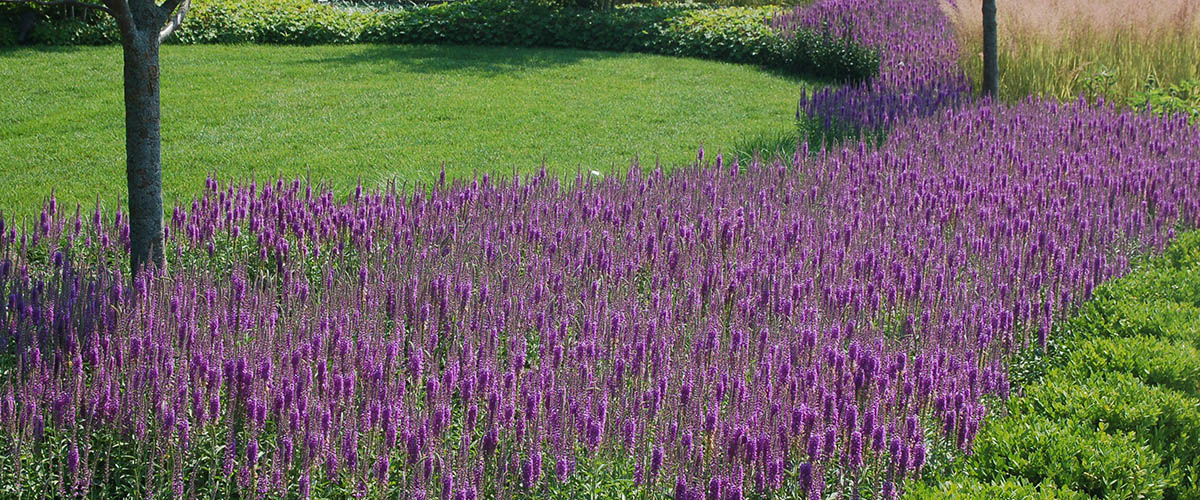
Evaluating Perennials for Chicagoland Gardens
Perennials in Focus is a plant evaluation program that examines new and underused plants for Chicagoland, the third largest metropolitan area in the country. A group of horticultural experts trials and evaluates plants at numerous locations across the region. Results help consumers, public gardens, growers, landscape designers, breeders, and other industry professionals make informed plant choices.
Comparing Lobelia Cardinalis Flower Colour Under Different Light
Lobelia cardinalis is valued for its vivid scarlet flower spikes, upright habit and late-season presence in damp perennial borders. Its colour can appear remarkably strong in one garden and noticeably softer in another, even when plants share the same cultivar and receive similar care.
Light is a major reason for that variation. High light may encourage compact growth and intense pigmentation, while lower light can produce taller stems and flowers that look deeper, cooler or less saturated depending on temperature, moisture and the age of each bloom.
For Australian gardeners, trial observations from the Chicagoland region offer useful principles rather than a direct planting prescription. Seasonal timing differs between Chicago, Melbourne, Sydney and Brisbane, yet careful comparison of bloom colour, plant stress and flower longevity can still guide choices for home gardens, nurseries and public landscapes.
What Flower Colour Fastness Means
Flower colour fastness describes how well a bloom keeps its original visual intensity while exposed to light, heat, rain and ageing. In Lobelia cardinalis, the key question is whether scarlet flowers remain clear and saturated or shift towards dull red, pink, purple-red or brown as the flowering period progresses.
This is different from simply recording the colour at peak bloom. A strong evaluation follows individual flower spikes over several days, noting when the first flowers open, when colour begins to fade and whether older flowers discolour evenly. A plant that opens with brilliant blooms but fades rapidly may be less useful than one with slightly softer colour that remains attractive for weeks.
Why Light Changes Red Blooms
Light affects the production and stability of pigments in petals. Bright conditions can support strong colour development, but intense ultraviolet exposure and high temperatures may accelerate pigment breakdown. In a cool, well-watered setting, high light may therefore produce the clearest scarlet display; in a hot, dry position, it can lead to bleaching or browned edges.
Low light presents a different pattern. Flowers may retain a rich appearance because they receive less direct radiation, yet the plant can stretch, produce thinner stems and open fewer flowers. Dense shade may also make red blooms appear darker to the eye because of the surrounding foliage, even when measured colour intensity is modest.
Designing A Fair Comparison
A reliable trial should compare plants of similar age, cultivar, container size and establishment. Soil moisture, fertiliser, temperature and wind exposure need to be recorded alongside light levels. “High light” might mean several hours of direct sun, while “low light” could mean bright filtered light beneath open trees; these conditions are not interchangeable.
Useful observations include flower colour at opening, colour after three, seven and fourteen days, number of open flowers, stem height and signs of scorch. Photographs should be taken at the same time of day with consistent camera settings. A simple colour card placed near the flowers can help reduce the influence of changing phone-camera exposure.
The wider value of this approach is familiar to professional plant evaluators. Perennials in Focus examines performance across multiple gardens and seasons, which helps separate a genuine plant characteristic from an isolated result caused by one unusual site or weather pattern.
Reading High-Light Results
Plants grown in brighter positions often produce sturdier stems and a more substantial flower display when moisture remains consistent. Lobelia cardinalis typically benefits from strong light without prolonged afternoon heat, and well-irrigated specimens may hold a clean, vivid red for much of the flowering period.
The risk is that intense sun can expose differences between cultivars. Petals on the outer face of a spike may fade first, while flowers shaded by upper blooms retain stronger colour. In Australian gardens, a position with gentle morning sun and protection from harsh western exposure may give a better balance than an unrestricted north- or west-facing bed, particularly around Adelaide or inland Canberra.
Reading Low-Light Results
Lower light can be valuable where the goal is to extend visual freshness rather than maximise flower count. Filtered light beneath a deciduous tree or beside a bright wall may protect petals from direct heat and reduce rapid fading. Plants can remain attractive for longer if the soil stays evenly moist and air movement is adequate.
However, shade can also delay flowering and produce lanky growth. In Melbourne’s cooler climate, low light combined with wet winter soil may slow establishment, while in humid Brisbane, dense shade and poor airflow can increase the chance of foliage disease. A trial should therefore record plant form and health alongside flower colour fastness.
Applying Findings In Australian Gardens
Australian gardeners often plan weekend planting around watering schedules, local heatwaves and available space in suburban yards. Lobelia cardinalis suits a moisture-retentive position near a pond, rain garden or downpipe overflow, provided the site does not remain stagnant. In Sydney and Brisbane, filtered afternoon shade can protect colour during hot periods; in cooler southern regions, brighter light may be needed for good flowering.
Water restrictions also influence placement. Gardeners should check local rules before installing irrigation, particularly in metropolitan areas where permanent watering times may be limited. Mulch, improved soil organic matter and drip irrigation can reduce moisture loss, but they should support a suitable site rather than compensate for severe exposure.
Plant availability varies through the Australian market. Specialist nurseries and independent garden centres may offer cardinal flower as a seasonal perennial, while larger retailers tend to stock plants when demand for flowering moisture-lovers rises. Buyers should check whether plants are sold as dormant divisions, small potted specimens or actively flowering stock, since apparent colour at purchase may not predict performance later.
Using Trial Evidence For Plant Selection
A colour trial becomes more useful when it is connected with other performance traits. Record bloom period, flower count, height, spread, lodging, foliage quality and recovery after heat. A cultivar with excellent colour fastness but weak stems may need support, while a taller selection could work better at the back of a consistently moist border.
Regional evidence should be interpreted rather than copied. Findings from northern Illinois can clarify how light influences the plant, but Australian gardeners must account for different day length, ultraviolet exposure, rainfall patterns and summer temperatures. For comparison, readers interested in how flowering performance is assessed across seasons can explore this reblooming iris guide.
Planting decisions should also respect state biosecurity and weed legislation. Before moving plant material between states or introducing an unfamiliar perennial near waterways, consult the relevant government guidance, such as the Biosecurity Act requirements applying in New South Wales or Queensland. Responsible sourcing protects both gardens and natural habitats.
Comparing Light Conditions At A Glance
The most dependable choice is usually the position that combines sufficient brightness with stable moisture. High light can produce the strongest initial colour and fuller flowering, while low light may preserve individual petals but reduce density and stem strength. Site temperature, irrigation and air movement can reverse these general tendencies.
| Growing condition | Likely flower colour response | Common plant response | Australian placement |
|---|---|---|---|
| Bright light with cool, moist soil | Clear, saturated scarlet | Strong stems and good flower count | Morning sun, irrigated border |
| Bright light with heat or drought | Faster fading or browned edges | Stress, wilting and shorter display | Protect from western sun |
| Filtered low light | Colour may remain visually rich | Taller stems and fewer flowers | Open tree canopy or bright courtyard |
| Dense shade with wet soil | Duller overall display | Delayed flowering and weak growth | Avoid stagnant, airless corners |
| Moderate light with even moisture | Balanced colour retention | Reliable habit and steady flowering | Preferred general garden position |
Use these comparisons as a framework for observing your own plants rather than as a fixed ranking. Track colour through the season, photograph the same spike repeatedly and note local weather beside each observation. Those records can help Australian gardeners choose the most dependable position for Lobelia cardinalis and help nurseries communicate realistic expectations about flowering performance.
Share your observations with local gardening groups, plant evaluators or specialist nurseries so that regional knowledge continues to grow. Careful records from Melbourne, Sydney, Brisbane and other Australian climates can complement formal trials and make future perennial selections more precise.
In the Garden
Evaluator gardens are located across the Chicagoland area, representing a range of growing conditions. Visit our retail and wholesale partners to find trialled perennials for your own garden.
Retail & Wholesale: Hinsdale Nurseries (Willowbrook, IL), Mariani Nurseries (Kenosha, WI & Garden Prairie, IL), Northwind Perennials (Burlington, WI), The Growing Place (Aurora, IL).
Wholesale Only: Hinsdale Nurseries (Plano, IL), Intrinsic Perennial Gardens (Hebron, IL).
Our Evaluation Program
The 2017–2020 evaluation cycle included Agastache 'Blue Boa', Allium senescens 'Blue Eddy', Amsonia ciliata var. filifolia 'Georgia Pancake', Astilbe 'Chocolate Shogun', Boltonia astroides 'James Crocket', Brunnera 'Alexander's Great', and Geranium cinereum 'Jolly Jewel Purple'. Completed evaluations include Amsonia 'Blue Ice' (2004–07).
On April 10, 2020, the program published snapshot profiles for Vernonia lettermanii 'Iron Butterfly', Stokesia laevis 'Elf', Stachys officinalis 'Pink Cotton Candy', Lobelia 'Monet Moment', Helleborus 'Winter Thrillers', Geum 'Mai Tai', Geranium soboliferum 'Butterfly Kisses', Gentiana x intermedia 'True Blue', Eurybia divaricata, Asparagus 'Purple Passion', and Agastache 'Bolero'.
Browse the full collection of snapshots organized alphabetically — from A–D, E–H, I–Q, and R–Z — to find detailed performance data on perennials trialled across Chicagoland.