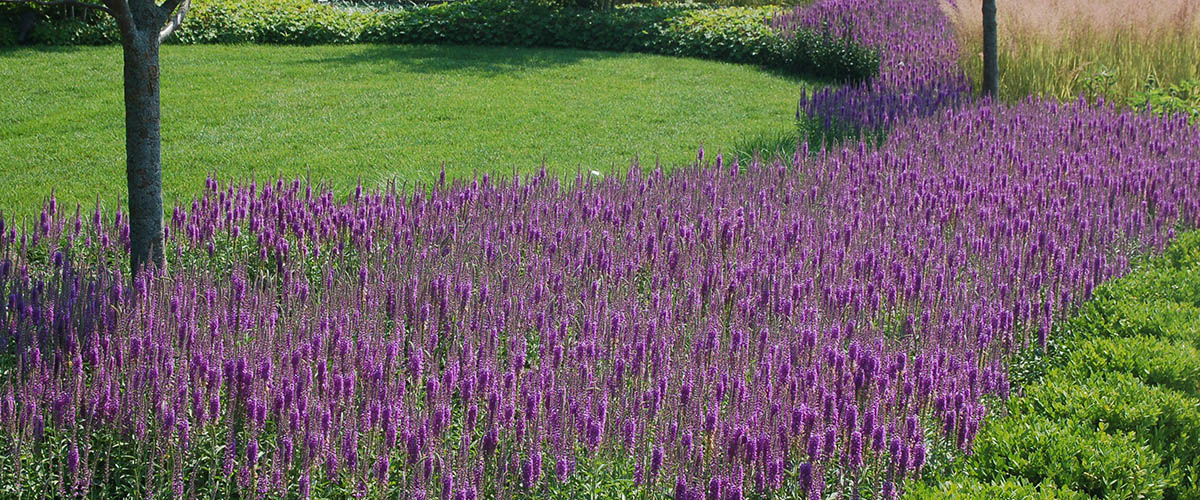
Evaluating Perennials for Chicagoland Gardens
Perennials in Focus is a plant evaluation program that examines new and underused plants for Chicagoland, the third largest metropolitan area in the country. A group of horticultural experts trials and evaluates plants at numerous locations across the region. Results help consumers, public gardens, growers, landscape designers, breeders, and other industry professionals make informed plant choices.
Comparing Monarda Fistulosa And Monarda Didyma For Disease Resistance
Monarda fistulosa and Monarda didyma are valuable perennial bee balm species, yet they do not behave identically when disease pressure rises. Their differences in foliage, growth habit, moisture preference and cultivar genetics can influence whether a planting remains attractive through a humid summer or develops powdery mildew and leaf spotting.
Evidence from regional plant trials is especially useful because disease resistance is rarely a fixed species-wide trait. The Chicagoland findings published by Perennials in Focus offer a helpful model for comparing bloom performance, plant form and seasonal health, while Australian gardeners must also account for local heat, rainfall patterns, irrigation rules and nursery availability.
The two species bring different strengths
Monarda fistulosa, commonly called wild bergamot, generally forms an upright, branching plant with aromatic foliage and lavender, pink or pale purple flowers. It is often more tolerant of dry soil and open, sunny conditions than red bee balm. Its relatively airy habit can improve movement around the leaves, which may reduce the prolonged leaf wetness that favours fungal disease.
Monarda didyma is usually recognised by vivid scarlet, red, pink or purple flowers and a stronger preference for evenly moist soil. It can produce a fuller, more dramatic clump, making it popular in cottage borders and pollinator gardens. That dense growth is attractive to people and beneficial insects, but crowded foliage can create a humid microclimate where powdery mildew develops readily.
Neither species should be treated as uniformly resistant or susceptible. Named cultivars, local strains and hybrids can perform very differently. A well-bred M. didyma selection may remain clean longer than an inferior M. fistulosa plant, particularly when the planting site is poorly ventilated.
Powdery mildew is the main comparison point
Powdery mildew is the disease most often associated with bee balm. It appears as a white, flour-like coating on leaves and stems, followed by yellowing, premature leaf drop and reduced visual quality. Warm days, cool nights, crowded planting and fluctuating moisture can all encourage infection, although the disease does not require wet leaves in the same way many leaf spots do.
In broad terms, M. fistulosa tends to have the advantage where soil drains well and summer watering is limited. M. didyma often shows greater mildew pressure when roots are dry but surrounding air is humid, or when irrigation wets the foliage late in the day. The distinction is useful, but it is a tendency rather than a guarantee.
Leaf spot diseases and occasional rust can affect either species. Damaged, ageing or drought-stressed foliage is more vulnerable, and infected leaves can make a plant appear less resistant than it really is. Disease ratings should therefore be recorded across the whole season rather than judged from one visit after an isolated weather event.
Climate and garden habits alter the result
Australian conditions complicate direct comparisons from North American trials. In Melbourne and Adelaide, hot, dry summers may favour M. fistulosa, particularly in free-draining beds. In Sydney and Brisbane, warm humidity and summer rainfall can place heavier pressure on foliage, while Perth gardeners may need to balance disease prevention with intense heat and sandy soil.
Everyday garden practices matter as well. A gardener who hand-waters at the base in the early morning is likely to see a different result from someone using overhead irrigation after work. Mulching can moderate root temperatures, but a thick, constantly damp mulch layer around the crown may worsen poor drainage. Regular division also helps prevent old clumps from becoming congested.
| Feature | Monarda fistulosa | Monarda didyma |
|---|---|---|
| Typical disease advantage | Often better under dry, airy conditions | More variable, with mildew-prone selections |
| Moisture preference | Moderate, with good drainage | Even moisture, without waterlogging |
| Common disease concern | Powdery mildew, leaf spot in stress | Powdery mildew, leaf spot and crown problems in wet soil |
| Growth habit | Often open and branching | Often fuller and denser |
| Best placement | Sunny, well-ventilated border | Moist but well-drained pollinator bed |
| Selection priority | Fragrant, vigorous, mildew-tolerant forms | Named mildew-resistant cultivars or hybrids |
How to read resistance claims
A label describing a plant as “mildew resistant” should be interpreted as a performance claim, not immunity. Resistance may mean the plant develops fewer symptoms, shows them later, or recovers more effectively. Retail descriptions can also simplify results from trials conducted under different soils, temperatures and disease populations.
Look for repeated observations from several locations and seasons. The plant trial snapshots provide a useful way to examine how perennial characteristics are documented rather than relying only on flower colour or catalogue language. For Australian purchasing decisions, ask whether the cultivar has been assessed in a climate resembling your own.
The most dependable evidence combines clean foliage with strong flowering, sturdy stems and consistent regrowth. A plant that resists mildew but collapses in heat or fails to flower is not necessarily the best choice for a Melbourne courtyard, a Brisbane verge or a Perth water-wise border.
Selecting and placing bee balm in Australia
Choose a position with morning sun, good air circulation and soil that drains freely. In cooler southern regions, full sun is usually appropriate. In subtropical districts, light afternoon shade can reduce heat stress, although excessive shade may produce soft growth and increase humidity around the leaves.
Space plants according to their mature spread rather than the size of the nursery pot. Remove crowded stems in spring, divide congested clumps every few years and cut away badly infected foliage after the main flush of growth. Clean secateurs between plants when disease is present, and avoid placing diseased leaves in home compost unless the compost reliably reaches temperatures capable of destroying pathogens.
Australian gardeners should also check local plant movement and import requirements. Live plants and some propagating material entering the country may require approval through the Biosecurity Import Conditions system, while Western Australia and Tasmania apply particularly strict quarantine controls. State and territory weed or nursery regulations can change, so buying from a reputable local nursery is safer than obtaining unverified mail-order material.
Matching the choice to the local market
M. didyma and its hybrids are often easier to find where retailers focus on bright summer colour, while M. fistulosa may appear under wildflower, native-inspired or pollinator-plant listings. Stock varies between large garden centres, independent nurseries and specialist perennial growers. In Australia, the same cultivar may be marketed under different common names, so the botanical name is important when comparing disease performance.
For a low-input garden, M. fistulosa is often the sensible starting point where summers are dry, soils are lean and watering is restricted. In a damp, richly improved border, a carefully selected M. didyma can perform beautifully if it receives ventilation and consistent moisture. Raised beds, drip irrigation and restrained feeding may improve either species more than repeated fungicide use.
Public gardens, landscape professionals and home gardeners can make better choices by recording first symptoms, flowering duration, plant height and recovery after pruning. That approach reflects the value of regional evaluation: the strongest recommendation is not simply the plant with the brightest flowers, but the one that stays healthy and useful in its intended setting.
Compare several cultivars in the conditions where they will actually grow, keep notes through the full Australian growing season, and share dependable observations with local nurseries, garden groups and perennial trial programs. Choosing bee balm through recorded performance will produce healthier pollinator plantings and reduce the disappointment of replacing mildew-damaged plants each summer.
In the Garden
Evaluator gardens are located across the Chicagoland area, representing a range of growing conditions. Visit our retail and wholesale partners to find trialled perennials for your own garden.
Retail & Wholesale: Hinsdale Nurseries (Willowbrook, IL), Mariani Nurseries (Kenosha, WI & Garden Prairie, IL), Northwind Perennials (Burlington, WI), The Growing Place (Aurora, IL).
Wholesale Only: Hinsdale Nurseries (Plano, IL), Intrinsic Perennial Gardens (Hebron, IL).
Our Evaluation Program
The 2017–2020 evaluation cycle included Agastache 'Blue Boa', Allium senescens 'Blue Eddy', Amsonia ciliata var. filifolia 'Georgia Pancake', Astilbe 'Chocolate Shogun', Boltonia astroides 'James Crocket', Brunnera 'Alexander's Great', and Geranium cinereum 'Jolly Jewel Purple'. Completed evaluations include Amsonia 'Blue Ice' (2004–07).
On April 10, 2020, the program published snapshot profiles for Vernonia lettermanii 'Iron Butterfly', Stokesia laevis 'Elf', Stachys officinalis 'Pink Cotton Candy', Lobelia 'Monet Moment', Helleborus 'Winter Thrillers', Geum 'Mai Tai', Geranium soboliferum 'Butterfly Kisses', Gentiana x intermedia 'True Blue', Eurybia divaricata, Asparagus 'Purple Passion', and Agastache 'Bolero'.
Browse the full collection of snapshots organized alphabetically — from A–D, E–H, I–Q, and R–Z — to find detailed performance data on perennials trialled across Chicagoland.