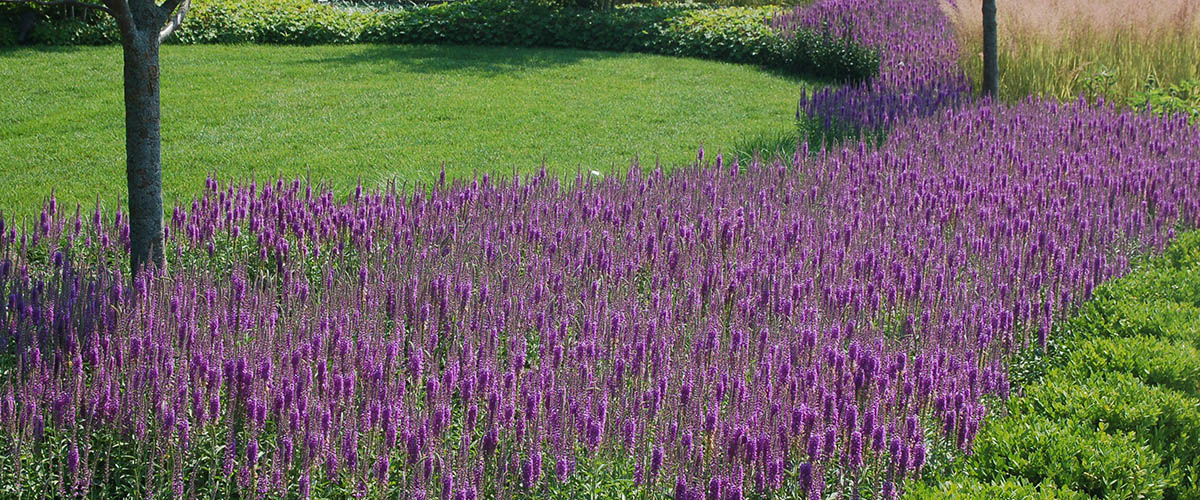
Evaluating Perennials for Chicagoland Gardens
Perennials in Focus is a plant evaluation program that examines new and underused plants for Chicagoland, the third largest metropolitan area in the country. A group of horticultural experts trials and evaluates plants at numerous locations across the region. Results help consumers, public gardens, growers, landscape designers, breeders, and other industry professionals make informed plant choices.
Aphid Resistance in Butterfly Weed and Common Milkweed
Aphids are a familiar sight on milkweeds, especially during warm weather when soft new growth is expanding quickly. On Asclepias tuberosa, commonly called butterfly weed, and Asclepias syriaca, or common milkweed, colonies can gather on stems, flower buds and the undersides of leaves. Their presence may look alarming, yet the effect on an established plant is often less serious than the yellow, curling foliage suggests.
For gardeners in Australia, the comparison is useful when choosing plants for a pollinator border, suburban garden or council verge. However, aphid performance depends on climate, plant age, soil moisture and local predators. Findings from Chicagoland trials offer valuable regional evidence, while Australian growers should also consider conditions in Melbourne, Sydney, Adelaide, Canberra or Brisbane before treating either species as reliably “resistant”.
How Aphids Use Milkweed Plants
The most common pest is the oleander aphid, Aphis nerii, a bright yellow insect that often has black legs and cornicles. It feeds by extracting sap from tender stems and leaves. Dense colonies may distort new growth, reduce vigour and leave sticky honeydew that supports sooty mould. Winged forms can appear when a colony becomes crowded, allowing aphids to spread to nearby plants.
Asclepias syriaca generally produces substantial, upright stems and broad leaves that offer plenty of feeding sites. In a favourable season, it can support conspicuous aphid colonies, particularly on lush shoots and developing flower clusters. This does not mean every common milkweed plant will suffer significant damage; vigorous plants can tolerate a surprising amount of sap loss.
Asclepias tuberosa has a different habit, with narrower leaves, more branching near the crown and vivid orange flowers held above a neater mound. Its comparatively fine foliage may make colonies less visually dominant, but it is not immune. Aphids can still gather around stems and flower stalks when plants are overfed with nitrogen or stressed by drought.
What Resistance Means In Practice
When comparing aphid resistance, it helps to separate resistance from tolerance and simple pest visibility. Resistance describes a plant’s ability to deter aphids, limit their reproduction or reduce feeding. Tolerance means the plant continues growing and flowering well despite infestation. A smaller-looking colony on butterfly weed may reflect fewer suitable feeding sites rather than a strong chemical defence.
Published garden observations often suggest that common milkweed attracts heavier, more obvious infestations than butterfly weed. Its softer, broader foliage and vigorous spring growth can create an excellent aphid habitat. Butterfly weed may show fewer aphids in some plantings, especially once its stems become firm, but results can change with rainfall, temperature and surrounding vegetation.
The most useful comparison records plant condition alongside insect numbers. Note the percentage of stems occupied, the amount of curled or yellow foliage, flower production and late-season recovery. The evaluation committee behind a regional perennial trial represents the type of horticultural expertise needed to assess these traits across multiple sites rather than relying on a single garden snapshot.
Climate Changes The Result
Chicagoland’s cold winters, warm summers and defined growing season create a different test environment from Australia. Both species are herbaceous perennials that die back in cold conditions, but their response in Australia may range from winter dormancy in Canberra to extended growth in coastal New South Wales. In Brisbane or far north Queensland, heat, humidity and rainfall can alter both plant vigour and aphid reproduction.
A Melbourne gardener may see butterfly weed remain relatively compact in a dry, free-draining bed, while a Sydney garden with richer soil and regular irrigation could produce softer, more aphid-prone growth. In Adelaide, the main challenge may be keeping either species growing through hot, dry spells. These local differences make a Chicagoland result a guide, not a guarantee.
Australian nurseries and garden centres may also stock cultivars selected for flower colour, compact habit or drought performance rather than documented pest resistance. Read the plant label carefully and check whether the material has been evaluated locally. If a species is being planted near bushland, a school garden or a council verge, confirm relevant state or local weed guidance before establishing a large patch.
Supporting Plants And Beneficial Insects
Aphids are part of the food web surrounding milkweed. Ladybird beetles, lacewing larvae, hoverfly larvae and tiny parasitoid wasps can reduce colonies naturally. Spraying at the first sign of yellow insects may remove these beneficial organisms before they have time to respond. A few aphids on a strong plant are often better treated as an observation than an emergency.
Start with cultural conditions that encourage sturdy growth. Give both species well-drained soil and adequate sunlight, but avoid excessive nitrogen fertiliser, which can produce lush, soft tissue. Water deeply during establishment, then allow the surface to dry according to the site and season. Crowded stems should be thinned for airflow, especially in humid coastal districts.
A strong jet of water can dislodge aphids from non-flowering stems. Pruning a badly infested shoot is another low-impact option, provided enough healthy growth remains. Broad-spectrum insecticides are a poor fit for a butterfly garden because they can harm pollinators and predators as well as the target insects.
Choosing Between The Two Species
For a formal perennial border, butterfly weed is usually the easier choice when a compact, colourful plant is wanted. Its orange flowers suit hot, sunny combinations and its narrower form can work in smaller Australian gardens. It may offer a lower visual aphid burden, though that advantage should be treated as a tendency rather than a dependable guarantee.
Common milkweed is better suited to gardeners who have room for a taller, spreading plant and want a bold vertical presence. It can provide abundant foliage for monarch or wanderer butterfly larvae where those butterflies occur, but its vigorous growth may require more space and closer monitoring. In some Australian locations, its behaviour and legal status should be checked before planting widely.
| Feature | Asclepias tuberosa | Asclepias syriaca |
|---|---|---|
| Common name | Butterfly weed | Common milkweed |
| Typical form | Compact, upright, finer foliage | Tall, spreading, broad foliage |
| Aphid visibility | Often lower, especially on firm mature growth | Frequently conspicuous on lush stems |
| Likely tolerance | Good once established in suitable soil | Usually strong, but colonies can be large |
| Flower colour | Mainly orange to red-orange | Pink, mauve or greenish-pink |
| Best garden use | Sunny borders, smaller pollinator beds | Naturalistic plantings and larger sites |
| Australian consideration | Needs drainage and careful summer watering | Needs space and local weed-status checking |
Use these differences to guide observation rather than to promise a pest-free plant. Compare plants grown under similar conditions, inspect them weekly during active growth and record both aphid pressure and flowering performance. That approach gives Australian gardeners a more reliable picture than choosing solely from a nursery label or a single photograph.
For a pollinator planting in Australia, begin with the species that suits the site, provide balanced care and allow beneficial insects to work. Track how butterfly weed and common milkweed perform through your local seasons, then share those observations with growers, retailers and horticultural networks so future plant choices reflect real garden conditions.
In the Garden
Evaluator gardens are located across the Chicagoland area, representing a range of growing conditions. Visit our retail and wholesale partners to find trialled perennials for your own garden.
Retail & Wholesale: Hinsdale Nurseries (Willowbrook, IL), Mariani Nurseries (Kenosha, WI & Garden Prairie, IL), Northwind Perennials (Burlington, WI), The Growing Place (Aurora, IL).
Wholesale Only: Hinsdale Nurseries (Plano, IL), Intrinsic Perennial Gardens (Hebron, IL).
Our Evaluation Program
The 2017–2020 evaluation cycle included Agastache 'Blue Boa', Allium senescens 'Blue Eddy', Amsonia ciliata var. filifolia 'Georgia Pancake', Astilbe 'Chocolate Shogun', Boltonia astroides 'James Crocket', Brunnera 'Alexander's Great', and Geranium cinereum 'Jolly Jewel Purple'. Completed evaluations include Amsonia 'Blue Ice' (2004–07).
On April 10, 2020, the program published snapshot profiles for Vernonia lettermanii 'Iron Butterfly', Stokesia laevis 'Elf', Stachys officinalis 'Pink Cotton Candy', Lobelia 'Monet Moment', Helleborus 'Winter Thrillers', Geum 'Mai Tai', Geranium soboliferum 'Butterfly Kisses', Gentiana x intermedia 'True Blue', Eurybia divaricata, Asparagus 'Purple Passion', and Agastache 'Bolero'.
Browse the full collection of snapshots organized alphabetically — from A–D, E–H, I–Q, and R–Z — to find detailed performance data on perennials trialled across Chicagoland.