Evaluating Perennials for Chicagoland Gardens
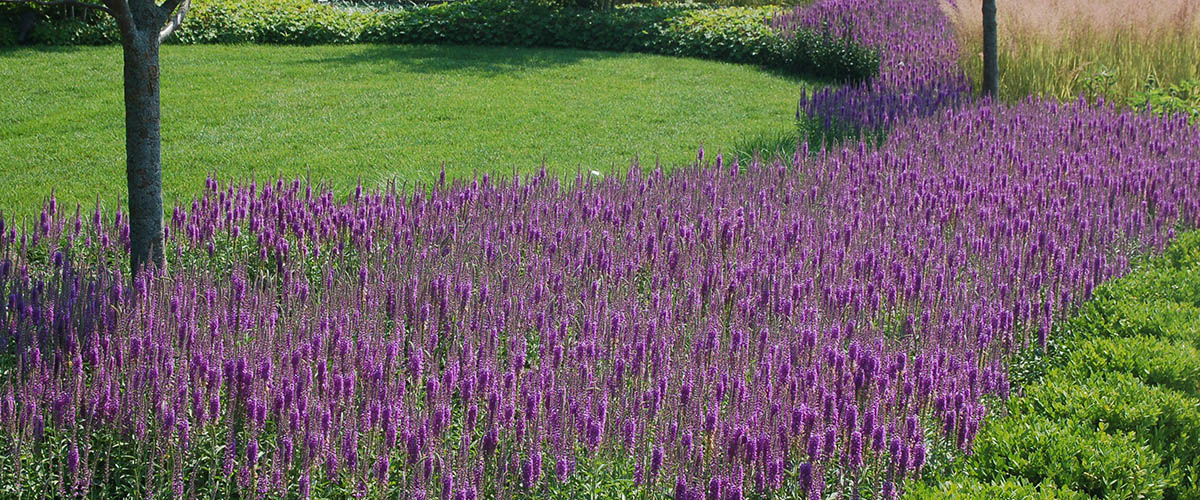
Perennials in Focus is a plant evaluation program that examines new and underused plants for Chicagoland, the third largest metropolitan area in the country. A group of horticultural experts trials and evaluates plants at numerous locations across the region. Results help consumers, public gardens, growers, landscape designers, breeders, and other industry professionals make informed plant choices.
Best shade-loving perennials for Illinois gardens
Shade can be one of the most rewarding conditions in an Illinois landscape. Beneath mature trees, beside north-facing foundations, or along wooded property edges, filtered light creates a cooler setting where many woodland and foliage plants thrive. The best choices bring dependable texture, seasonal flowers, and strong performance through humid summers and cold winters.
A successful shade garden begins with more than a plant label. Light levels change throughout the day and year, while clay soil, competition from tree roots, and inconsistent moisture can influence performance. Perennials evaluated in the Chicagoland region offer useful clues about which plants are likely to establish well in similar Illinois conditions.
Regional trials are especially valuable for gardeners choosing between familiar species and newer introductions. Observations about bloom time, mature size, flower color, disease resistance, and winter survival help turn a shaded planting bed into a durable, layered garden.
Understanding shade in Illinois landscapes
“Shade” can mean several different growing conditions. Full shade receives little direct sun, while partial or part shade may get two to six hours of sunlight, often in the morning or late afternoon. Dappled shade beneath a deciduous tree provides shifting light, and dry shade occurs where tree roots absorb much of the available moisture.
These distinctions affect plant selection. Hostas and foamflowers can handle lower light, while many woodland perennials flower more heavily with a few hours of gentle morning sun. Plants in dry shade need dependable establishment and occasional supplemental watering, particularly during the first two growing seasons.
Illinois soils also vary widely, though heavy clay is common in many residential areas. Improve planting conditions with compost worked into the bed rather than placing rich soil only in individual holes. A two- to three-inch layer of organic mulch helps moderate soil temperature and conserve moisture, but keep it away from crowns and stems.
Reliable foliage plants for low light
Hostas remain among the most versatile shade plants for Illinois gardens. Their leaves range from blue-gray and chartreuse to green-and-white, offering options for both quiet woodland beds and high-contrast borders. Smaller cultivars fit beneath shrubs or along paths, while large varieties create bold focal points in broad planting areas.
Coral bells, or Heuchera, add finely textured foliage in purple, bronze, caramel, lime, and silver. They perform best in well-drained soil and may struggle when crowns stay wet through winter. Planting them slightly high and avoiding excessive mulch can reduce crown problems. Heucherella, a coral bell and foamflower hybrid, often provides similar color with a softer, more spreading habit.
Japanese forest grass offers graceful movement in filtered light, especially where a low, arching plant is needed. Its golden or green-striped foliage brightens darker corners without relying on flowers. Solomon’s seal contributes upright stems and a woodland character, while sedges such as Carex can provide evergreen or semi-evergreen texture in protected locations.
Flowering perennials for seasonal interest
Bleeding heart is a classic spring bloomer for moist, humus-rich shade. The arching stems and heart-shaped flowers fade in summer, so combine it with later-emerging foliage plants such as hostas, ferns, or heucheras. Native wild bleeding heart has a lighter, more delicate appearance and can work well in naturalistic plantings.
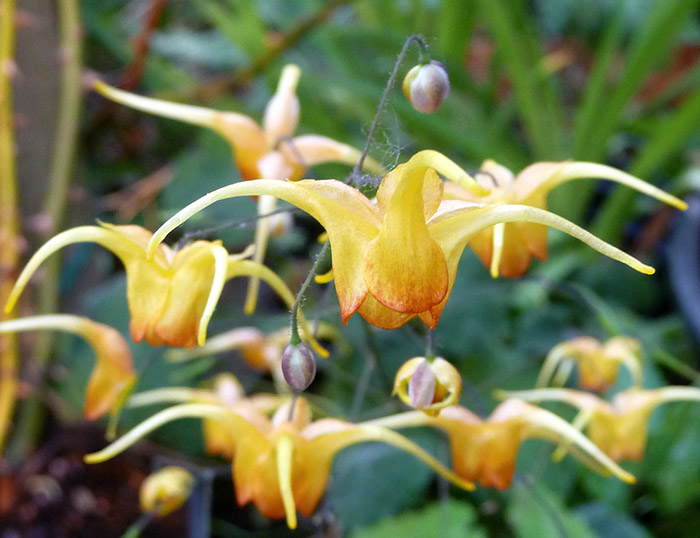
Lungwort, or Pulmonaria, offers early flowers in shades of pink, blue, or violet, followed by spotted or silver-marked leaves. It is useful near paths and patios where its foliage can be appreciated after flowering. Epimedium is another dependable woodland perennial, valued for wiry flowers, attractive leaves, and tolerance of dry shade once established.
For summer color, astilbe performs best where soil remains evenly moist. Its feathery flower plumes rise above divided foliage in white, pink, red, or lavender. Bigroot geranium is more adaptable to dry conditions and forms a broad, weed-suppressing mound with long-lasting flowers. For additional late-season interest, consider Japanese anemone in a protected, evenly moist location, though it may spread more readily than expected.
The regional plant snapshots provide a helpful way to compare individual perennials by traits such as height, spread, bloom period, and flower color before committing space to a new selection.
Native choices for wildlife and resilience
Native perennials can give Illinois shade gardens a strong ecological foundation. Woodland phlox flowers in spring and forms a useful groundcover beneath trees. Jacob’s ladder provides finely divided foliage and early summer flowers, while wild columbine tolerates dry, rocky conditions and attracts hummingbirds.
Foamflower is a compact native with frothy spring blooms and attractive leaves that can spread gradually in moist, shaded soil. Christmas fern and sensitive fern provide reliable foliage structure, although sensitive fern prefers damper locations. Golden ragwort brings yellow flowers to spring borders and can function as a low, spreading groundcover.
Virginia bluebells are especially effective in naturalistic gardens, emerging early with pink buds that open to blue flowers. Their foliage retreats after blooming, so pair them with plants that fill the space later. Native plants still require suitable conditions; a shade label does not guarantee success in compacted, waterlogged, or extremely dry soil.
| Perennial | Light and soil preference | Main season of interest | Typical garden role |
|---|---|---|---|
| Hosta | Part to full shade; average, well-drained soil | Summer foliage and flowers | Bold massing or edging |
| Heuchera | Part shade; well-drained soil | Foliage from spring to fall | Color contrast and edging |
| Astilbe | Part shade; consistently moist soil | Early to midsummer flowers | Moist woodland border |
| Epimedium | Part to full shade; adaptable, including dry shade | Spring flowers and foliage | Groundcover or underplanting |
| Wild columbine | Part shade; well-drained soil | Late spring flowers | Native pollinator planting |
| Foamflower | Part to full shade; moist, humus-rich soil | Spring flowers and foliage | Spreading woodland layer |
| Japanese forest grass | Part shade; evenly moist soil | Summer through fall foliage | Low, flowing texture |
Matching plants to difficult garden conditions
Dry shade is often the hardest setting because mature trees compete for water and their roots can make digging difficult. Choose plants with proven tolerance, including epimedium, bigroot geranium, Solomon’s seal, wild columbine, Christmas fern, and some hostas. Water new plantings deeply and less frequently rather than applying small amounts every day.
Wet shade calls for a different palette. Astilbe, cardinal flower, marsh marigold, turtlehead, and certain ferns can handle consistently moist soil when drainage is not stagnant. If water remains in the bed after rainfall, correct the drainage problem where possible instead of relying on plants to tolerate flooded roots.
Under walnut trees, juglone sensitivity may also influence plant selection. Conditions vary by site, but testing a small group of plants before creating a large installation is prudent. In every challenging location, observe the bed across a full year: spring light can be plentiful before tree canopies leaf out, while summer conditions may become much darker and drier.
Creating a layered planting design
A visually strong shade border usually combines several plant heights rather than repeating one species across the entire bed. Tall plants such as goatsbeard, cup plant in suitable moisture, or large ferns can form a backdrop. Medium-height hostas, astilbes, and woodland phlox create the central layer, while foamflower, sedges, and epimedium occupy the foreground.
Repeat a few dependable plants to establish rhythm, then add smaller groups of distinctive cultivars for contrast. Foliage often carries the design after spring flowers finish, so combine broad leaves with fern fronds, grass-like blades, and finely divided textures. Silver, blue, gold, and burgundy foliage can brighten shade without appearing overly busy.
Allow enough room for mature spread. Closely packed perennials may look finished during the first season but can develop poor air circulation and require division later. Planting according to expected size also makes maintenance easier and allows each selection to show its natural habit.
Practical recommendations for Illinois gardeners
- Match each perennial to actual moisture, soil, and light conditions rather than choosing solely by flower color.
- Use native woodland plants to support pollinators and create a locally appropriate garden character.
- Improve heavy clay with organic matter and maintain a restrained mulch layer around, not over, plant crowns.
- Give new shade perennials regular water during establishment, especially beneath mature trees.
- Record bloom dates, mature height, and seasonal changes so successful combinations can be repeated elsewhere in the landscape.
The strongest shade garden is built through observation and deliberate plant selection. Explore regional perennial evaluations, compare performance traits, and use those findings to develop a planting palette suited to your Illinois site. Begin with a few well-matched plants, watch how they respond through every season, and expand the combinations that prove dependable.
In the Garden
Evaluator gardens are located across the Chicagoland area, representing a range of growing conditions. Visit our retail and wholesale partners to find trialled perennials for your own garden.
Retail & Wholesale: Hinsdale Nurseries (Willowbrook, IL), Mariani Nurseries (Kenosha, WI & Garden Prairie, IL), Northwind Perennials (Burlington, WI), The Growing Place (Aurora, IL).
Wholesale Only: Hinsdale Nurseries (Plano, IL), Intrinsic Perennial Gardens (Hebron, IL).
Our Evaluation Program
The 2017–2020 evaluation cycle included Agastache 'Blue Boa', Allium senescens 'Blue Eddy', Amsonia ciliata var. filifolia 'Georgia Pancake', Astilbe 'Chocolate Shogun', Boltonia astroides 'James Crocket', Brunnera 'Alexander's Great', and Geranium cinereum 'Jolly Jewel Purple'. Completed evaluations include Amsonia 'Blue Ice' (2004–07).
On April 10, 2020, the program published snapshot profiles for Vernonia lettermanii 'Iron Butterfly', Stokesia laevis 'Elf', Stachys officinalis 'Pink Cotton Candy', Lobelia 'Monet Moment', Helleborus 'Winter Thrillers', Geum 'Mai Tai', Geranium soboliferum 'Butterfly Kisses', Gentiana x intermedia 'True Blue', Eurybia divaricata, Asparagus 'Purple Passion', and Agastache 'Bolero'.
Browse the full collection of snapshots organized alphabetically — from A–D, E–H, I–Q, and R–Z — to find detailed performance data on perennials trialled across Chicagoland.