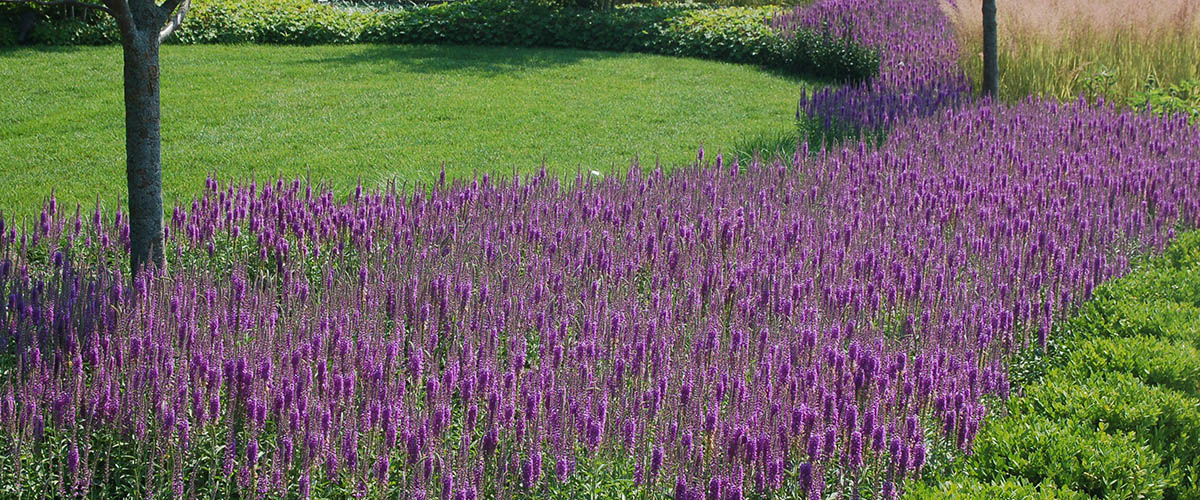
Evaluating Perennials for Chicagoland Gardens
Perennials in Focus is a plant evaluation program that examines new and underused plants for Chicagoland, the third largest metropolitan area in the country. A group of horticultural experts trials and evaluates plants at numerous locations across the region. Results help consumers, public gardens, growers, landscape designers, breeders, and other industry professionals make informed plant choices.
Best perennials to pair with spring bulbs for lasting color
Spring bulbs create one of the garden’s most welcome bursts of color, yet their display often fades within a few weeks. As tulips, daffodils, crocuses, and ornamental onions finish flowering, their foliage can remain untidy while it replenishes the bulb underground. Interplanting bulbs with dependable perennials creates a succession of flowers and leaves that carries the border into early summer.
In the Chicagoland region, plant selection must account for cold winters, fluctuating spring temperatures, clay-heavy soils, summer humidity, and periods of drought. A plant that performs beautifully in a mild climate may struggle through an Illinois winter or decline in compacted urban soil. Regionally tested plants offer a more reliable starting point than a catalog description alone.
The strongest combinations consider the entire season rather than matching flower colors for one week. Bulbs provide early height and saturated color, while perennials conceal fading foliage, occupy open spaces, and maintain structure after the bulbs go dormant. The result is a layered planting that changes gradually instead of reaching a peak and then collapsing.
Why bulb beds need perennial partners
Spring bulbs are excellent for creating an early focal point, but many have a short flowering window. Species crocuses may bloom in March, daffodils often continue into April, and late tulips can extend color into May. Their leaves need to remain intact for several weeks after flowering, so surrounding plants should grow around them without smothering them.
Low-growing perennials can soften the front edge of a bulb bed, while medium-height plants fill the space behind fading foliage. Ground-covering plants are especially useful beneath deciduous trees, where bulbs bloom before the canopy closes. Choose companions with leaves that emerge late enough to avoid hiding the bulbs during their peak display.
Color repetition also helps the planting feel intentional. Blue, violet, and white perennials complement yellow daffodils and golden aconites, while coral bells, heuchera, and soft pink phlox can echo the tones of tulips. Foliage color matters just as much as flowers, particularly after the bulb display has ended.
Match plants to light and soil
Start by observing the site in spring and summer. A bed that receives full sun before trees leaf out may become part shade by June. This changing exposure favors spring-flowering bulbs and woodland perennials, including wild geranium, Jacob’s ladder, foamflower, and Virginia bluebells.
For shaded locations, Polemonium reptans is worth considering as a compact companion with finely divided foliage and blue spring flowers. The plant’s performance in woodland conditions is explored in these regional polemonium trials, making it a useful example of why local evaluation matters when choosing plants for the Midwest.
Soil preparation should improve drainage without making the bed excessively rich. Incorporate compost into dense soil, but avoid creating a soft pocket that holds water around bulbs. Most spring bulbs perform best in soil that drains well during winter and early spring, while perennials such as sedge, wild geranium, and foamflower can tolerate a wider range of moisture conditions once established.
Reliable foliage and flowers for a long season
Several perennial groups are especially effective around spring bulbs. Brunnera, lungwort, and foamflower offer early foliage and flowers in shade. Their leaves expand as bulb foliage begins to decline, helping the planting maintain visual weight. Wild geranium follows with airy flowers and a rounded habit that works well in naturalistic borders.
In sunny beds, catmint, salvia, yarrow, and threadleaf coreopsis can take over after tulips and daffodils finish. Their flowering periods frequently begin in late spring or early summer, creating a smooth transition rather than a bare interval. Ornamental grasses such as prairie dropseed add fine texture without overwhelming smaller bulbs.
Use plants with different heights and habits. A low mat of creeping thyme or sedum can frame the planting, medium-height nepeta or geranium can conceal bulb foliage, and taller baptisia or meadow sage can provide a later vertical accent. Avoid filling every gap with aggressive spreaders, since bulbs need room to multiply and emerge freely each year.
| Spring bulb display | Perennial companions | Light and site fit | Seasonal role |
|---|---|---|---|
| Crocus and early scilla | Creeping phlox, sedum, heuchera | Sun to part shade; well-drained soil | Covers open ground in early spring |
| Daffodils | Wild geranium, catmint, brunnera | Sun or shifting light | Hides fading leaves and extends color |
| Tulips | Nepeta, salvia, yarrow | Full sun; moderate drainage | Replaces late spring bulb color |
| Fritillaria | Foamflower, sedge, lungwort | Part to full shade | Supports a woodland-style sequence |
| Ornamental onions | Coreopsis, prairie dropseed, baptisia | Full sun; dry to average soil | Carries the border into summer |
| Camassia | Siberian iris, meadow sage, hardy geranium | Sun to part shade; moist spring soil | Bridges late spring and early summer |
Woodland combinations for shifting shade
Under deciduous trees, bulbs can take advantage of spring sunlight before leaves cast dense shade. Plant daffodils, scilla, trout lily, or species tulips among perennials that tolerate lower summer light. Foamflower, wild ginger, Christmas fern, and Jacob’s ladder provide foliage after the bulbs have finished, while their softer textures keep the planting naturalistic.
A woodland border benefits from repeated drifts rather than isolated specimens. Plant bulbs in loose clusters and repeat two or three perennial species through the bed. This approach creates continuity while allowing seasonal changes in height, bloom color, and texture. Blue flowers from Jacob’s ladder or Polemonium reptans pair especially well with white daffodils and pale pink tulips.
Leaf litter can be useful in these settings, but thick layers should not bury emerging bulb shoots or trap excessive moisture. Allow leaves to break down naturally where appropriate, then remove only material that mats over the crowns of low-growing perennials. Early spring maintenance should be light so that self-seeding and natural bulb spread can occur.
Sunny border combinations for summer color
Sunny borders need perennials that can handle heat, competition from established roots, and occasional dry periods. Nepeta, yarrow, salvia, coreopsis, and Russian sage offer durable foliage and long flowering periods after early bulbs fade. Their upright or mounding forms also disguise yellowing bulb leaves without creating a crowded appearance.
Pair strong bulb colors with calmer perennial tones. Purple-flowering catmint can cool a display of orange or yellow tulips, while white yarrow creates a clean transition from daffodils to summer flowers. Baptisia provides a substantial late-spring presence and can occupy the background behind shorter bulbs, although it should be given room because its mature crown becomes broad.
Grasses are valuable for extending structure beyond the flowering season. Prairie dropseed, little bluestem, and blue fescue contribute texture from summer through winter, while their roots generally coexist well with bulbs in open, sunny soil. Place them where their foliage will not shade smaller bulbs during emergence.
Timing, spacing, and maintenance
Plant bulbs in fall when the soil has cooled but remains workable. Set them in groups rather than straight rows, using the recommended depth for each species. Perennials can be installed in spring or fall, but avoid placing a large, vigorous crown directly over a dense bulb cluster. Leave enough space for both plants to mature.
After bulbs bloom, remove spent flower heads if seed production is not desired, but leave healthy leaves until they yellow naturally. Perennials with expanding foliage can hide this process, reducing the need for premature cutting. Do not braid or tightly bundle bulb leaves, since this limits their ability to photosynthesize.
A thin mulch layer helps moderate soil temperature and suppress weeds, especially during the first year. Keep mulch away from perennial crowns and bulb shoots. Dividing crowded perennials or lifting congested bulbs every few years can restore airflow and preserve the layered effect of the planting.
A practical planting shortlist
Select plants according to the garden’s exposure, drainage, mature size, and desired bloom sequence. A short, dependable palette is often easier to maintain than a collection of unrelated specimens.
- Pair daffodils with wild geranium, brunnera, or catmint for a dependable transition into late spring.
- Use crocuses and scilla with low sedums, creeping phlox, or heuchera near paths and bed edges.
- Combine tulips with nepeta, salvia, or yarrow in sunny, well-drained borders.
- Plant woodland bulbs with foamflower, Jacob’s ladder, sedge, or Polemonium reptans beneath deciduous trees.
- Add prairie dropseed or baptisia behind late bulbs to provide summer height and lasting structure.
When choosing cultivars, review mature dimensions rather than relying on the size of the plant at purchase. Regional trial observations can clarify which perennials retain attractive foliage, resist winter damage, and flower consistently in Chicagoland gardens. That information is especially valuable when selecting less familiar plants for a public landscape or a long-lived home border.
Build the planting in layers, record what succeeds, and adjust gaps as the seasons reveal themselves. Use regional performance information from Perennials in Focus to guide your choices, then create a bulb-and-perennial combination that delivers color from the first crocus through the height of summer.
In the Garden
Evaluator gardens are located across the Chicagoland area, representing a range of growing conditions. Visit our retail and wholesale partners to find trialled perennials for your own garden.
Retail & Wholesale: Hinsdale Nurseries (Willowbrook, IL), Mariani Nurseries (Kenosha, WI & Garden Prairie, IL), Northwind Perennials (Burlington, WI), The Growing Place (Aurora, IL).
Wholesale Only: Hinsdale Nurseries (Plano, IL), Intrinsic Perennial Gardens (Hebron, IL).
Our Evaluation Program
The 2017–2020 evaluation cycle included Agastache 'Blue Boa', Allium senescens 'Blue Eddy', Amsonia ciliata var. filifolia 'Georgia Pancake', Astilbe 'Chocolate Shogun', Boltonia astroides 'James Crocket', Brunnera 'Alexander's Great', and Geranium cinereum 'Jolly Jewel Purple'. Completed evaluations include Amsonia 'Blue Ice' (2004–07).
On April 10, 2020, the program published snapshot profiles for Vernonia lettermanii 'Iron Butterfly', Stokesia laevis 'Elf', Stachys officinalis 'Pink Cotton Candy', Lobelia 'Monet Moment', Helleborus 'Winter Thrillers', Geum 'Mai Tai', Geranium soboliferum 'Butterfly Kisses', Gentiana x intermedia 'True Blue', Eurybia divaricata, Asparagus 'Purple Passion', and Agastache 'Bolero'.
Browse the full collection of snapshots organized alphabetically — from A–D, E–H, I–Q, and R–Z — to find detailed performance data on perennials trialled across Chicagoland.