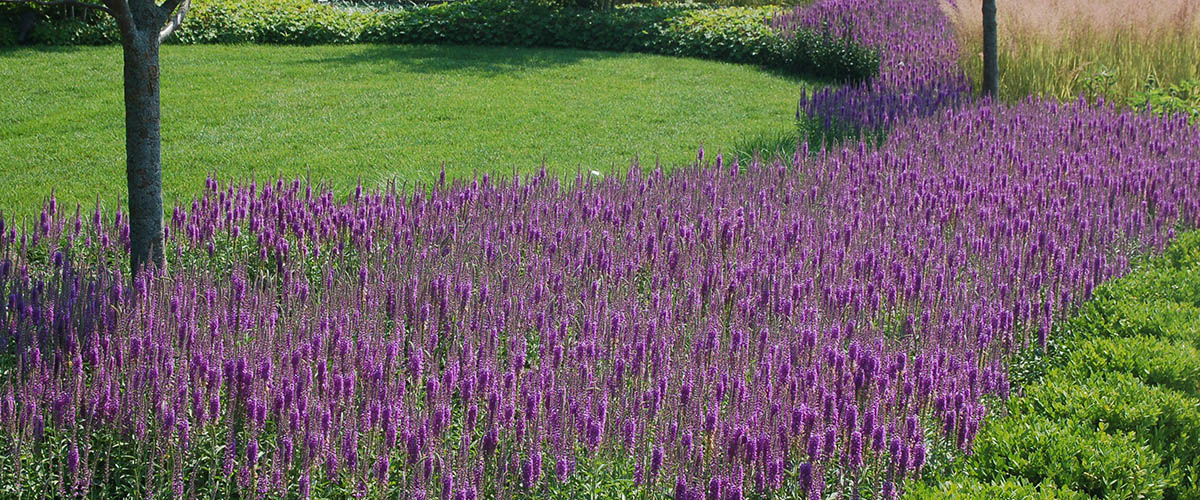
Evaluating Perennials for Chicagoland Gardens
Perennials in Focus is a plant evaluation program that examines new and underused plants for Chicagoland, the third largest metropolitan area in the country. A group of horticultural experts trials and evaluates plants at numerous locations across the region. Results help consumers, public gardens, growers, landscape designers, breeders, and other industry professionals make informed plant choices.
Native Groundcovers For Smaller Australian Lawns
Reducing lawn can make an Australian garden easier to water, mow and manage while creating space for flowers, insects and textured foliage. The most successful replacements are rarely a single plant spread across every metre. They are layered communities of low-growing species selected for sunlight, drainage, foot traffic and the local climate.
Perennials in Focus offers a useful way to think about those decisions. Its Chicagoland trials record flowering period, colour, height, spread and seasonal performance across several gardens. Australian conditions differ substantially, yet the same disciplined approach helps gardeners compare plants rather than choosing solely from a nursery label or attractive catalogue photograph.
A compact planting can work in a Melbourne nature strip, a Sydney suburban verge, a Brisbane backyard or a dry Perth garden, provided the groundcover matches its site. Plant availability also varies between local independent nurseries, large garden centres and specialist native-plant growers, so a flexible planting palette is more realistic than relying on one universally available species.
Why Replace Lawn With Groundcovers
Small lawn areas often require disproportionate effort. Mowing around trees, edging paths and trimming narrow strips can consume time, while compacted soil and summer heat leave turf thin or brown. Replacing selected sections with spreading perennials can reduce mowing and create a more useful habitat without removing every patch of grass.
Groundcovers are especially effective beside paving, beneath open-canopy trees and across gently sloping beds. They soften hard edges and suppress some weed growth once established. They do not eliminate maintenance: young plants need watering, mulch must be kept away from crowns, and occasional pruning may be needed to keep paths clear.
A lawn substitute should also suit the way a household uses the garden. A planting beside a frequently used gate needs tougher foliage than a quiet bed beneath a shrub. Council verge rules may apply in Australian suburbs, so check local requirements before planting a public-facing nature strip or narrowing access around a footpath.
Australian Plants Worth Considering
Dichondra repens is a familiar option for lightly used areas, offering rounded leaves and a low, spreading habit. It prefers some moisture and protection from severe afternoon heat, making it more dependable in many Melbourne or Sydney gardens than in an exposed, unirrigated Perth position. Native violet, Viola hederacea, is another useful choice for shade or filtered light where soil does not dry excessively.
For sunnier sites, Myoporum parvifolium can form a broad mat and tolerate dry conditions after establishment, although drainage is important. Pratia pedunculata, often sold as swamp mat, provides small flowers and works best where the soil does not become bone dry. In warmer districts, selected native grasses and low-growing sedges can add resilience where a soft, dense carpet would struggle.
Availability is a practical consideration. A plant may be described as native at a national level yet perform poorly outside its natural rainfall pattern. Ask a local nursery in Adelaide, Brisbane or Canberra whether a species has proved reliable in gardens with similar summer temperatures, frost exposure and rainfall. Local provenance is valuable for biodiversity, but garden performance still depends on the exact site.
Read Trial Data Before Choosing Plants
A regional evaluation program can reveal details that a plant label leaves out: whether flowering extends for weeks or fades quickly, whether stems flop, how wide a clump becomes and how consistently it returns after winter. Those observations are useful when narrowing a lawn-reduction palette, even when the trial region is overseas.
For example, the mountain mint trials highlight how a plant can be judged for pollinator value alongside its garden habit. Pycnanthemum muticum is not a direct recommendation for every Australian garden, but the evaluation model encourages gardeners to consider bloom timing, insect activity, height and spread together.
| Groundcover or companion | Best position | Main strength | Watch for |
|---|---|---|---|
| Dichondra repens | Filtered light to morning sun | Soft foliage and low habit | Drying soil and heavy foot traffic |
| Viola hederacea | Shade or cool, moist soil | Flowers and useful seasonal cover | Slugs, heat and prolonged drought |
| Myoporum parvifolium | Full sun with free drainage | Broad, drought-tolerant mat | Excess wetness and vigorous spread |
| Pratia pedunculata | Moist, lightly shaded beds | Small flowers and dense coverage | Loss of vigour in very dry sites |
| Native sedges | Sun or shade, depending on species | Structure and weed suppression | Requires species-level selection |
Use trial findings as evidence, not as a substitute for local observation. A Chicago perennial that survives cold winters may fail in a humid Brisbane summer, while a plant with excellent summer colour in Illinois may need afternoon shade in western Sydney. Performance records become most valuable when paired with information from Australian growers and botanic gardens.
Build A Mixed Planting Rather Than A Carpet
A resilient lawn replacement usually contains three layers. The lowest layer spreads between plants, a middle layer supplies seasonal flowers, and taller accents provide habitat and visual rhythm. This arrangement reduces the pressure on one groundcover to fill every role and makes occasional losses less obvious.
For example, Dichondra repens could weave around clumps of a compact native grass, with small flowering perennials placed at intervals. In a sunny bed, Myoporum parvifolium may occupy the front while upright species provide nectar and seed. Leave enough space for mature spread rather than planting tightly to achieve an instant finished appearance.
Heat tolerance deserves particular attention as Australian summers become more demanding. Coreopsis is not a native groundcover, but its response to hot weather illustrates why cultivar-level information matters; heat-tolerance findings can help gardeners think beyond a species name when comparing plant material for exposed beds.
Match Plants To Water And Light
Map the area before buying. Note the hours of direct sun in summer, where roof runoff collects, how quickly the soil drains and whether nearby trees compete for moisture. A narrow southern-side bed in Melbourne may support plants that would scorch beside a north-facing wall in Brisbane.
Group plants with similar water needs. Keeping moisture-loving species together makes irrigation more efficient, while drought-adapted groundcovers can occupy hot edges without receiving unnecessary daily water. This is particularly relevant in areas affected by restrictions, including parts of Sydney, Adelaide and Perth, where an established garden still benefits from thoughtful water zoning.
Soil preparation should be modest but thorough. Remove perennial weeds, loosen compacted layers and add compost where organic matter is genuinely low. Avoid creating a rich pocket that encourages lush growth unsuited to local conditions. A light organic mulch helps during establishment, but it should not bury crowns or sit against woody stems.
Establish Plants For Long-Term Ease
The first growing season determines whether a groundcover becomes a weed-suppressing mat or a patchy collection of stressed plants. Water deeply at planting, then extend the interval as roots develop. Hand-weeding during this stage prevents invasive grasses from becoming embedded in the new planting.
Planting time depends on the region. Autumn is often favourable in southern cities because soil remains warm while rainfall can assist establishment. In tropical and subtropical districts, the beginning of the wetter season may be more practical, provided heavy rain will not wash out young plants. Follow local nursery advice rather than applying a single national calendar.
Allow for access during maintenance. Narrow stepping stones through a larger bed prevent people from compressing soil and make pruning, irrigation checks and rubbish collection easier. In family gardens, retaining a small play or gathering area may produce better results than trying to convert every remaining square metre of turf.
Keep The Design Tidy And Ecologically Useful
Low maintenance does not mean no maintenance. A seasonal cutback, removal of spent stems and inspection for runners moving into paths can keep a planting attractive. Some native groundcovers spread steadily rather than aggressively, but conditions such as irrigation or fertile soil can change their behaviour.
Avoid choosing plants solely because they are labelled “native” or “bee friendly”. Check mature dimensions, local weed-risk information and whether the species is appropriate for your rainfall zone. A plant that escapes into nearby bushland or smothers valued local vegetation is a poor choice for a responsible garden.
The strongest designs combine regional suitability with observed performance. Use trial-style notes to record flowering, spread, pest damage and summer survival in your own yard. That simple record becomes especially useful when replacing another section of lawn or comparing plants from different Australian suppliers.
Start with one manageable lawn section, define its light and water conditions, and select a small mix of locally suitable groundcovers rather than a single uniform carpet. Source plants from reputable native nurseries, allow them time to establish, and observe how they perform through a full year. A carefully tested planting can reduce routine mowing while giving an ordinary suburban garden greater seasonal interest and ecological value.
In the Garden
Evaluator gardens are located across the Chicagoland area, representing a range of growing conditions. Visit our retail and wholesale partners to find trialled perennials for your own garden.
Retail & Wholesale: Hinsdale Nurseries (Willowbrook, IL), Mariani Nurseries (Kenosha, WI & Garden Prairie, IL), Northwind Perennials (Burlington, WI), The Growing Place (Aurora, IL).
Wholesale Only: Hinsdale Nurseries (Plano, IL), Intrinsic Perennial Gardens (Hebron, IL).
Our Evaluation Program
The 2017–2020 evaluation cycle included Agastache 'Blue Boa', Allium senescens 'Blue Eddy', Amsonia ciliata var. filifolia 'Georgia Pancake', Astilbe 'Chocolate Shogun', Boltonia astroides 'James Crocket', Brunnera 'Alexander's Great', and Geranium cinereum 'Jolly Jewel Purple'. Completed evaluations include Amsonia 'Blue Ice' (2004–07).
On April 10, 2020, the program published snapshot profiles for Vernonia lettermanii 'Iron Butterfly', Stokesia laevis 'Elf', Stachys officinalis 'Pink Cotton Candy', Lobelia 'Monet Moment', Helleborus 'Winter Thrillers', Geum 'Mai Tai', Geranium soboliferum 'Butterfly Kisses', Gentiana x intermedia 'True Blue', Eurybia divaricata, Asparagus 'Purple Passion', and Agastache 'Bolero'.
Browse the full collection of snapshots organized alphabetically — from A–D, E–H, I–Q, and R–Z — to find detailed performance data on perennials trialled across Chicagoland.