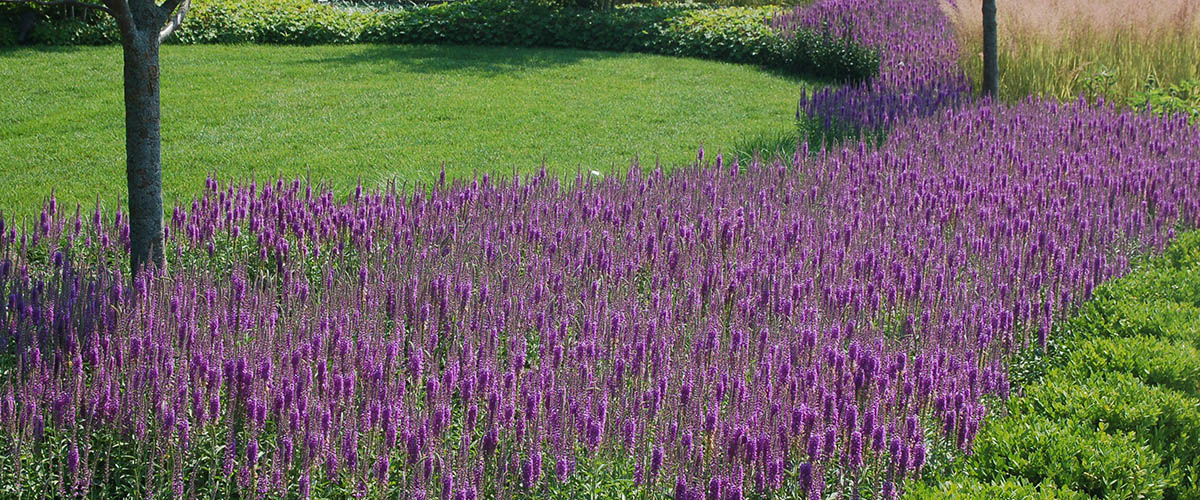
Evaluating Perennials for Chicagoland Gardens
Perennials in Focus is a plant evaluation program that examines new and underused plants for Chicagoland, the third largest metropolitan area in the country. A group of horticultural experts trials and evaluates plants at numerous locations across the region. Results help consumers, public gardens, growers, landscape designers, breeders, and other industry professionals make informed plant choices.
Best Perennials For Rain Gardens That Handle Wet And Dry
Rain gardens are designed to receive stormwater, hold it briefly and let it soak into the surrounding soil. That cycle creates a demanding planting environment: roots may sit in saturated ground after a cloudburst, then face dry conditions several days or weeks later. The best perennials for rain gardens are therefore resilient plants with strong root systems, flexible moisture requirements and reliable seasonal growth.
Australian gardeners need to interpret plant recommendations through a local lens. A rain garden in Melbourne may have heavy clay and winter saturation, while a Sydney site can receive intense summer downpours followed by heat. In Perth, rapid drainage and long dry spells are central concerns, and many councils encourage water-sensitive garden design to reduce pressure on stormwater systems.
Trials from Perennials in Focus are useful because they assess plants across seasons rather than relying on a single nursery description. Bloom time, mature height, spread and overwintering performance all help when choosing plants for a residential garden, streetscape, school landscape or commercial planting.
| Plant | Wet-soil tolerance | Dry-period tolerance | Useful role |
|---|---|---|---|
| Swamp milkweed (Asclepias incarnata) | High when soil is moist | Moderate once established | Upright summer colour and pollinator habitat |
| Blue flag iris (Iris versicolor) | High | Moderate | Low or mid-level basin planting |
| Cardinal flower (Lobelia cardinalis) | High | Low to moderate | Bright colour in consistently damp pockets |
| Carex appressa | High | High after establishment | Australian sedge for structure and erosion control |
| Lomandra (Lomandra longifolia) | Moderate to high | High | Tough foliage on the upper bank |
| Dianella cultivars | Moderate | High | Strappy foliage for drier margins |
| Joe-Pye weed (Eutrochium species) | High | Moderate | Tall back planting and late-season flowers |
Understanding The Wet-Dry Cycle
A rain garden is rarely wet at every depth. The lowest point may remain damp for days, while the upper berm drains within hours. This creates several planting zones: a temporary ponding area, a transition slope and a dry outer edge. Choosing plants according to these zones is more successful than filling the entire bed with species described simply as “moisture loving.”
Drainage speed matters as much as rainfall. Compacted clay in Melbourne’s outer suburbs can hold water around crowns and roots, whereas sandy Perth soil may drain too quickly to support plants that need consistent moisture. Before planting, observe the site after a major storm and during a dry spell. A simple infiltration test can reveal whether amendments, an overflow path or a raised planting area is needed.
Perennials that tolerate both flooding and drought commonly share several traits: fibrous or spreading roots, sturdy crowns, flexible stems and foliage that can recover after temporary stress. Even tough plants perform better when the basin has a defined overflow and does not receive contaminated runoff from oil-stained driveways or heavily trafficked areas.
Dependable Perennials For The Basin
Swamp milkweed offers upright stems, pink flowers and strong wildlife value in a basin that remains moist during part of the year. It can cope with short periods of inundation, then manage ordinary summer dryness once its roots are established. In Australia, it should be purchased from a reputable nursery and checked against local weed and plant import guidance before use.
Blue flag iris suits damp lower zones and provides sword-like foliage with cool-toned flowers. It is a better choice for a rain garden than many bearded irises, which prefer sharp drainage. Cardinal flower supplies vivid red blooms and performs best where the soil does not dry completely. Mulch can help preserve moisture, but keep it away from the crown to reduce rot.
Tall species such as Joe-Pye weed can anchor the rear of a broad rain garden, especially where a softer, meadow-like appearance is wanted. Their height makes them useful behind lower sedges and iris. In smaller Australian suburban gardens, compact cultivars are easier to manage and less likely to shade neighbouring plants excessively.
Australian Natives For Tougher Margins
Australian sedges and strappy-leaved perennials are often the most practical choices for the transition zone. Carex appressa handles periodically wet soils and forms a substantial clump that helps hold soil on a gently sloping bank. Lomandra longifolia is valuable where stormwater arrives in bursts but the surface becomes dry and hot between events. Its dense foliage also provides year-round structure.
Dianella cultivars suit the upper margin, where they receive runoff without standing in water. Their blue-green leaves and occasional flowers combine well with lomandra, while their drought tolerance reduces irrigation demand. Local provenance and cultivar selection matter: performance can differ between a coastal Sydney garden, an inland Canberra site and a humid subtropical Brisbane position.
Native plants are widely available through Australian specialist nurseries, council plant sales and larger garden retailers, although stock can vary by state. Ask for mature width rather than planting too closely to create an instant effect. Crowded rain gardens dry unevenly, become difficult to weed and may develop poor airflow around the crown.
Designing Colour Beyond The Basin
A rain garden can support seasonal interest without placing every ornamental plant in the wettest area. Use moisture-tolerant flowers in the depression, then graduate to drought-tough foliage and scented plants on the higher edge. This layered approach also gives pollinators shelter and makes the garden attractive between flowering periods.
Fragrance is usually best placed where people walk past rather than in a frequently flooded pocket. Lily cultivars can provide evening scent on a well-drained upper bank; guidance on lily fragrance trials can help when selecting cultivars for a sensory garden. Keep bulbs out of areas that remain saturated, since persistent wetness can encourage bulb rot.
Lavender has similar placement requirements. It may thrive beside the rain garden on a raised, sharply drained edge but is poorly suited to the basin itself. Information from lavender overwintering trials is particularly relevant when creating a dry companion zone with airflow, gravelly soil and limited irrigation.
Matching Plants To Australian Conditions
Plant height and spread should reflect both rainfall movement and maintenance access. Low sedges and dianella belong near paths or overflow points, while taller milkweed and Joe-Pye weed can occupy the rear of a generous bed. Leave clear access to inspect grates, remove litter and check that water is leaving the basin as designed.
In Sydney and coastal Queensland, select plants that tolerate heat, humidity and sudden storms, with excellent airflow around crowns. In Canberra, frost tolerance and winter dormancy deserve attention. Adelaide and Perth gardeners should give drought tolerance greater weight, using deep mulch and grouping plants with similar water needs. In Melbourne, avoid assuming that a wet winter means the bed will remain moist through summer.
Avoid planting aggressively spreading species without checking state restrictions and local environmental guidance. A plant that behaves well in a contained trial may spread differently beside a creek, drainage reserve or natural bushland. Use overflow protection, replace failed plants promptly and keep invasive weeds from exploiting the nutrient-rich edges of the garden.
Choose a small palette of plants suited to each moisture zone, then record flowering, survival and spread through at least one wet season and one dry summer. Browse Perennials in Focus evaluations for region-specific performance details, and use those findings alongside local nursery advice to build a rain garden that manages runoff, supports wildlife and remains attractive through Australia’s changing seasons.
In the Garden
Evaluator gardens are located across the Chicagoland area, representing a range of growing conditions. Visit our retail and wholesale partners to find trialled perennials for your own garden.
Retail & Wholesale: Hinsdale Nurseries (Willowbrook, IL), Mariani Nurseries (Kenosha, WI & Garden Prairie, IL), Northwind Perennials (Burlington, WI), The Growing Place (Aurora, IL).
Wholesale Only: Hinsdale Nurseries (Plano, IL), Intrinsic Perennial Gardens (Hebron, IL).
Our Evaluation Program
The 2017–2020 evaluation cycle included Agastache 'Blue Boa', Allium senescens 'Blue Eddy', Amsonia ciliata var. filifolia 'Georgia Pancake', Astilbe 'Chocolate Shogun', Boltonia astroides 'James Crocket', Brunnera 'Alexander's Great', and Geranium cinereum 'Jolly Jewel Purple'. Completed evaluations include Amsonia 'Blue Ice' (2004–07).
On April 10, 2020, the program published snapshot profiles for Vernonia lettermanii 'Iron Butterfly', Stokesia laevis 'Elf', Stachys officinalis 'Pink Cotton Candy', Lobelia 'Monet Moment', Helleborus 'Winter Thrillers', Geum 'Mai Tai', Geranium soboliferum 'Butterfly Kisses', Gentiana x intermedia 'True Blue', Eurybia divaricata, Asparagus 'Purple Passion', and Agastache 'Bolero'.
Browse the full collection of snapshots organized alphabetically — from A–D, E–H, I–Q, and R–Z — to find detailed performance data on perennials trialled across Chicagoland.