Evaluating Perennials for Chicagoland Gardens
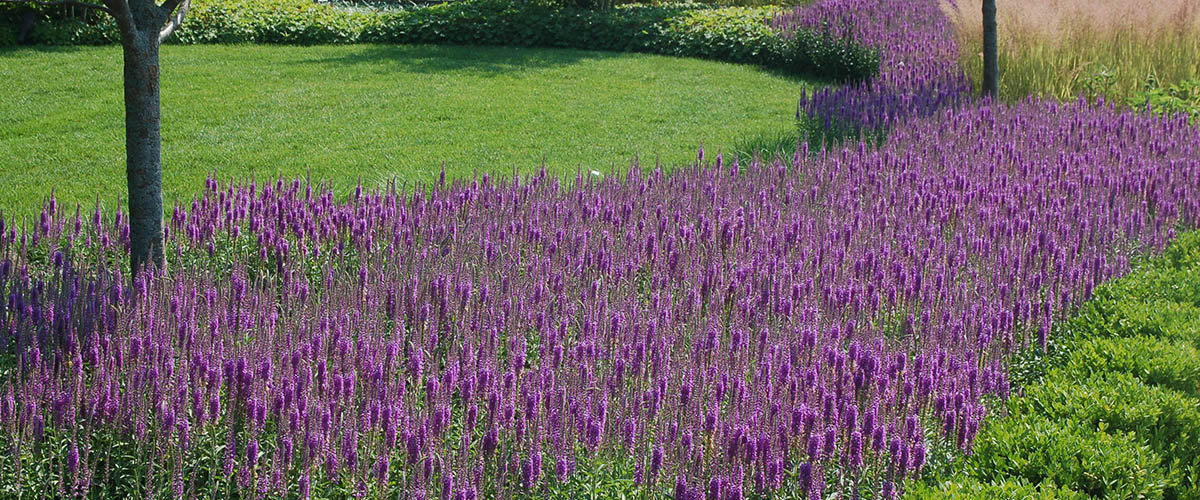
Perennials in Focus is a plant evaluation program that examines new and underused plants for Chicagoland, the third largest metropolitan area in the country. A group of horticultural experts trials and evaluates plants at numerous locations across the region. Results help consumers, public gardens, growers, landscape designers, breeders, and other industry professionals make informed plant choices.
Perennials That Thrive In Shallow Green Roof Substrates
Selecting the best perennials for green roof installations with shallow soil depth requires more than choosing plants that tolerate drought. A successful roof garden must handle reflected heat, strong wind, rapid drainage, limited root space and long periods without irrigation. Plant height, flowering time, spread and winter performance also affect how well the planting works over several seasons.
For Australian gardeners and designers, regional testing is especially valuable. A plant that performs reliably in the cooler, wetter conditions of Chicagoland may need different positioning, watering or protection in Sydney, Melbourne, Adelaide or Perth. Perennials in Focus offers useful evaluation principles, while local roof exposure and Australian nursery availability should guide the final plant list.
| Plant or group | Useful qualities | Best Australian application | Main caution |
|---|---|---|---|
| Sedum species and cultivars | Drought tolerance, shallow roots, seasonal colour | Extensive roofs in most temperate cities | Protect from prolonged waterlogging |
| Delosperma | Bright flowers, heat tolerance, low growth | Sunny roofs in Melbourne, Adelaide and Perth | Needs excellent drainage |
| Sempervivum | Compact rosettes, minimal water demand | Small pockets and exposed roof edges | Can rot in persistently wet media |
| Dianthus | Fragrant flowers, neat foliage, pollinator value | Sheltered temperate roofs | Requires more depth than very small succulents |
| Creeping thyme | Aromatic foliage, pink flowers, low habit | Lightly trafficked roof areas | Can struggle in intense heat without establishment water |
| Achillea and similar tough perennials | Long flowering, resilience, habitat value | Deeper extensive or semi-intensive roofs | Needs adequate substrate volume |
Plant Selection Starts With Site Conditions
Shallow roof substrates commonly range from about 60 to 150 millimetres deep, although the exact profile depends on the structural design. At the thinnest depth, plants must survive with little moisture storage and limited nutrient availability. Compact succulents, stonecrops and low mats generally cope better than plants with deep crowns or extensive woody roots.
Sun exposure should be assessed across the roof rather than assumed from the site plan. Metal parapets, pale membranes and nearby glass can intensify afternoon heat. Conversely, roof plantings close to tall buildings may receive shade and wind turbulence. Record hours of direct sun, prevailing wind, drainage speed and access for maintenance before deciding which perennial mix is appropriate.
A roof in Hobart or Melbourne may support a broader palette than one in Perth, where summer heat and water restrictions can be severe. Sydney’s humid periods call for careful drainage, while Adelaide roofs may need plants that tolerate both dry summers and occasional intense rainfall. These local conditions are as important as the plant label.
Low-Growing Succulents For Thin Substrates
Sedum remains one of the most dependable choices for shallow green roofs. Low mats of Sedum album, Sedum acre and related cultivars store water in fleshy leaves, spread across bare areas and offer flowers valued by small pollinators. Their foliage can shift colour through the year, giving a roof visual interest outside the main flowering season.
Delosperma is another strong candidate for hot, sunny positions. Its daisy-like flowers can appear in vivid pink, purple, orange or white, and its leaves cope with dry conditions once established. It performs best in a gritty, free-draining medium and should be kept away from areas where irrigation remains frequent after rain.
Sempervivum forms architectural rosettes that suit minimalist roof compositions; ideas about restrained planting layouts can be paired with minimalist garden styling when a clean visual language is required. These plants are useful in exposed pockets, although their crowns need protection from standing water and dense organic mulch.
Flowering Groundcovers With Seasonal Value
A roof should offer more than a green surface. Flowering perennials extend seasonal interest, support insects and make the planting visible from nearby apartments or upper-storey windows. Creeping thyme can provide aromatic foliage and small flowers, while low Dianthus adds fine grey-green leaves, colour and, in some cultivars, fragrance.
Where the substrate is deeper and irrigation is available during establishment, compact Achillea, Gaura or low-growing perennial geraniums may add height and a longer flowering sequence. These choices need more careful assessment than sedums because stems can dry out quickly, flop in wind or require extra nutrients.
Plant diversity should be planned in small groups rather than scattered as individual specimens. Repeating several proven cultivars creates a coherent appearance and reduces the risk that one plant failure will leave obvious gaps. A mixture of flowering periods also avoids a roof that looks attractive for only a few weeks each year.
Australian Climate And Fire Considerations
Australian roofs must be assessed for bushfire exposure where relevant. Succulent, low-growing plants with high moisture content are often preferable to dry, resinous or highly combustible vegetation, yet no plant can make a roof fireproof. Irrigation, maintenance, access, substrate composition and separation from combustible materials all contribute to the risk profile.
Local council requirements and project-specific bushfire assessments should be checked before planting. In parts of New South Wales, Victoria, South Australia and Western Australia, a roof garden may sit within a broader Bushfire Attack Level planning context. Dead foliage, accumulated litter and neglected irrigation lines can increase risk even when the original plant palette was carefully selected.
Water availability also affects plant choice. A new roof planting generally needs regular watering while roots establish, even when the mature plants are drought tolerant. Drip irrigation, moisture monitoring and collected rainwater can reduce waste, but the design should still assume that hot weather may coincide with restrictions or supply interruptions.
Designing For Wind, Water, And Maintenance
Wind is frequently underestimated on roofs. Taller stems may bend, dry out or be uprooted, while loose growing media can migrate towards drains. Use low, spreading plants near corners and edges, secure erosion-control layers correctly and reserve taller perennials for protected areas with adequate depth.
Drainage is equally important. A lightweight roof medium usually contains mineral components such as expanded shale, pumice, scoria or crushed brick, blended with a modest amount of organic matter. Ordinary garden soil is too heavy and can compact, reducing drainage and placing unnecessary load on the structure.
Maintenance should include checking drains, removing unwanted woody seedlings, inspecting irrigation and replacing failed plants before gaps enlarge. In Australia, roof access can be limited and summer work may be uncomfortable, so a planting that looks attractive but needs frequent attention can become expensive. Low-maintenance does not mean maintenance-free.
How To Read Regional Trial Results
Perennials in Focus evaluates plants across multiple gardens and seasons, recording characteristics such as height, spread, bloom period and flower colour. Those observations are useful because they show how a plant behaves over time rather than relying solely on nursery descriptions. Trial data can help identify plants with reliable flowering, stable form and manageable growth.
The program’s findings are based on Chicagoland conditions, including cold winters, seasonal rainfall and freeze-thaw cycles. Australian professionals should treat them as a starting point rather than a direct planting prescription. A strong performer in Chicago may fail under Perth’s dry heat, while a plant valued for winter hardiness may have little relevance in Brisbane.
Review the evaluation team and the methods behind each assessment before applying a result to a roof project. Look for repeated performance across sites, evidence from more than one season and notes about spread, lodging, disease or winter survival. For Australian use, compare those observations with local botanic garden trials, specialist growers and green-roof suppliers.
Sourcing And Establishing A Roof Planting
Availability shapes the practical plant list. Australian nurseries may stock popular Sedum, Delosperma, Sempervivum and thyme varieties, but particular cultivars can vary by state and season. Buying from a nursery that understands rooftop conditions is preferable to substituting untested groundcover simply because it is readily available.
Plant plugs and small containers are often easier to establish than large specimens in a shallow profile. Space them closely enough to close the surface within a reasonable period, while allowing air movement around crowns. A temporary irrigation schedule is essential during the first summer, with watering gradually reduced as roots develop.
Before ordering plants, confirm the roof’s load capacity when saturated, membrane compatibility, wind-uplift protection and safe access arrangements. Coordinate the horticultural plan with the waterproofing contractor and structural engineer. The most resilient perennial is ineffective if drainage, root protection or maintenance access has been overlooked.
Use trial evidence to assemble a short list, then test that list in small roof-ready plots before committing to a large installation. Record survival, flowering, weed pressure and irrigation needs through at least one hot season. This measured approach helps Australian designers build green roofs that are lighter, safer and more attractive over time.
A well-chosen perennial palette can turn a shallow roof into a durable ecological surface rather than a short-lived decorative layer. Select proven low growers, match them to the local climate and keep clear records of what succeeds. Apply the same careful evaluation to every project so future plant choices become more reliable for Australian homes, commercial buildings and public landscapes.
In the Garden
Evaluator gardens are located across the Chicagoland area, representing a range of growing conditions. Visit our retail and wholesale partners to find trialled perennials for your own garden.
Retail & Wholesale: Hinsdale Nurseries (Willowbrook, IL), Mariani Nurseries (Kenosha, WI & Garden Prairie, IL), Northwind Perennials (Burlington, WI), The Growing Place (Aurora, IL).
Wholesale Only: Hinsdale Nurseries (Plano, IL), Intrinsic Perennial Gardens (Hebron, IL).
Our Evaluation Program
The 2017–2020 evaluation cycle included Agastache 'Blue Boa', Allium senescens 'Blue Eddy', Amsonia ciliata var. filifolia 'Georgia Pancake', Astilbe 'Chocolate Shogun', Boltonia astroides 'James Crocket', Brunnera 'Alexander's Great', and Geranium cinereum 'Jolly Jewel Purple'. Completed evaluations include Amsonia 'Blue Ice' (2004–07).
On April 10, 2020, the program published snapshot profiles for Vernonia lettermanii 'Iron Butterfly', Stokesia laevis 'Elf', Stachys officinalis 'Pink Cotton Candy', Lobelia 'Monet Moment', Helleborus 'Winter Thrillers', Geum 'Mai Tai', Geranium soboliferum 'Butterfly Kisses', Gentiana x intermedia 'True Blue', Eurybia divaricata, Asparagus 'Purple Passion', and Agastache 'Bolero'.
Browse the full collection of snapshots organized alphabetically — from A–D, E–H, I–Q, and R–Z — to find detailed performance data on perennials trialled across Chicagoland.