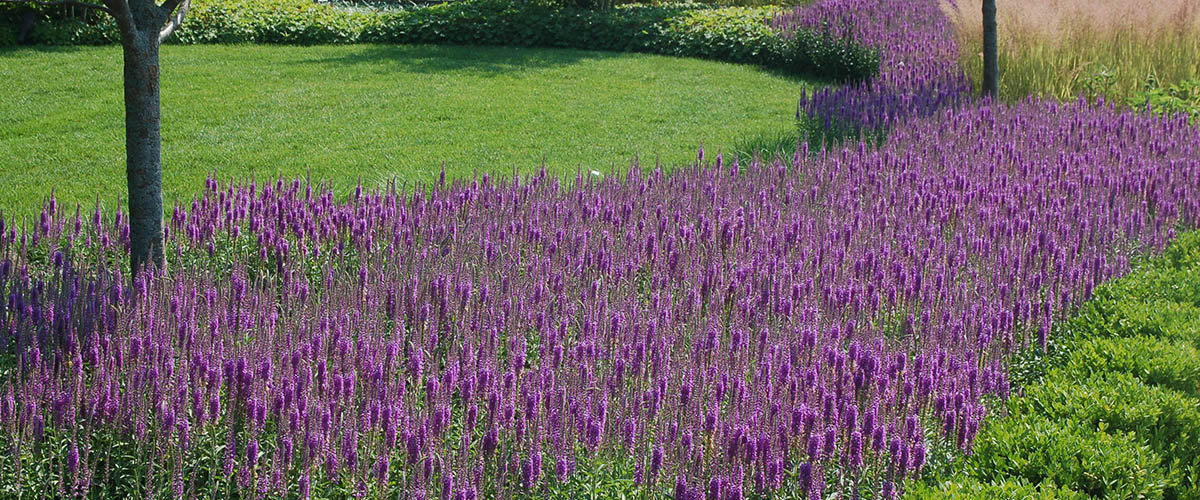
Evaluating Perennials for Chicagoland Gardens
Perennials in Focus is a plant evaluation program that examines new and underused plants for Chicagoland, the third largest metropolitan area in the country. A group of horticultural experts trials and evaluates plants at numerous locations across the region. Results help consumers, public gardens, growers, landscape designers, breeders, and other industry professionals make informed plant choices.
Best dry-shade perennials: Spotted deadnettle and creeping Jenny
A dry, shaded corner beneath a tree can be the hardest part of an Australian garden. It receives little direct sun, competes with thirsty roots and often stays dry because the canopy intercepts rain. The best perennials for dry shade must therefore tolerate low light, limited soil moisture and constrained root space without collapsing after a few weeks.
Spotted deadnettle and creeping Jenny are often discussed together as shade groundcovers, but they need different conditions. Spotted deadnettle is the more dependable dry-shade choice once established; creeping Jenny performs best where the soil remains damp. Chicagoland trial findings can help separate reliable traits from site-specific luck, while Australian climate, water and weed rules determine the final choice.
What dry shade means in Australian gardens
Dry shade is not the same as ordinary drought. A plant in full sun may benefit from a thorough soak every few days, while one beneath dense evergreen or deciduous foliage may need less irrigation but face cooler soil and intense root competition. Check moisture at 10–15 centimetres rather than judging conditions from the surface.
The challenge changes across Australia. Many Adelaide gardens combine intense summer heat with restricted irrigation, while Melbourne has dry spells and changeable winters; Canberra adds frost and low rainfall, and Sydney often has humid summers and wet winters. A plant labelled “shade tolerant” in one city may be stressed by another region’s summer heat.
Improve dry shade by adding compost, mulch and a slow-release wetting product, then watering deeply but less often. Morning irrigation and recycled household water suit many households, but avoid daily sprinklers that wet leaves. Allow space around root trunks and monitor plants through their first summer.
How regional trials guide plant choices
Perennials in Focus publishes regional trial snapshots showing how bloom period, flower colour, height and spread vary across multiple gardens and seasons. That multi-site approach is useful because a perennial that performs well in one exposed Chicagoland plot may behave differently in a shaded, irrigated garden.
Read each result for the conditions behind it: soil type, sun exposure, rainfall, plant age and trial duration. Consistently strong flowering and controlled spread across sites carry more weight than a single photograph or an exceptional first-year result.
Chicagoland data cannot prescribe a planting plan for Brisbane, Hobart or Warrnambool. Use it to identify promising species and measurable traits, then confirm those traits with local nurseries, council resources and plants already growing nearby. The closer the comparison site resembles your own garden, the more useful the finding becomes.
Comparing plants for difficult shade
Both candidates offer groundcover, but one rewards dry conditions and the other depends on them. The useful comparison is not simply which has prettier flowers; it is which matches the available light, moisture and maintenance level.
| Feature | Spotted deadnettle | Creeping Jenny |
|---|---|---|
| Botanical name | Lamium maculatum | Lysimachia nummularia |
| Typical height | 15–30 cm | 5–15 cm |
| Flowering | Pink, purple or white; spring to summer | Yellow; late spring to summer |
| Light | Partial shade; tolerates dappled light | Partial shade; tolerates deeper shade when moist |
| Soil moisture | Tolerates dry shade after establishment | Prefers consistently moist soil |
| Growth habit | Stolons form a spreading mat | Stolons root readily and spread rapidly |
| Main Australian caution | Can escape beds and naturalise in some districts | Can form dense mats; weed status varies by location |
| Best role | Dry woodland edge, shrub bed, shady path | Damp woodland, rain garden, moist container |
For a genuinely dry, root-competitive pocket, spotted deadnettle is usually the better-performing choice. Creeping Jenny belongs only where dependable moisture can be provided and its edges can be controlled. Neither should be planted simply because a label says “groundcover” or “shade lover”.
For broader dry-shade planting, combine a flowering groundcover with epimedium, brunnera, heuchera or bergenia in temperate gardens. In warmer regions, ask local native nurseries for species suited to the specific soil and rainfall pattern. Local provenance is particularly valuable where summer humidity and fungal pressure differ from temperate examples.
Why spotted deadnettle is the stronger choice
Lamium maculatum forms a low, spreading mat, usually around 15–30 centimetres high, with pink, purple or white flowers from spring into summer. It handles dappled light and the root competition found under deciduous trees better than most flowering groundcovers. Once settled, it copes with short dry periods that would stop a moisture-loving plant.
The foliage provides useful texture before flowering and may remain semi-evergreen in mild districts. Plant it along a shaded path, at the base of shrubs or beneath deciduous canopy where rain can reach the soil. Avoid excessively rich, wet ground, which encourages faster spread and weaker flowering.
Its runners can travel beyond the intended bed, so divide or edge the planting each season. Some Australian gardens treat this species as a garden escape; check local council weed information before propagating it. In very hot or tropical districts, trial a small area first and consider brunnera, epimedium or suitable native woodland plants as alternatives.
Where creeping Jenny belongs
Lysimachia nummularia is a vigorous perennial with trailing stems, rounded green leaves and bright yellow flowers. Its tolerance of shade is genuine, yet its preference for consistently moist, humus-rich soil makes it a poor match for genuinely dry shade. Drought often reduces flowering before the foliage dies back.
Creeping Jenny is useful beside a damp pond edge, in a rain garden or in a container kept evenly moist. It can soften hard edges and provide yellow flowers in late spring and summer. A shaded position beneath established trees may be too deep, but the outer canopy of a large tree can work if the root zone receives winter rain or irrigation.
Its stems root wherever they touch moist soil, producing dense mats that can overwhelm small companions. Check state and local environmental weed registers before planting near bushland, drainage lines or waterways. Imported plant material must also meet Commonwealth biosecurity requirements, including the Biosecurity Act 2015 and any permit conditions.
Buy, plant and contain with care
Australian gardeners can find these plants through independent nurseries, hardware-store garden centres and online plant marketplaces. Look for the botanical name, mature size and propagation method, not just a flowering photograph. Available state nursery accreditation schemes and the Australian Consumer Law provide useful checks on the quality and accuracy of retail information.
Read the small print on any review: a fruit machine game review is useful only when it identifies the version, test period and stated conditions, just as a sound plant recommendation names the species, site and season. Avoid buying anonymously packaged rhizomatous clumps without knowing their source.
Prepare a broad planting hole, backfill with improved soil and water thoroughly, then apply 50–75 millimetres of organic mulch without burying the crown. Keep new plants away from constant irrigation if the species dislikes moisture, and inspect spreading stems during the first year. Choose one trial-backed perennial that suits the actual site, buy from a reputable local source, and record its growth through a full Australian season before expanding the planting.
In the Garden
Evaluator gardens are located across the Chicagoland area, representing a range of growing conditions. Visit our retail and wholesale partners to find trialled perennials for your own garden.
Retail & Wholesale: Hinsdale Nurseries (Willowbrook, IL), Mariani Nurseries (Kenosha, WI & Garden Prairie, IL), Northwind Perennials (Burlington, WI), The Growing Place (Aurora, IL).
Wholesale Only: Hinsdale Nurseries (Plano, IL), Intrinsic Perennial Gardens (Hebron, IL).
Our Evaluation Program
The 2017–2020 evaluation cycle included Agastache 'Blue Boa', Allium senescens 'Blue Eddy', Amsonia ciliata var. filifolia 'Georgia Pancake', Astilbe 'Chocolate Shogun', Boltonia astroides 'James Crocket', Brunnera 'Alexander's Great', and Geranium cinereum 'Jolly Jewel Purple'. Completed evaluations include Amsonia 'Blue Ice' (2004–07).
On April 10, 2020, the program published snapshot profiles for Vernonia lettermanii 'Iron Butterfly', Stokesia laevis 'Elf', Stachys officinalis 'Pink Cotton Candy', Lobelia 'Monet Moment', Helleborus 'Winter Thrillers', Geum 'Mai Tai', Geranium soboliferum 'Butterfly Kisses', Gentiana x intermedia 'True Blue', Eurybia divaricata, Asparagus 'Purple Passion', and Agastache 'Bolero'.
Browse the full collection of snapshots organized alphabetically — from A–D, E–H, I–Q, and R–Z — to find detailed performance data on perennials trialled across Chicagoland.