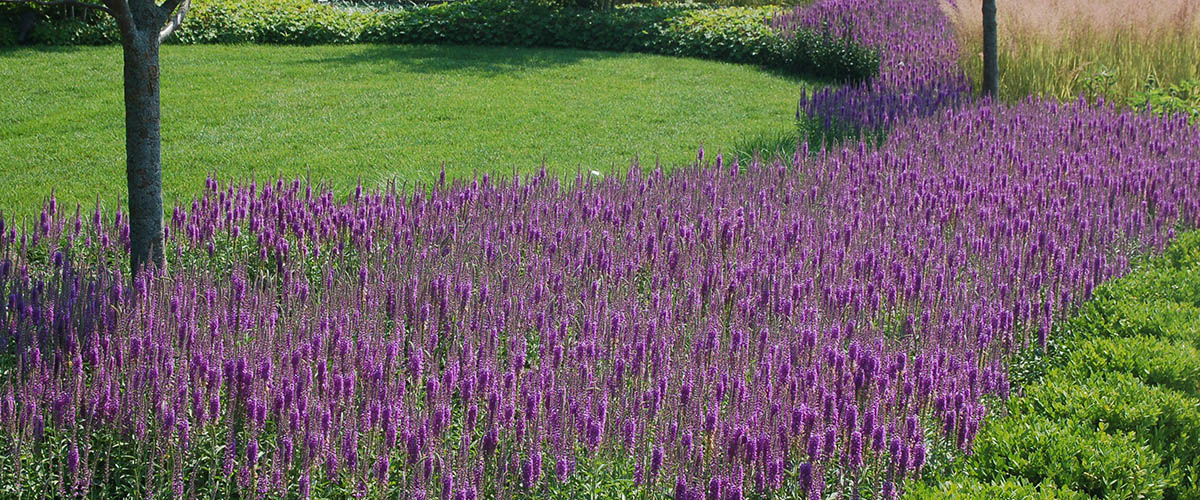
Evaluating Perennials for Chicagoland Gardens
Perennials in Focus is a plant evaluation program that examines new and underused plants for Chicagoland, the third largest metropolitan area in the country. A group of horticultural experts trials and evaluates plants at numerous locations across the region. Results help consumers, public gardens, growers, landscape designers, breeders, and other industry professionals make informed plant choices.
Linking Suburban Prairie Remnants With a Perennial Nectar Corridor
Across Melbourne's western growth corridor and Sydney's outer Cumberland Plain suburbs, fragments of original grassland and grassy woodland persist in odd corners: railway cuttings, easements, and the back buffers of new estates. Each surviving patch holds a remarkable concentration of native bees, butterflies, hoverflies, and honeyeaters, yet most sit within a sea of mown lawn and ornamental shrubs that offer little forage between them. A perennial nectar corridor stitches these remnants together, giving pollinators a continuous flow of food across streets, driveways, and fence lines.
Choosing plants for that linkage means thinking like a pollinator with a daily commute. Bloom has to overlap from one patch to the next, soil and sun conditions need to match the surrounding remnant, and the corridor has to remain interesting from late winter through late autumn. The plants below come from evaluation trials across temperate climates, adapted here for Australian suburban conditions, including the heavy clay soils of Craigieburn and the sandy profiles common in the northern Adelaide Park Lands fringe.
Why Corridors Matter Between Remnants
Pollen and nectar are not stored in any meaningful way by most adult bees and butterflies, so a forager flying out from a nest or roost has only a few hours of fuel. When the nearest flower is more than a hundred metres away across hostile ground cover, far less energy reaches the colony than was spent in transit. A planted linkage shortens that gap, lifts colony growth rates, and stabilises the small populations already holding on inside the remnant itself.
The same logic applies to the birds and mammals that move through the matrix. Eastern Spinebills in the Dandenong Ranges fringe and Red Wattlebirds across inner Brisbane suburbs follow reliable flower sources through the year. Once a corridor of perennials replaces even a strip of unused turf along a back fence, the property becomes a stepping stone in a much larger landscape network that benefits wildlife far beyond its lot boundaries.
Planning Bloom Succession Across the Calendar
The first design task is matching flowering peaks to pollinator demand. Early spring is the leanest season, when queen bumblebees emerge and many native bees are provisioning their first brood. Mid-summer brings heat stress that can shut down bloom on poorly chosen plants. Late autumn flowers fuel migrating butterflies and the final brood cycles of solitary bees before winter dormancy.
A reliable Australian corridor usually starts with a backbone of long-flowering perennials that bridge seasons, then layers in specialist plants for the trickier months. The backbone might include Salvia, Penstemon, and Russian Sage for sheer duration, while specialist early-spring value comes from Catmint and late-autumn interest from Sedum and asters. Aim for at least three species in bloom at any moment along the entire length of the linkage, so a forager never encounters a dead stretch.
Reliable Perennials for an Australian Corridor
Native options sit comfortably alongside hardy exotics in a corridor planting, and mixing them often widens the pollinator menu. Kangaroo Paw (Anigozanthos) and Grevillea hybrids such as 'Superb' carry copious nectar for honeyeaters and lorikeets, while Westringia and Dampiera provide steady insect forage through the warmer months. In the cooler south, planting Echinacea, Rudbeckia, and Salvia nemorosa alongside the Australian natives gives a corridor that performs reliably from Geelong to the Hills District.
For gardeners sourcing plants locally, the range at most Bunnings and native specialist nurseries in Melbourne, Sydney, and Perth covers most of the species in the comparison that appears later in this guide. When selecting, prioritise plants that have already proven themselves in trials rather than relying on catalogue descriptions, and consult resources such as the most successful perennials from our Chicagoland evaluation trials checklist for guidance on which genera hold up under close evaluation over multiple seasons.
Designing the Pathway: Width, Layering, and Microclimates
Width matters more than length when a corridor first goes in. A single row of perennials barely registers for many pollinators, while a strip three to four metres wide allows a low ground layer, a mid layer of flowering perennials, and an occasional shrub canopy. Where space is tight, even a one-metre verge planting that mimics those layers in miniature still functions as a passage for smaller native bees.
Microclimate also shapes what will thrive. The hot, dry verges along Adelaide's Outer Harbor line demand drought-tolerant selections, while the sheltered streets of inner Sydney can support moisture-loving Astilbe and Lobelia in dappled corners. Match each plant to the actual sun and soil of its segment, and resist the urge to plant a uniform row that ignores the changes in aspect along a fence line.
Establishment, Watering, and Long-Term Care
Australian suburbs impose tough conditions on young perennials, especially through the first two summers. Water-wise establishment matters: deep soakings twice a week during the first dry season, then a slow taper as roots reach down. Most councils now publish guidance on WaterWise gardening, and many rebate schemes in Perth and Melbourne offset the cost of mulch and drip lines.
Maintenance is light once plants establish, but a late-winter cutback, a light compost top-up, and a five-year plan to replace any perennials that have declined keep the corridor productive. Keep a notebook or phone spreadsheet of which species actually drew the most visitors; the data will reshape the mix as the corridor matures.
Tracking Results and Supporting Pollinators Beyond Bloom
A nectar corridor should keep working when flowers are scarce. Leaving seed heads through winter gives finches something to graze on and supplies overwintering sites for native bee larvae that nest in hollow stems. Perennials such as Echinacea, Rudbeckia, and kangaroo paw all contribute structure that persists long after petal drop.
Hollow stems and dry flower stalks are particularly valuable for small songbirds during the colder months in southern Australia. Resources such as Perennials that provide nesting material for chickadees and titmice in winter overview explain how structural perennials feed cavity nesters, and the same principle applies to local robins, wrens, and pardalotes that pick fibrous material from garden borders. Schedule a tidy-up for early spring, just before new growth emerges, so the corridor offers both winter shelter and a fresh burst of forage.
A side-by-side look at how the most reliable corridor perennials compare on bloom timing, mature size, and pollinator value:
| Plant | Bloom Period | Mature Height | Pollinator Value |
|---|---|---|---|
| Anigozanthos (Kangaroo Paw) | Late winter to early summer | 60–120 cm | High for honeyeaters and lorikeets |
| Grevillea 'Superb' | Year-round in mild climates | 150–200 cm | High for honeyeaters and native bees |
| Echinacea purpurea | Mid-summer to early autumn | 80–120 cm | High for butterflies and solitary bees |
| Salvia nemorosa | Late spring to mid-autumn | 50–80 cm | Medium-high for bumblebees and hoverflies |
| Nepeta x faassenii | Late spring to early autumn | 40–60 cm | Medium for solitary bees and hoverflies |
| Sedum 'Autumn Joy' | Late summer to mid-autumn | 50–60 cm | High for late-season butterflies and wasps |
| Rudbeckia fulgida | Mid-summer to mid-autumn | 60–90 cm | High for native bees and small butterflies |
For residents ready to start, begin by mapping the closest remnant on a council biodiversity layer or a community app such as iNaturalist, then walk the route between it and your garden with a notepad. Sketch which segments are full sun, which are shaded, and where existing shrubs already offer vertical structure. The next planting weekend becomes a targeted intervention rather than another scattered garden bed, and the corridor can grow outward from your patch as neighbours see what is possible.
Join the Perennials in Focus mailing list for seasonal planting reminders and corridor design workshops running through autumn 2026 across Melbourne, Sydney, and Adelaide. Share your corridor progress with the evaluation network and help refine the plant lists that other gardeners will rely on.
In the Garden
Evaluator gardens are located across the Chicagoland area, representing a range of growing conditions. Visit our retail and wholesale partners to find trialled perennials for your own garden.
Retail & Wholesale: Hinsdale Nurseries (Willowbrook, IL), Mariani Nurseries (Kenosha, WI & Garden Prairie, IL), Northwind Perennials (Burlington, WI), The Growing Place (Aurora, IL).
Wholesale Only: Hinsdale Nurseries (Plano, IL), Intrinsic Perennial Gardens (Hebron, IL).
Our Evaluation Program
The 2017–2020 evaluation cycle included Agastache 'Blue Boa', Allium senescens 'Blue Eddy', Amsonia ciliata var. filifolia 'Georgia Pancake', Astilbe 'Chocolate Shogun', Boltonia astroides 'James Crocket', Brunnera 'Alexander's Great', and Geranium cinereum 'Jolly Jewel Purple'. Completed evaluations include Amsonia 'Blue Ice' (2004–07).
On April 10, 2020, the program published snapshot profiles for Vernonia lettermanii 'Iron Butterfly', Stokesia laevis 'Elf', Stachys officinalis 'Pink Cotton Candy', Lobelia 'Monet Moment', Helleborus 'Winter Thrillers', Geum 'Mai Tai', Geranium soboliferum 'Butterfly Kisses', Gentiana x intermedia 'True Blue', Eurybia divaricata, Asparagus 'Purple Passion', and Agastache 'Bolero'.
Browse the full collection of snapshots organized alphabetically — from A–D, E–H, I–Q, and R–Z — to find detailed performance data on perennials trialled across Chicagoland.