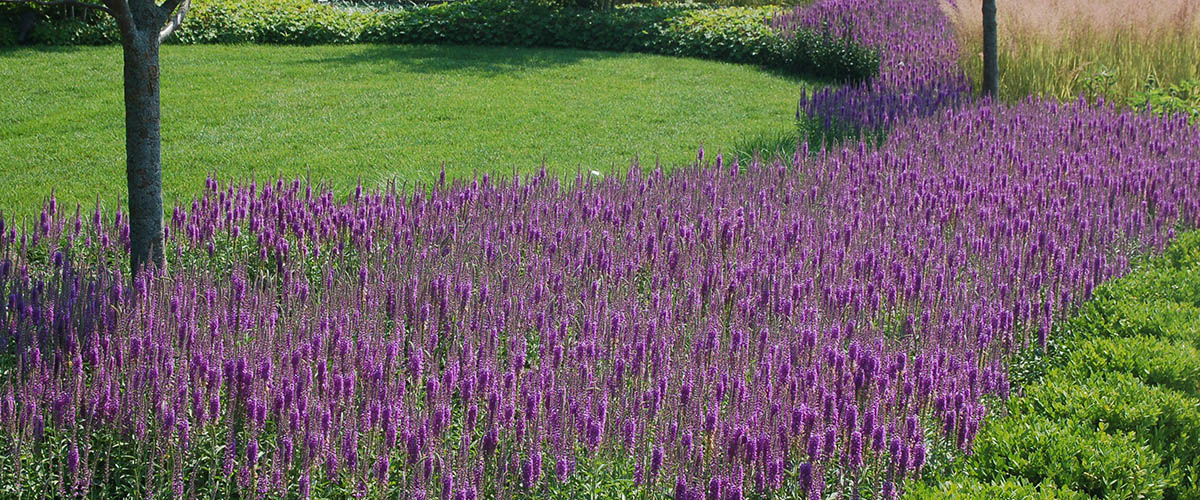
Evaluating Perennials for Chicagoland Gardens
Perennials in Focus is a plant evaluation program that examines new and underused plants for Chicagoland, the third largest metropolitan area in the country. A group of horticultural experts trials and evaluates plants at numerous locations across the region. Results help consumers, public gardens, growers, landscape designers, breeders, and other industry professionals make informed plant choices.
Best perennials for a small courtyard garden in Chicago
A small courtyard can support a surprisingly rich planting when each perennial earns its space. The most successful combinations usually include a dependable framework plant, a few long-blooming accents, and foliage that remains attractive after flowers fade. In Chicago, those choices must also handle winter cold, humid summers, freeze-thaw cycles, and the reflected heat of masonry.
Perennials in Focus is especially useful for this kind of decision because regional performance matters. A plant that thrives in a spacious Midwestern border may become floppy, aggressive, or visually overwhelming in a compact courtyard. Observations from multiple gardens and seasons can help narrow the selection to plants with suitable height, spread, bloom timing, and garden behavior.
The right plant list will depend on sunlight, soil drainage, irrigation, and the amount of room around paths and seating. Begin with those conditions, then choose plants that offer several seasons of value rather than relying on a brief flush of flowers.
Read the courtyard before choosing plants
Track sunlight at different times of day before buying anything. A south- or west-facing courtyard surrounded by brick may receive intense afternoon heat, while a north-facing space can behave like woodland shade. Buildings also create rain shadows, so soil near walls may become much drier than beds exposed to open skies.
Measure the planting areas at mature plant size, not at the spacing shown on a nursery bench. In a small garden, a perennial that spreads 30 inches can quickly cover a path or crowd a neighboring plant. Leave enough room for air circulation and maintenance, especially where walls reduce airflow.
Soil preparation should improve drainage without creating a highly fertile, overly lush bed. Compost worked into compacted soil can help roots establish, but excessive fertility often produces weak stems and oversized foliage. A two- to three-inch layer of organic mulch helps moderate temperature and moisture while keeping it away from crowns.
Choose plants for Chicago’s seasonal rhythm
Early spring bulbs and low-growing perennials can provide color before summer plants reach their full size. Woodland phlox, foamflower, and compact coral bells are useful in partly shaded spaces, while creeping phlox and basket-of-gold can brighten sunny, gravelly edges. Their foliage and form should still contribute after the first bloom period ends.
For summer, look for plants with a long display or attractive structure. Threadleaf coreopsis, catmint, black-eyed Susan cultivars, and butterfly weed can flower for weeks when placed in suitable light. Butterfly weed, or Asclepias tuberosa, prefers well-drained soil and does not appreciate frequent transplanting; these local butterfly weed findings provide useful regional context before it is added to a courtyard bed.
Fall interest can come from seed heads, persistent foliage, and late flowers rather than from adding a separate collection of plants. Sedum, anise hyssop, ornamental grasses, and certain asters extend the season and give pollinators additional resources. Leaving some stems standing through winter also adds texture and shelter.
Compact perennials with reliable impact
Coral bells are among the most flexible choices for a small courtyard. Their mounded foliage fits narrow beds, and cultivars range from lime green to burgundy and silver. They perform best in part shade with consistent moisture and excellent drainage. In very hot locations, dark-leaved selections may need protection from intense afternoon sun.
For sunny sites, threadleaf coreopsis offers fine foliage, a tidy habit, and bright yellow flowers without the bulk of many large prairie plants. Catmint supplies fragrant foliage and long-lasting blue-purple flowers, though compact cultivars are preferable where paths are close. Shearing after the first flush can encourage fresh growth and reduce a tired, sprawling appearance.
Sedum, especially upright types with sturdy stems, is valuable in dry courtyards and raised beds. Its succulent leaves tolerate periods of limited watering, while late-season flower clusters provide color when many other perennials are fading. Low-growing sedums work well between pavers, but they should be kept away from areas where winter salt collects.
Compare space, bloom, and care
The following choices cover several light conditions and design roles. Mature size varies by cultivar and site, so use the figures as planning estimates rather than fixed limits. Regional trial observations and local nursery tags should guide the final selection.
| Perennial | Light | Approximate mature size | Main season of interest | Courtyard role |
|---|---|---|---|---|
| Coral bells | Part shade to morning sun | 12–18 in. tall, 12–20 in. wide | Spring to fall foliage | Compact foliage anchor |
| Threadleaf coreopsis | Full sun | 18–24 in. tall, 18–24 in. wide | Summer flowers | Fine-textured long bloomer |
| Upright sedum | Full sun | 18–24 in. tall, 18–24 in. wide | Late summer to fall | Drought-tolerant structure |
| Catmint | Full sun | 12–24 in. tall, 18–24 in. wide | Late spring to summer | Fragrant edging plant |
| Foamflower | Shade to part shade | 8–16 in. tall, 12–18 in. wide | Spring flowers and foliage | Woodland-style ground layer |
| Butterfly weed | Full sun | 18–30 in. tall, 12–18 in. wide | Summer flowers and seed pods | Pollinator accent |
| Creeping phlox | Full sun to light shade | 4–6 in. tall, 18–24 in. wide | Spring flowers | Wall or rock-garden carpet |
Control spread in narrow planting beds
Ground-hugging plants can make a courtyard feel established quickly, but their behavior deserves close attention. Creeping phlox is attractive over walls and between rocks, yet its stems can move beyond the intended edge when conditions are favorable. The observations in these creeping phlox trials are relevant when planning a narrow border or a bed beside paving.
Use physical edges where a plant’s spread could interfere with access. A clean line of stone, metal edging, or a distinct change in mulch can make seasonal trimming easier. Dividing vigorous clumps every few years is preferable to allowing them to press against neighboring crowns.
Self-seeding is another form of spread to monitor. Butterfly weed is generally well behaved, but its pods can release seed, and some asters or black-eyed Susans may appear outside the original planting. Remove developing seed heads if a precise layout matters more than winter texture and natural reseeding.
Layer foliage around seating and paths
A successful courtyard planting should be attractive at eye level, near the ground, and beyond the immediate season of bloom. Place the tallest plants toward a wall or rear corner, medium-height perennials beside seating, and low mounding or trailing plants along paths. This arrangement preserves sightlines and makes the space feel deeper.
Repeat two or three plants rather than filling every gap with a different species. For example, coral bells can connect shady corners, while upright sedum can repeat in sunny pockets. A restrained palette gives a small garden visual calm and makes individual flower colors more noticeable.
Use foliage contrast to sustain interest between bloom periods. Pair broad leaves with fine-textured coreopsis, silver foliage with deep green, or upright seed heads with low mats. Containers can hold plants that need special drainage or seasonal replacement, leaving permanent beds for the most reliable performers.
A practical planting shortlist
Begin with the plants that match the site rather than selecting by flower color alone. A sunny, dry courtyard might combine upright sedum, threadleaf coreopsis, catmint, and butterfly weed. A shadier courtyard could rely on coral bells, foamflower, compact hostas, and spring bulbs, with mulch and irrigation supporting establishment.
Keep the initial design manageable and observe it through at least one full growing season. The following approach helps maintain proportion and reduces future correction work:
- Reserve the brightest, driest locations for sedum, coreopsis, catmint, or butterfly weed.
- Use coral bells and foamflower where morning sun or filtered light is available.
- Select compact cultivars and verify their mature spread before planting.
- Repeat key foliage colors to make a small space feel intentional.
- Install edging around spreading ground covers and inspect the boundary each spring.
Water new plants deeply during their first season, then adjust irrigation as roots develop. Courtyard walls can create hot, dry pockets even after rainfall, while shaded corners may remain damp for longer than expected. Regular observation is more useful than following a fixed watering schedule.
A carefully selected collection of Chicago-hardy perennials can turn a limited courtyard into a layered habitat with flowers, texture, and seasonal movement. Explore the region-specific evaluations from Perennials in Focus, compare plants against your site conditions, and use those findings to create a planting that remains balanced well beyond its first season.
In the Garden
Evaluator gardens are located across the Chicagoland area, representing a range of growing conditions. Visit our retail and wholesale partners to find trialled perennials for your own garden.
Retail & Wholesale: Hinsdale Nurseries (Willowbrook, IL), Mariani Nurseries (Kenosha, WI & Garden Prairie, IL), Northwind Perennials (Burlington, WI), The Growing Place (Aurora, IL).
Wholesale Only: Hinsdale Nurseries (Plano, IL), Intrinsic Perennial Gardens (Hebron, IL).
Our Evaluation Program
The 2017–2020 evaluation cycle included Agastache 'Blue Boa', Allium senescens 'Blue Eddy', Amsonia ciliata var. filifolia 'Georgia Pancake', Astilbe 'Chocolate Shogun', Boltonia astroides 'James Crocket', Brunnera 'Alexander's Great', and Geranium cinereum 'Jolly Jewel Purple'. Completed evaluations include Amsonia 'Blue Ice' (2004–07).
On April 10, 2020, the program published snapshot profiles for Vernonia lettermanii 'Iron Butterfly', Stokesia laevis 'Elf', Stachys officinalis 'Pink Cotton Candy', Lobelia 'Monet Moment', Helleborus 'Winter Thrillers', Geum 'Mai Tai', Geranium soboliferum 'Butterfly Kisses', Gentiana x intermedia 'True Blue', Eurybia divaricata, Asparagus 'Purple Passion', and Agastache 'Bolero'.
Browse the full collection of snapshots organized alphabetically — from A–D, E–H, I–Q, and R–Z — to find detailed performance data on perennials trialled across Chicagoland.