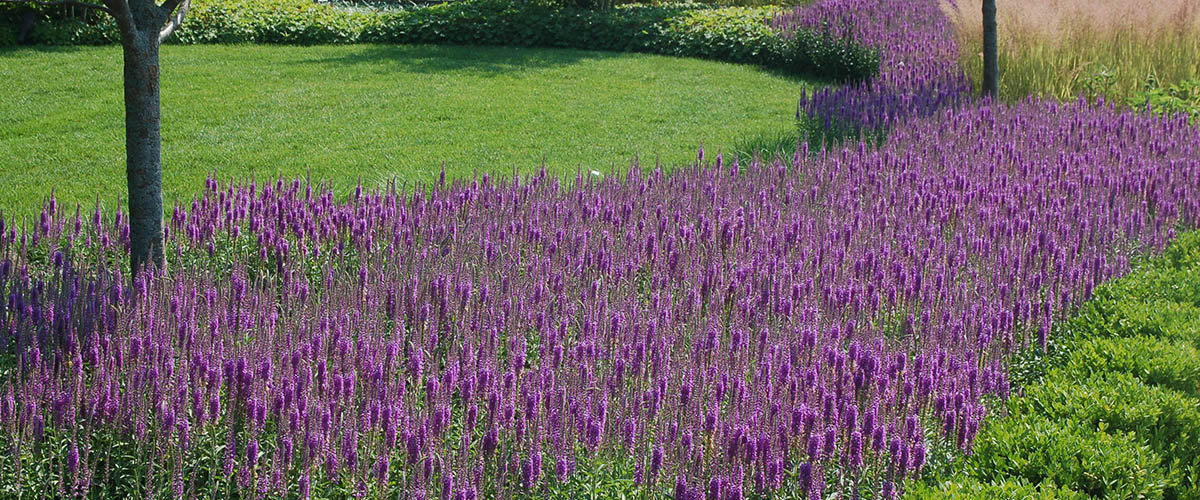
Evaluating Perennials for Chicagoland Gardens
Perennials in Focus is a plant evaluation program that examines new and underused plants for Chicagoland, the third largest metropolitan area in the country. A group of horticultural experts trials and evaluates plants at numerous locations across the region. Results help consumers, public gardens, growers, landscape designers, breeders, and other industry professionals make informed plant choices.
Assessing Cutting Production of Solidago rugosa
Assessing the cutting production rate of Solidago rugosa for florist use means measuring what reaches the bucket, not merely whether the plant flowers. A useful rate combines stem number, usable length, cut quality and regrowth across a defined period. These measurements help growers estimate weekly supply and help florists judge whether the crop can support dependable orders.
Perennials in Focus provides a strong starting point because its Chicagoland trials record bloom period, flower color, height and spread across multiple gardens and seasons. Australian growers still need to adapt the method, as climate, daylength, crop calendars and florist expectations differ. Regional performance data become most useful when translated into locally measurable harvest targets.
Measuring the useful production rate
Define the production rate before planting. Count marketable stems per plant at each cut, total cuts over a season, stems per square metre and the percentage of stems suitable for sale. A plant producing 30 saleable stems in three cuts offers a different commercial value from one producing 50 short or damaged stems. Yield without quality can therefore exaggerate the crop’s potential.
Set specifications with buyers rather than relying on appearance alone. Useful stems may need particular lengths, firm stems, several flowering laterals, clean foliage and an appropriate stage of opening. Record rejected stems separately, identifying causes such as lodging, sparse branching, disease, insect damage or inadequate length. This converts cutting production from a general impression into a repeatable commercial measure.
Building a reliable cutting trial
Use traceable, true-to-name planting material. Named selections of Solidago rugosa can differ in habit, and seed-grown plants may vary, so label each group and record the nursery and cultivar. Randomise plants within replicated blocks at each site, using the same spacing and management. The collaborative approach described in the trial program history illustrates the value of comparing plants under consistent conditions across locations.
Harvest every trial plant on the same dates and use a defined flower-opening stage. Count total stems, saleable stems, length, branching and defects at each cutting, then record the interval until the next crop. Labor for cutting, conditioning and bunching belongs in the assessment, along with irrigation, feeding and losses from weather. These figures allow production per plant to be compared with production per unit of space, time and effort.
Reading Chicagoland performance
Chicagoland observations offer valuable clues about flowering sequence, stature and regional adaptability. Cold winters, variable springs and humid summers can influence stem quality, while the late display of goldenrod may extend the useful season. However, the regional field context should be read alongside the program’s observations rather than treated as a universal forecast for Australian gardens.
Separate ornamental performance from harvest performance. A plant may score well for flower color, height and spread while producing fewer saleable stems because of weak branching or lodging. Conversely, a moderately decorative display may provide regular cuts. Australian decisions should therefore weight marketable yield, recovery after cutting and buyer acceptance more heavily than a general rating of how the plant looks in a trial garden.
Adapting the crop to Australia
The Southern Hemisphere reverses the familiar crop calendar. A plant that flowers during Chicago’s summer may be harvested during the Australian winter, so flowering and cutting dates cannot simply be copied from Northern Hemisphere trials. Southern growers can explore winter production, while subtropical growers may obtain different results from spring or autumn planting. Planting windows should be tested locally rather than assumed.
Climate also changes stem length and vase life. Melbourne’s cool winters and variable frosts can slow establishment, Sydney’s milder conditions may encourage continuous growth, and Brisbane’s subtropical heat and humidity can favour growth while increasing disease and quality risks. Record flowering density, stem firmness and post-harvest hydration separately in each location. Where summer heat reduces quality, shade management or a cooler production window may improve results.
Matching stems to florist demand
Australian florists need dependable stems for bouquets, event work and retail bunches, not an isolated novelty flower. Trading hubs such as Melbourne’s Flemington flower market and the Sydney Flower Market at The Rocks connect growers with buyers who can identify the desired lengths, branching and finish. Test several bunch styles rather than judging stems only as individual cuttings.
Domestic production can offer a reliable alternative to imported specialty material, which may cross borders by air and incur substantial freight, quarantine and cold-chain costs. A local crop has a stronger case if it supplies useful quantities over several weeks and arrives with consistent quality. Florists should record whether they prefer tight buds, partly open flowers or fully expanded sprays, since that preference affects the ideal harvest date and expected vase life.
Protecting yield through handling and biosecurity
Harvest during the cooler part of the day, remove damaged lower foliage and place stems into clean, treated water. Move buckets promptly into an appropriate cool environment and avoid mixing material from plants with different hydration needs. Measure vase life after conditioning, since a stem that looks strong at harvest can lose value quickly if it wilts during distribution. Australian delivery conditions should be included in the trial rather than treated separately from flower production.
Plant movement also affects trial planning. Before taking liners or dormant crowns across Australian state borders, check the receiving jurisdiction’s plant movement and biosecurity requirements. Commercial imports must meet Australian import conditions and any applicable phytosanitary documentation. Using locally sourced, correctly labelled plants avoids unnecessary regulatory delays and ensures that measured yield belongs to the cultivar being assessed.
Comparing sites and setting a commercial threshold
Combine the measurements into a simple seasonal profile: dates of first and final cuts, average saleable stems per plant, weekly availability, recovery intervals, rejection rates and labor. The Perennials in Focus Gaura performance checklist demonstrates how weather-related quality issues need to remain visible within evaluation records. The same approach helps prevent a good flowering display from hiding losses that reduce commercial yield.
| Measure | Chicagoland trial relevance | Australian production comparison |
|---|---|---|
| First and final cut | Records seasonal flowering and useful harvest duration | Identifies local supply windows and event periods |
| Stems per plant | Shows performance of individual plants | Estimates stock needed for weekly florist orders |
| Stems per square metre | Supports comparison between trial sites | Determines space required for a target order volume |
| Stem quality | Captures height, spread and flowering performance | Measures usable length, strength, branching and defects |
| Recovery after cutting | Indicates regrowth between harvests | Shows whether repeated cuts remain commercially viable |
| Labor and vase life | Adds practical value to trial observations | Establishes the full cost of locally produced stems |
The strongest site will not always be the one with the highest raw stem count. Commercial viability depends on the combination of marketable yield, repeatability, labor and buyer acceptance. A modest total output may be more useful when it arrives regularly, while a high-yield crop can remain unattractive if too many stems fail quality checks or the plant takes too long to recover.
Run a traceable harvest trial this season. Obtain permitted, correctly labelled plants, establish replicated plots in several representative locations and count every saleable or rejected stem at each cut. Record dates, stem dimensions, branching, vase life, labor and regrowth so the results represent an actual production rate rather than a single attractive photograph.
Florists can set commercial specifications, while growers can test those requirements against local crop performance. Sharing weekly cut counts, quality findings and harvest dates will give Australian buyers a clearer view of availability and help determine where Solidago rugosa can become a dependable florist crop.
In the Garden
Evaluator gardens are located across the Chicagoland area, representing a range of growing conditions. Visit our retail and wholesale partners to find trialled perennials for your own garden.
Retail & Wholesale: Hinsdale Nurseries (Willowbrook, IL), Mariani Nurseries (Kenosha, WI & Garden Prairie, IL), Northwind Perennials (Burlington, WI), The Growing Place (Aurora, IL).
Wholesale Only: Hinsdale Nurseries (Plano, IL), Intrinsic Perennial Gardens (Hebron, IL).
Our Evaluation Program
The 2017–2020 evaluation cycle included Agastache 'Blue Boa', Allium senescens 'Blue Eddy', Amsonia ciliata var. filifolia 'Georgia Pancake', Astilbe 'Chocolate Shogun', Boltonia astroides 'James Crocket', Brunnera 'Alexander's Great', and Geranium cinereum 'Jolly Jewel Purple'. Completed evaluations include Amsonia 'Blue Ice' (2004–07).
On April 10, 2020, the program published snapshot profiles for Vernonia lettermanii 'Iron Butterfly', Stokesia laevis 'Elf', Stachys officinalis 'Pink Cotton Candy', Lobelia 'Monet Moment', Helleborus 'Winter Thrillers', Geum 'Mai Tai', Geranium soboliferum 'Butterfly Kisses', Gentiana x intermedia 'True Blue', Eurybia divaricata, Asparagus 'Purple Passion', and Agastache 'Bolero'.
Browse the full collection of snapshots organized alphabetically — from A–D, E–H, I–Q, and R–Z — to find detailed performance data on perennials trialled across Chicagoland.