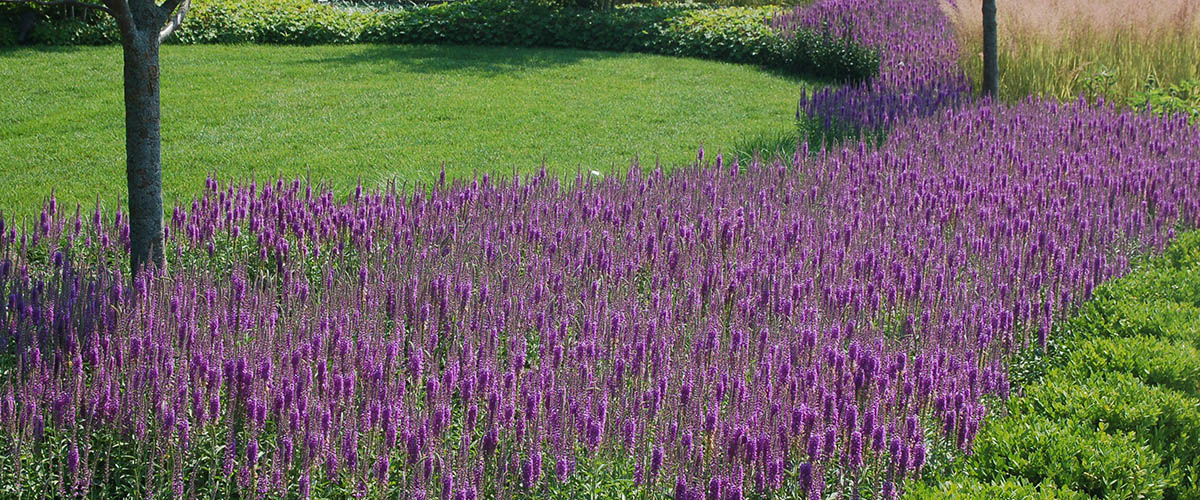
Evaluating Perennials for Chicagoland Gardens
Perennials in Focus is a plant evaluation program that examines new and underused plants for Chicagoland, the third largest metropolitan area in the country. A group of horticultural experts trials and evaluates plants at numerous locations across the region. Results help consumers, public gardens, growers, landscape designers, breeders, and other industry professionals make informed plant choices.
Assessing New Echinacea Cultivars for Chicago Winters
Echinacea has become a staple of Midwestern perennial gardens, valued for its long flowering season, pollinator appeal, and tolerance of heat and drought once established. New cultivars continue to expand the palette with unusual colors, compact habits, double flowers, and improved branching. Yet a plant that looks impressive in a catalog or performs well in a milder region may respond differently after a Chicago winter.
Cold hardiness is therefore a field question rather than a label alone. USDA Zone 5 describes a broad minimum temperature range, but survival in Chicagoland also depends on winter moisture, fluctuating temperatures, wind exposure, soil drainage, snow cover, and the timing of new growth. A meaningful evaluation must examine how a cultivar enters winter, survives it, and resumes growth in spring.
For the Perennials in Focus program, multi-site trials provide a practical way to compare Echinacea cultivars under regional conditions. Observations from horticultural professionals can help gardeners distinguish true winter injury from slow emergence, crown loss, or damage caused by wet soils and rapid freeze-thaw cycles.
What cold hardiness means for Echinacea
Cold hardiness is the plant’s ability to survive low temperatures while maintaining a healthy crown and viable overwintering buds. In Echinacea, the crown is especially important because the plant’s stems die back naturally in many gardens. A cultivar may appear completely dormant in March yet still produce strong shoots later in spring.
Winter survival should be separated from overall performance. A plant can survive the cold but emerge weakly, lose its desired form, or flower much later than expected. Conversely, a late-emerging cultivar may be healthy even when neighboring varieties are already several inches tall. Evaluators need repeated observations rather than a single early-season visit.
Zone 5 hardiness also varies within the Chicago region. Urban heat, reflected warmth from buildings, sheltered courtyards, exposed suburban lots, and open public gardens create different winter environments. Recording the site and microclimate helps explain why the same cultivar may receive different ratings at separate trial gardens.
Why new cultivars need regional trials
Many modern Echinacea selections are bred for traits such as flower color, compact growth, extended bloom, or distinctive petal arrangement. These features can involve changes in plant architecture and energy allocation. A heavily double-flowered or highly compact cultivar may establish differently from a simpler, open-pollinated type, even when both carry the same species name.
Propagation method can also influence early performance. Tissue-cultured plants and young divisions may need a full growing season to build a substantial root system before facing a Chicago winter. Trial results should therefore distinguish first-year survival from established-plant hardiness. A disappointing first season does not always prove that a cultivar lacks cold tolerance.
Regional evaluation is especially useful when it includes several winters. A mild winter may conceal weaknesses, while an unusually harsh year can reveal them. Looking across multiple seasons gives growers, retailers, designers, and gardeners a more reliable picture of consistency than relying on one dramatic weather event.
The traits evaluators should record
A thorough trial begins with standardized planting information. Evaluators should note planting date, container size or division size, soil type, drainage, exposure, irrigation, mulch, and whether the cultivar was planted in a raised bed or level ground. These details provide context for later survival ratings.
During autumn, observers can record the length of active growth, stem strength, foliage health, and the time when plants enter dormancy. A cultivar that continues producing tender growth late into the season may be more vulnerable to an early freeze. The presence of mature basal foliage and a well-developed crown can suggest better preparation for winter, although visual appearance alone is not definitive.
Spring observations should include the date of first shoot emergence, percentage of surviving crowns, number of shoots, stem vigor, and evidence of crown rot. Later records can cover final height, spread, branching, flower count, bloom date, and whether the plant retains the habit seen before winter. These details connect cold survival with garden value.
Reading winter injury in the field
Winter damage does not always appear as obvious death. Some Echinacea cultivars may show delayed emergence after cold soil temperatures or heavy spring moisture. Others may produce a few weak shoots before collapsing. Crown rot, heaving, and desiccation can each resemble poor hardiness, so evaluators should inspect the planting conditions before assigning a cause.
Poor drainage is a major concern. Echinacea generally prefers well-drained soil, and saturated ground can deprive roots of oxygen during dormant months. Freeze-thaw movement may lift crowns above the soil surface, exposing them to drying winds. A thin layer of mulch can moderate temperature changes, but heavy, wet mulch piled over crowns may retain moisture and create additional problems.
Winter injury should be documented with photographs and consistent rating categories. For example, a trial may record complete survival, minor dieback with full recovery, delayed but satisfactory emergence, severe crown damage, or total loss. Clear categories make results easier to compare across gardens and reduce the temptation to treat every weak spring plant as a failure of genetic hardiness.
| Evaluation point | Useful field observation | Why it matters |
|---|---|---|
| Crown survival | Percentage of plants producing healthy shoots | Shows whether the cultivar endured winter |
| Emergence timing | Date of first reliable growth | Separates dormancy from delayed recovery |
| Crown condition | Firm, damaged, heaved, or rotted crown | Helps identify the likely cause of loss |
| Early vigor | Shoot number and strength in spring | Indicates recovery capacity |
| Summer performance | Height, spread, branching, and bloom | Connects survival with landscape value |
| Consistency | Results across sites and winters | Reveals dependable regional performance |
Comparing cultivars fairly
Fair comparisons require similar planting conditions and adequate replication. A cultivar planted in a dry, sunny bed should not be judged directly against one placed in a shaded, irrigated border without acknowledging the difference. Multiple plants per selection help account for individual variation, while repeated plantings across trial gardens reveal whether performance is broadly adaptable.
The comparison should include established standards alongside newer introductions. Familiar cultivars provide a reference point for emergence, height, bloom time, and winter recovery. If a new selection survives at a similar rate but offers a more useful habit or longer bloom period, it may have practical value even without exceptional cold tolerance.
Gardeners should also consider traits beyond survival. A cultivar that withstands winter but flops in summer, spreads poorly, or produces sparse flowers may be less useful than a slightly less vigorous plant with a tidy form and dependable bloom. For broader planting decisions, it is wise to avoid invasive perennials and evaluate each introduction for responsible garden behavior as well as ornamental appeal.
Turning trial data into planting decisions
Cold-hardiness findings are most useful when translated into realistic recommendations. A cultivar with strong survival across exposed sites may be appropriate for larger plantings, commercial landscapes, and public gardens. One that performs well only in protected, sharply drained locations may still be worthwhile, but should be marketed and planted with greater care.
Retailers can use regional data to describe new Echinacea selections more accurately, especially when customers want unusual colors or compact plants for small gardens. Landscape professionals can match cultivars to site conditions instead of treating all Zone 5 locations as identical. Home gardeners can improve the odds of success by selecting sunny, well-drained sites, avoiding excessive late-season fertilization, and allowing plants time to establish before judging them.
Collaborative evaluation strengthens these decisions because it brings together observations from people working in different garden settings. The program committee helps connect trial expertise with the practical needs of the Chicagoland horticultural community, supporting a shared record of which plants earn a place in regional gardens.
Use the following practices when interpreting Echinacea trial results:
- Give established plants more weight than first-year installations.
- Compare survival across several sites and winters whenever possible.
- Separate cold injury from poor drainage, crown heaving, and spring disease.
- Judge winter recovery alongside bloom, habit, branching, and garden longevity.
- Match each cultivar to the exposure and soil conditions where it performed best.
As new Echinacea cultivars enter the market, careful Chicago-area trials can replace guesswork with evidence. Record what survives, how quickly it returns, and whether its summer performance justifies its place in the garden. Gardeners, growers, and designers can then use regional findings to choose introductions with confidence and contribute observations that make future perennial recommendations even more useful.
In the Garden
Evaluator gardens are located across the Chicagoland area, representing a range of growing conditions. Visit our retail and wholesale partners to find trialled perennials for your own garden.
Retail & Wholesale: Hinsdale Nurseries (Willowbrook, IL), Mariani Nurseries (Kenosha, WI & Garden Prairie, IL), Northwind Perennials (Burlington, WI), The Growing Place (Aurora, IL).
Wholesale Only: Hinsdale Nurseries (Plano, IL), Intrinsic Perennial Gardens (Hebron, IL).
Our Evaluation Program
The 2017–2020 evaluation cycle included Agastache 'Blue Boa', Allium senescens 'Blue Eddy', Amsonia ciliata var. filifolia 'Georgia Pancake', Astilbe 'Chocolate Shogun', Boltonia astroides 'James Crocket', Brunnera 'Alexander's Great', and Geranium cinereum 'Jolly Jewel Purple'. Completed evaluations include Amsonia 'Blue Ice' (2004–07).
On April 10, 2020, the program published snapshot profiles for Vernonia lettermanii 'Iron Butterfly', Stokesia laevis 'Elf', Stachys officinalis 'Pink Cotton Candy', Lobelia 'Monet Moment', Helleborus 'Winter Thrillers', Geum 'Mai Tai', Geranium soboliferum 'Butterfly Kisses', Gentiana x intermedia 'True Blue', Eurybia divaricata, Asparagus 'Purple Passion', and Agastache 'Bolero'.
Browse the full collection of snapshots organized alphabetically — from A–D, E–H, I–Q, and R–Z — to find detailed performance data on perennials trialled across Chicagoland.